Saturday, December 27, 2025
33 C
Lagos
Home Blog Page 165

AMCON: Senate Challenges Aviation Ministry Over Issuance of NG Eagle AOC

0

L-R: Senator Yakubu Oseni; a member of the Senate Committee on Banking Insurance and other Financial Institution; Chairman of the Senate Committee, Senator Uba Sani; Managing Director/CEO, Asset Management Corporation of Nigeria (AMCON) Mr Ahmed Kuru; and the Executive Directors of AMCON, Mr Aminu Ismail and Dr Eberechukwu Uneze at the Senate Symposium in Niger State

The Chairman Senate Committee on Banking, Insurance and other Financial Institutions, Senator Uba Sani, has declared that the 9th Senate of the Federal Republic of Nigeria is not happy that certain agencies of government are working at cross-purposes. This he stated is not in the overall interest of the Nigerian economy.
Sani who was speaking earlier today at the Zuma Rock Resort in Niger State said the Upper Chamber was particularly not happy with the Aviation Ministry whom he accused of frustrating the efforts of the Asset Management Corporation of Nigeria (AMCON), a government debt resolution agency that has scaled all huddles that are required by law to set up a new airline tagged NG Eagle, but are being denied the final Air Operating Certificate (AOC) to enable the new airline to commence scheduled operations.
It would also be recalled that AMCON’s intervention in Arik Air Limited (“Arik”) in February of 2017 was supported by the Ministry of Aviation to prevent imminent collapse of another Nigerian airline, especially one that controlled over 60% of the domestic Air transportation in the country amongst other public concerns. The intervention was necessary at that time for the continued existence of the airline.
AMCON said it was setting up NG Eagle as strategic exit from its aviation portfolio. The concerned airlines owed over N300billion, and all funds injected into the airlines pre, and post receivership have not yielded any positive repayment result. AMCON therefore opted for a strategic exit from its aviation portfolio through NG Eagle, creating an unencumbered and brand-new airline that would be easier to dispose profitably.
Sani who was noticeably angry said “This AMCON intervention in Arik and the frustration the agency is going through because of its proposal to set up NG Eagle as best option to recover its investment in the airlines is not supposed to be. I think we are about to lose billions of naira because of ego. The ministry is not being realistic with his proposal of a National Carrier and because of that frustrating the efforts of AMCON on NG Eagle.
“I say it is not realistic after we listened to the explanations of the ministry that the government will own only 5% of the new National Carrier, Nigerians will own 46% and yet to be named foreign interest will own 49%. So, I think the Executive arm of government will work together with the 9th Senate under this Committee to ensure that the right things are done to enable AMCON recover this huge outstanding N4.4trillion debt.
“It is also on that note that the Senate through this Committee is directing the Management of AMCON led by Ahmed Lawan Kuru, Managing Director/Chief Executive Officer to again publish the full list of AMCON obligors in daily newspapers so that Nigerians will know those that have played leading roles in destroying the economy of this great country.”
In his welcome address, the AMCON Boss explained that “AMCON getting involved in the airline is not from a recovery perspective, but from a national duty perspective to ensure that the airline continued to operate given its strategic importance in the aviation sector at that time.
“After intervention by AMCON, the airline continued to meet its obligations particularly that of the Aviation Ministry. The airline has so far remitted over N12billion as ongoing obligations to the ministry. The Corporation also do realize that at certain point in time it must prepare an exit strategy from all its aviation portfolio, and based on advice, decided to set up NG Eagle through the process of certification by Nigerian Civil Aviation Authority (NCAA).
“It was a very vigorous process that took us more than two years. Ultimately, we were able to meet all the requirements including getting three aircrafts branded (they are currently at the Murtala Muhammed Airport in Lagos, branded as NG Eagle) and ready for operation but we are being frustrated.”
The AMCON MD added, “NG Eagle is not a national carrier. We have no business with that. We are only concerned with recovering our money, but first we were told that NG Eagle sounds too much like a national carrier. We reminded them that they had issued license to United Nigeria Airlines, and somehow that one does not sound like a national carrier to them.
“We are also aware that based on the NCAA Act, the only condition for NCAA to deny anyone a license to operate an airline should be based on safety reasons, which would be investigated and brought to the attention of the applicant for fair hearing. Suddenly, we are again being confronted with the challenge through the National Assembly that the license should not be released until AMCON settles Arik debt with NCAA, this we believe is an after-thought.”

INEC Chief, Yakubu, Dedicates ThisNigeria Award to Staff, Youth Corps Members

0

Chairman, Independent National Electoral Commission (INEC), Prof. Mahmood Yakubu (left), receives the ThisNigeria newspaper’s “Gold Award in Public Service” from the former Inspector General of Police, Mr Solomon Arase, at the event.

The ThisNigeria newspaper has conferred its inaugural Gold Award in Public Service on the Independent National Electoral Commission’s (INEC) Chairman, Prof. Mahmood Yakubu, in recognition of his efforts to reposition the country’s electoral system for free, fair, credible, and inclusive elections, despite daunting challenges.
The conferment took place today at the newspaper’s well-attended Inaugural Lecture and Gold Prize ceremony, held at the Yar Adua Centre in Abuja, the Federal Capital Territory (FCT).
Two other individuals who also received Gold Awards were Governor of Rivers State, Nyesom Wike, for good governance, and the Registrar, Joint Admissions and Matriculation Board (JAMB), Prof Ishaq Oloyede, for his contribution to the education sector.
The Catholic Archbishop of Sokoto Diocese, Bishop Mattew Hassan Kukah, delivered a lecture on “National Cohesion for Sustainable growth and Progress,” with a Senior Advocate of Nigeria (SAN), Mr Mike Ozekhome (SAN), and former governorship candidate of the Labour Party for Kwara State, Mr Issa Aremu as discussants. A former Director-General of the Nigerian Television Authority (NTRA), Dr Tonnie Iredia, moderated the discussion.
In his acceptance speech, Prof Yakubu dedicated the award to the Commission’s staff members, members of the National Youth Service Corps (NYSC), and other critical stakeholders involved in elections.
He said: “We have just successfully concluded the Anambra Governorship Election. Next, we have to prepare for the Federal Capital Territory (FCT) Area Council election. We are preparing for two more governorship elections in Ekiti and Osun States. In between, we have seven bye-elections to conduct. So, it’s a hectic period for us.
“In INEC, we are used to more of condemnation than commendation. So, when commendation comes, especially from a friend like Eric Osagie, we genuinely appreciate it.
“This recognition is dedicated to all the hardworking staff of INEC. But I would also like to dedicate this to all those who have constructively criticized the Commission. We cherish constructive criticisms. As a teacher all my life, I know that there can’t be new knowledge; there can’t be progress without constructive criticisms.
“I would like to recognise the role of the National Peace Committee (NPC), chaired by our respected former Head of State, General Abdulsalami Abubakar. But let me also recognise a category of Nigerians that are hardly recognised. Yet, they play a very, very critical role in conducting elections in the country. I am not referring to the security agencies that also play a very good role. I am not referring to other stakeholders – political parties, the media and Civil Society Organisations (CSOs), but I am referring to election duty staff: those young Nigerians on national service. I have said it over and over again that you (National Youth Service Corps members) are among the most educated, the most hardworking, the most readily available election duty staff in Nigeria. We cannot do without you.”
He added: “I recognised the critical role of the NYSC when we travelled to the Republic of Liberia for their election. The Liberian Electoral Commission was battling with where to get election duty staff. They were looking for teachers and other categories of staff. And the Chairman (Liberia Electoral Commission), who is my very good friend, turned around and said to me, ‘we know that in Nigeria, you have no issues at all. The number of young Nigerian serving the nation in the National Youth Service Corps (NYSC) is probably half of the population of the Republic of Liberia’. And so, in that respect, we have no issues with capacity.”
Governor Wike, in his speech, commended the Commission for conducting what he described as a “free and fair governorship election” in Anambra State.

Stanbic IBTC Bank Appoints Sola David-Borha as Board Chairman

0

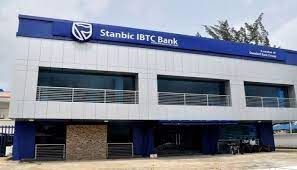
The Board of Stanbic IBTC Bank Plc has announced the appointment of Mrs. Sola David-Borha as Chairman of the Board, effective 26 November 2021.
Sola recently retired as Chief Executive, Standard Bank, Africa Regions. She was previously Chief Executive of Stanbic IBTC Holdings PLC and prior to that, was also Chief Executive of Stanbic IBTC Bank PLC.
Mrs. David-Borha has had an extensive career in the financial services industry which has spanned over three decades. Her executive educational experience includes the Advanced Management Program of Harvard Business School and the Global CEO Program of CEIBS, Wharton and IESE. She is an Honorary Senior Member of the Chartered Institute of Bankers of Nigeria and winner of the CNBC African Woman of the Year Award for 2016.
While commenting on the appointment, Mr. Wole Adeniyi, Chief Executive, Stanbic IBTC Bank PLC, stated, “Mrs. David-Borha has held several leadership roles over the years in the group and once again, we are privileged to have her as the Chairman of the Board of Stanbic IBTC Bank PLC. The Bank will definitely benefit from her wealth of experience as she brings to bear her decades of experience and wealth of knowledge in the financial services industry”.
Mrs. Sola David-Borha takes over from Mr. Barend Kruger who resigned as Chairman of Stanbic IBTC Bank on 21 October 2021. Kruger, however, remains on the Board of Stanbic IBTC Holdings PLC as a Non-Executive Director.

2021 ITREALMS E-Waste Dialogue Set for Dec 9 in Lagos

0

The 2021 edition of the ITREALMS E-Waste Dialogue has been slated to hold on December 9, 2021 at Welcome Centre Hotels, International Airport Road, Ikeja, Lagos by 9am.
This is coming as the Nigerian Communications Commission (NCC), Nigerian Content Development and Monitoring Board (NCDMB), Association of Licensed Telecommunications Operators of Nigeria (ALTON), National Environmental Standards and Regulations Enforcement Agency (NESREA), Environmental Health Officers Registration Council of Nigeria (EHORECON) and E-Waste Producer Responsibility Organisation of Nigeria (EPRON) are warming up among other members of stakeholders for the dialogue on December 9, 2021.
The editor-in-chief, ITREALMS Media Group, Mr. Remmy Nweke disclosed these in Lagos on Wednesday, and said the update has become necessary due to importance of tackling electronic waste as the country attained 20 years of Global System for Mobile Communications (GSM) which paved the way for influx of electronic devices and usage in Nigeria.
Nweke also said that the Waste of Electrical and Electronic Equipment (WEEE) emanates from the likes of mobile phones, computers, TV-sets, and fridges among other electronic devices have become a set of fastest growing waste streams across the globe.
Nigeria, he noted, is particularly burdened by the WEEE with estimated 1.1 million tonnes of e-waste annually arising from both local and imported Electrical and Electronic Equipment (EEE) under the guise of second hand or fairly used.
The editor-in-chief of ITREALMS Media, organisers of the E-Waste Dialogue cited a recent UNEP report which showed that in 2015 alone, Nigeria had 56,000 tonnes of imported e-waste; in 2017, this figure increased to 288,000 tonnes; over four times higher than two years earlier.
These, he said underscored the need for a massive and sustained campaign of Nigerians on e-waste and its likely effects when disposed wrongly.
According to him, experts have been assembled to give a roadmap on e-Waste in Nigeria: Consumer as key to circular economy with focus on 20 years of GSM.
“ITREALMS Media in commemoration of the International E-waste Day (IeWD) 2021, is hosting a day discourse on e-Waste in Nigeria: Consumer as key to Circular Economy & 20 years of GSM” under its flagship ITREALMS e-Waste Dialogue scheduled for Thursday, December 9, at the Welcome Centre Hotels, International Airport Road, Ikeja, Lagos,” he said.
Stressing the importance of raising awareness and exchanging knowledge of this complex waste stream, Nweke said it would provoke thought and support the transition to a sustainable society and circular economy as the nation looks forward to the full implementation of the fifth-generation (5G) networks.

Anti-Corruption: As Judicial Officers Re-Echo Need for Special Courts

0

By Walter Duru

One of the issues that came up strongly during last week’s peer review meeting of judicial officers in Abuja is the need for special courts for corruption cases in Nigeria.

The setting was a National Peer Learning Review Roundtable for State Judges on the Implementation of the Administration of Criminal Justice Act, organised by the Rule of Law and Anti-Corruption- ROLAC programme of the British Council (funded by the European Union), held at Treasure Suites hotel, Abuja.

Setting the stage for the discourse, Lagos State representative, on behalf of the Chief Judge of Lagos State, Hon. Justice Kazeem Olanrewaju Alogba argued that special courts for general criminal cases, financial crimes and sexual offences will speed up justice delivery in the country.

According to him, “one key challenge faced is a few retirements and having fewer hands-on decks.”

“Some of the amendments proposed in the ACJL 2021 and innovations are around video conferencing for vulnerable witnesses, communications, remand, monthly visits and to ensure that bail arraignment are dealt with; prevention of media parade of suspects, compensation to victims of bad judgement, collaboration with Ministry of Justice and Attorney General in the establishment of crime data register, among others.”

“Other areas include regular prison decongestion exercises, use of technology, data collection and analysis and the reviewed criminal laws in Lagos state with innovative provisions.”

Justifying ROLAC’s intervention, Anti-corruption Programme Manager of the Rule of Law and Anti-Corruption programme -ROLAC, Emmanuel Uche said judicial officers across the country were assembled in Lagos and Abuja to enable them share experiences and knowledge on the implementation of the Administration of Criminal Justice Act -ACJA with particular focus on anti-corruption cases across the country.

Speaking earlier on the essence of the meeting, Secretary of the Administration of Criminal Justice Monitoring Committee (ACJMC), Sulayman Dawodu said it was aimed at sharing knowledge and experiences on ACJA implementation in Nigeria.

“The administration of the criminal justice monitoring committee is the custodian of the ACJA with the unique responsibility of ensuring speedy trial and effective dispensation of criminal justice in Nigeria. The law has ensured that the justice system is blessed with some remarkable innovations which include: clear oversight functions, timeliness, proper reporting and monitoring mechanism to ensure that the purpose of the ACJL under section 1 is achieved by all stakeholders. It is remarkable to note that there are criminal divisions established in Edo and Lagos states, in line with the law, which is why we have counterparts from these states and other states, the EFCC and ICPC, to share and discuss lessons in their efforts to implement the law, in this roundtable. The roundtable will be tilted towards the anti-corruption component of RoLAC, so discussions will revolve around criminal justice as it relates to Anti-corruption which cuts across all offences.”

He emphasized that discussions would dwell more in the areas of speedy trials, case handling/management and plea bargain, which, according to him, are also part of the responsibilities of the ACJ Management Committee.

Continuing, he explained that “the consideration of anti-corruption is also deliberate, owing to support from Component 3 of RoLAC, which is sponsoring this roundtable in conjunction with Component 1 which is primarily focused on implementing the criminal justice reform agenda.”

“This meeting is also a follow up to the meeting held in Lagos on the 4th of November 2021, which had judges from Lagos, Ogun and FCT, but there are more Judges present here today. We have judges from the FCT, Adamawa, Kano, Anambra and Edo states, and we hope that the experience will be more robust.”

“So, my Lords will be called upon to share their success stories in the application of the law in practice in their various jurisdictions and we will confront the challenges collectively. We will be focusing on, and considering issues around plea bargain, how it has fared, how it has been applied in practice, how the committees are functioning and practically discuss the challenges encountered with the view to proffering lasting solutions.”

“Based on the data gathered by the ACJMC, some courts are struggling for major compliance with these provisions and it is also common knowledge that despite these provisions, we still have congestion in our court dockets, largely based on non-application of speedy trial mechanism as a result of collective lapses. So, in an attempt to improve the current position, the ACJMC has facilitated several workshops at different levels to address the issues and find practical solutions.”

According to him, “some of the ideas envisaged include advocating for the establishment of Criminal Divisions in state judiciary(under which a special section for financial crimes is designated), ensuring advocacy for national non-custodian committee which is responsible for setting up other state criminal justice divisions, application of case management hearing in complex anti-corruption cases and de-clogging of court docket from the office of the Department of Public Prosecution – DPP and setting up of criminal justice trust fund, among others.”

Also speaking, RoLAC’s Component 1 Manager, Dr. Oluwatoyin Badejogbin commended the judicial officers for attending the event, their heavy workload notwithstanding.

He said: “Most of you are coming from jurisdictions with heavy workload, working day-in, day- out, from morning till night, writing rulings and evaluating evidence. This kind of peer learning roundtable should be held more often, perhaps half yearly for a start. It should be structured in a way that judges can relax and share experiences and learn from each other on the adjudication of cases.”

“Judicial peer to peer approach is inherently relational, and as such, requires the investment of time and resources to maintain and build reciprocal relationships through offering channels of help and foundation to share best practice and a better understanding of institutional, cultural, and political dynamics on the function of judicial officers. It also helps to build mutual trust and respect for practitioners, providing a window for judges to improve their own judge craft and work more strategically to improve the rule of law. It is through engaging in these discussions that judicial peer to peer approaches can help to develop creative solutions in development challenges across our world.”

In their respective goodwill messages, Chief Judges of Edo, Adamawa, Anambra, Kano and Federal Capital Territory poured encomiums on ROLAC for its huge investments in deepening the knowledge of judicial officers and other critical stakeholders, while strengthening the implementation of the Administration of Criminal Justice Act in Nigeria.

The technical sessions of the meeting centered around Plea bargain in anti-corruption, Case Management hearing in anti-corruption, Remand proceeding/Speedy trial provision in ACJL in anti-corruption cases/Mechanism, Criminal court division in practice, Special Court for anti-corruption and Constitutional review and criminal justice reform.

In all of these, the need for vigorous implementation of the Administration of Criminal Justice Act cannot be over emphasized.

States that are yet to adopt the Act are strongly encouraged to initiate steps towards having state versions of the Law, in the interest of speedy adjudication of justice, among other benefits.

Steps need to be taken urgently to establish special courts for the handling of corruption and other specialized cases, as this will lead to professionalism and speedy dispensation of justice.

Furthermore, other donor agencies in the country must borrow a leaf from ROLAC to ensure the strengthening of the country’s judicial systems to enable them function optimally.

Final, the efforts of the European Union-funded ROLAC (managed by the British Council) cannot go without commendation. ROLAC’s intervention in supporting the vigorous implementation of the Freedom of Information Act in Nigeria remains unrivaled. Its investment in strengthening ACJA implementation in Nigeria also deserves commendation and therefore worthy of emulation.

But, if stakeholders want special courts to try corruption cases in Nigeria, with all the justifications – why not?

All hands must be on deck!

Dr. Walter Duru is a Researcher and Communications Consultant. He can be reached on: [email protected].

Continuous Dialogue Critical to Tackling Telecoms Industry Challenges – Danbatta

0


L- R: Engr. Bako Wakil, Director, Technical Standards and Network Integrity, Nigerian Communications Commission (NCC); Mr. Yakubu Gontor, Director, Finance Services, NCC; Mrs. Tolulase Omodele-Rufai, Assistant Director, NCC Lagos Zonal Office; Mr. Adeleke Adewolu, Executive Commissioner, Stakeholder Management, NCC; Mr. Babajika Mohammed, Director, Licensing and Authorization, NCC; Mr. Chidi Ibisi, Executive Director, Business Development, Broadband Communications Limited; Mrs. Chinwe Maduabum, 2021 Chairman Committee on Talk to the Regulator; Mr. Damian Udeh, Associate Director, Regulatory Affairs, IHS

The Executive Vice Chairman and Chief Executive Officer of the Nigerian Communications Commission (NCC), Prof. Umar Garba Danbatta, has said that continuous dialogues between the regulator and its various licensees is central to finding lasting solutions to issues negatively impacting licensee’s compliance with extant regulations and challenging the growth of the telecoms industry.

Danbatta stated this during the second edition of NCC’s 2021 Talk to The Regulator (TTTR) forum held in Lagos over the weekend. The theme of the discourse is, “Improving Stakeholders Satisfaction”. The Lagos edition of the programme followed the successful hosting of a similar dialogue in Kano on 16th October, 2021.

The objective of the forum is to get direct feedback from licensees on how the Commission, as a regulator, is meeting licensees’ expectations.

The programme was also designed to identify areas for regulatory improvement, highlight areas where licensees are defaulting as well as address critical industry challenges undermining full accomplishment of the set objectives for consolidating the gains in the telecoms sector.

According to Danbatta, who was represented at the forum by NCC’s Executive Commissioner, Stakeholder Management, Adeleke Adewolu, the forum is orgainsed in keeping with the Commission’s commitment to continually ensure regulator-licensee interactions to develop collaborative solutions and implementation programmes to the challenges of the telecom ecosystem.

“The Nigerian Communications Act (NCA, 2003) invests the NCC with powers and responsibilities for the regulation of both the technical and market-related aspects of telecoms infrastructure and services in Nigeria. We consider our role as regulator very vital to ensuring industry sustainability, because NCC considers consultation as the lifeblood of regulation” the EVC emphasised.

The EVC also declared that, “we have consistently deployed stakeholder engagement tools like public enquiries, private investigations, written information requests, one-on-one discussions as we are having it now and diverse consumer engagement platforms.

These tools enable us to ensure that our interventions are well-grounded and that our decisions are based on a clear understanding of stakeholders’ perspectives.”

Danbatta said that such interactions fit squarely within the five pillars of the Commission’s Strategic Management Plan (2020-2024), which include Regulatory Excellence, Promotion of Universal Broadband Access, the Development of the Digital Economy, Facilitation of Market Development, and Strategic Partnering.

“Through regular interactions with our licensees, the Commission is able to gain valuable insights to enhance our regulatory output and enabled us to drive excellence in consonance with the five pillars of our strategic vision for the industry as streamlined in the Commission’s Strategic Vision Plan (SVP), 2021-2025,” he said.

The EVC also reinforced the Commission’s belief that only through optional performance by the licensees will Nigeria be able to achieve the national objectives and targets in the National Digital Economy Policy and Strategy (NDEPS) 2020-2030, the Nigerian National Broadband Plan (NNBP), 2020-2025 and other national policy instruments targeted at developing the nation’s digital economy ecosystem.

He said on this basis that the Commission is, “Therefore, we intend to use this forum to seek support for many initiatives that the commission has carefully developed in our quest to enhance market opportunities for all our licensees,” Danbatta said to emphasise NCC’s faith in collaboration with stakeholders and its licensees in order to address any concerns that may impede the attainment of the relevant policy objectives.

The NCC CEO also emphasised that the Commission will continue to roll out forward-thinking and all-inclusive regulatory initiatives to provide market opportunities for all its licensees. Additionally, Danbatta said NCC is also committed to constantly reviewing licensing framework as well as key regulatory instruments so as to refresh the Commission’s regulatory frameworks and ensure better service delivery for consumers and efficient attainment of other national interest objectives.

However, Danbatta said some licensees are not doing as much as they ought to be doing. “Several licensees are struggling to pay their staff, many are unable to comply with basic licence obligations, some are defaulting in the payment of their Annual Operating Levies (AOL) while the level of interconnect and other inter-licensee indebtedness is still unacceptably high.

Therefore, we are required to ensure regulatory interventions are put in place to address challenges, bottlenecks and grievances that may arise among the licensees in this regard,” he said.
Also addressing the gathering, the Director, Licensing and Authorisation at NCC, Mohammed Babajika, said the forum was intended to foster a harmonious relationship with licensees, identify their challenges and provide feedback on licensees’ fulfilment of their licence obligations and to re-emphasise the role of licensees in ensuring good quality of service (QoS) and quality of experience (QoE) for the consumers.

While intimating the licensees of some regulatory initiatives focused on licensing issues, Babajika said despite the impact of the Covid-19 pandemic and its resultant challenges, the Commission was taking measures to further liberalise the telecoms industry by finalising the framework for Mobile Virtual Network Operators (MVNOs) while also reviewing existing licensing regulations.

In addition, the Director also informed the licensees that the Commission was finalising work on Information Memorandum (IM) for Fifth Generation (5G) technology deployment, which will promote emerging technology trends such as Internet of Things (IoT), Artificial Intelligence (AI), Over-The-Top (OTT) Services and Big Data Analytics, Blockchain, among others.

At the event, presentations were made by Management staff of the Commission to the licensees and others, who participated actively through listening, making observations and suggestions, as well as seeking clarifications to improve the quality of discourse and the expected outcomes.


7 Land Tenure Systems in Nigeria: Categories and Characteristics

0

The land tenure system in Nigeria differs from the 36 states we have here across the country.

An appropriate land tenure system serves as a foundation for economic growth and a source of investment incentives. It allows for secure land ownership and rights, as well as the involvement of vulnerable groups such as women and low-income earners, as well as the reduction of conflict. When land rights are insecure, it leads to conflict, instability, tribal conflicts, and gender inequality, as women are denied the right to own or inherit land.

In this article, we will explain the meaning of Nigerian land tenure system as well as the major categories of land tenure and their characteristics.

Details About Land Tenure System in Nigeria
In Nigeria, the Land Tenure System is the process of giving property ownership to individuals, legal entities, corporations, and natural entities depending on their usage of the land. This procedure aims in safeguarding the public and sustainability of human habitats. Its main purpose is to help guide the manner an entity or group of persons occupies a particular area in the country, societies created the regulations that govern land tenure.

The system itself can be described as a set of laws, responsibilities, and rights that define a person’s obligations and privileges in relation to the land. The technique of management in terms of distribution, usage, acquisition, and exploitation of specific portions of land is defined by the land tenure system.

Nigeria’s land tenure system is a hot topic for debate, research, and review. The fundamental land law regimes and determinants of relevant land property rights and obligations. Land tenure in Nigeria is a complicated web of interconnections between many entities that govern land use. It also includes institutions that play a role in determining land ownership and use patterns. The government, customary laws, and other institutions are examples of these institutions.

Types of Land Tenure System in Nigeria

The major types of land tenure systems in Nigeria are as follows:

  • Communal Land Tenure System

The communal land tenure system arrangement elevates the community as the land’s ruling power. The basis for land sharing or ownership is decided by the community’s leader. This approach promotes large-scale farming, but it cannot be utilized as a loan security.

  • Leasehold Tenure System

A person is given temporary ownership of a plot of land by the owner in the form of a title. An individual may have temporary access to the land during the lease time, but it cannot be used as collateral for loans.

  • Tenants at Government Will

Tenants at Government Will is a way in which the Federal Government of Nigeria distributes land to farmers. The land is inexpensive to purchase, but it cannot be used as collateral for the loan.

  • Gift Tenure System

The voluntarily transfer of ownership rights from one landowner to another is known as the gift tenure system. The new proprietor might use this sort of land ownership as collateral for a loan. The new owner is also entitled to all of the advantages of land ownership. The new ownership status can, however, be reversed by a court judgment under this type of property tenure.

  • Freehold Tenure System

In this situation, an individual or a group pays a set amount of money in exchange for the right to own a piece of land. It can be costly to purchase land under this tenancy. The land can be utilized to obtain loans from a financial institution, which is an advantage.

  • Inheritance Tenure System

The transfer of land ownership rights to a successor following the primary owner’s death is known as an inheritance land tenure system. The next of kin of the landowner—usually the children—assumes the role of new landowners under this system. The main downside of this land tenure arrangement is that the beneficiary and other family members may have disagreements about the land allotment.

Rent Tenure System

In a rent tenure system, a tenant pays a set sum to the landlord for the privilege of utilizing the land for a set length of time. In comparison to leasehold arrangements, the rent period is comparatively short. Although this structure hinders tenants from making long-term plans.

  • The Characteristics of Nigeria’s Land Tenure System

The Nigerian Land Tenure System consists of the following elements:

  • An individual’s property right
  • Land use within a community
  • Possession of a common plot of land
  • Transfer of a legally assigned plot of land.
  • Advantages of Nigeria’s land tenure system
  • It manifests as a system for governing the legal relationship between individuals and communities in terms of land usage.
  • It’s a system that makes it possible for people to use and manage land and natural resources.
  • It is supported by “Decrees,” which address all matters concerning lands in Nigeria, including ownership, descriptions, partition, inheritance, mortgages, purchase/sale transfers, and so on.
  • Disadvantages of Nigeria’s land tenure system

It has roots in tradition and culture, which can lead to differing perspectives among people based on their religious and cultural backgrounds.

In summary, the land tenure system in Nigeria serves a very useful purpose in ensuring that the set of laws, responsibilities, and rights that define a person’s obligations and privileges in relation to the land are well adhered to.

Dennis Isong Helps Individuals Invest Right In Real Estate.For Questions On This Article Or Enquiring About Real Estate. Follow him on Youtube https://www.youtube.com/LandPropertyNG/ or Whatsapp/Call +2348164741041


Fixit45 Reports Acquisition of Parkit, Unveils Subscription-based VIP Programme

0


R-L: Gideon Adepoju, Manager, Growth and Innovation, Gerald Okonkwo, VP, Business Development; Justus Obaoye, CEO and Co-Founder, and Fixit45; Abdulazeez Ogunjobi, Co-founder & CTO at an engagement session with partners in Lagos.

In demonstration of its stated commitment to facilitating value-creating interactions across stakeholders in the automotive industry, leading autotech platform, Fixit45 has announced the acquisition of Parkit, a network of tech enabled autocare and car wash centres.

Since its entry in to the market in July 2021, Fixit45 has been focused on building a platform that provides a seamless, collaborative infrastructure for interactions to occur across verticals that include auto repair and maintenance services, fleet management, auto parts sourcing and delivery, auto care, refurbishment and upgrades, repair financing and mechanic workshop software as well as pre-purchase inspections, underlying these with moderation for compliance and accountability.

Fixit45 caters to needs in the repair and maintenance segment, Parkit plays in the auto care vertical, Xparts is a discovery and trading platform for spare parts where you can explore a rich inventory, find exacts parts based on the platform’s AI tools and get these parts in very good time and Rampware is a Software-as-a-Service tool to help auto-workshops manage their operations and improve service delivery experience.

On the acquisition, Justus Obaoye, CEO and Co-Founder, Fixit45 said, “Parkit was committed to building out and digitizing the fragmented vertical in the autocare and car wash space. They provided business support, training and consumables to businesses and ensured that the experience was rewarding for fleet and car owners. We found synergies in what they were doing at the time and we approached them to join us in this journey to fix and build the aftermarket ecosystem which has culminated in the acquisition. Parkit has been fully integrated in the Fixit45 family and we look forward to providing market leadership.”

According to Gerald Okonkwo, VP, Business Development, Fixit45 and Founder, Parkit, “our business was founded in June 2018 to use technology in making the customer journey for car washes very seamless by automating payments, helping them acquire the right tools for the job and providing professional care services that were not available in-country. This journey has been a collaborative experience and we are blessed to have found the right team at Fixit45 with bold ambitions to create value for consumers in this space. The acquisition was finalized in September 2021 and we are looking to many more wins. When we started, we had to import most of our consumables and materials, but today, we are to provide quality car shampoo, upholstery, tire and engine wash, polish and air fresheners. This is just one of many success stories that this acquisition has berthed.”

Automobile ownership for car and fleet owners can be a frustrating experience owing to a myriad of factors that include highly fragmented, mostly unregulated industry, informal service providers who often lack the technical competence, as well as proliferation of counterfeit spare parts with a lack of warranty on repairs. These challenges in turn have also impacted the service delivery experience from service providers.

To change the narrative in the space, Fixit45 is collaborating with a lot of stakeholders and partners with a view to deepening value creation in the ecosystem. Some of these stakeholders include workshops, spare part suppliers, insurance companies, tow trucks, fintechs, and fleet owners.

The Fixit45 Vehicle Intact Programme (VIP) has been designed as the name suggests to delivering quality and affordable repair and maintenance services via subscription-based plans with a view to ensuring that the lifetime value of a vehicle or fleet is enhanced and productivity optimized. The rich bouquet of plans come in 4 packages that include the Service Plan, Maintenance Plan, Extended Services Plan and the Emergency Services Plan.

The Service Plan ensures that subscribers don’t have to worry about workmanship and getting their vehicles in good shape. The Maintenance Plan is a commitment to a routine and or scheduled preventive maintenance which in turn mitigates the need for some repair work on the vehicle. The Extended Service Plan works as an HMO for vehicles in which subscribers transfer to us the duty of keeping their fleet and or vehicles operational at all times. Because breakdowns don’t announce themselves, the Emergency Service plan is designed to give comfort and succor to motorists in the event of a breakdown.

With presence across 4 cities in Nigeria, more than 100 network partners and over 2500 vehicles under management, Fixit45’s ambition is to become Africa’s largest and most trusted autotech platform. “We have built a robust end-to-end ecosystem platform that caters for all players in the aftermarket segment. The industry has largely been based on brick-and-mortar operations and it is our intention to disrupt and digitize this space using technology,” said Abdulazeez Ogunjobi, Co-founder & CTO.

“It is gratifying to see the uptake and adoption of Fixit45’s service platform by corporates in the FMCG, Mobility and Tech industry. The glowing commendations we have received will further spur us to do more in the aftermarket space. Our value propositions of affordability, peace of mind, quick turnaround time, convenience, quality assurance and accessibility will never go out of fashion. We will double down on these and ensure that the vehicle ownership experience is better improved,” said Bemigho Awala, Head of Marketing and Communications.


African Alliance: N56bn Assets, N8bn Claims Paid, N6bn Profit in 2020

0

African Alliance Insurance Plc has declared a profit before tax of N5.67 billion in 2020 compared to a loss of N7.04 billion in 2019 representing over 1300% year-on-year increase. This was made known at the company’s hybrid 52nd Annual General Meeting held in Lagos and streamed online.

Writing in the Chairman’s Statement to shareholders, the company’s Chairman, Dr Anthony Okocha, whose retirement was later announced at the event, high-lighted the many progresses of the company in the year under review.

“Your Company was able to grow its asset base by 29% from over N40 billion to N56.3 billion. This was as a result of substantial capital injection which gave us a boost on our bottom line to the tune of N5.67 billion from the 2019 loss position of – N7.04 billion. These profits have been immediately assigned as retained earnings to further boost our ongoing quest to revamp our books and grow the overall financial standing of your Company,” he said.

A further analysis of the books shows that the company paid N8.16 billion in claims, a 21% reduction year-on-year on the previous year’s figure of N10.4 billion. This, according to the Chairman, was as a “result of shrewd underwriting/ vibrant risk selection process which saw us cede strategically to reinsurers.”

The firm’s income from investments dropped also by 19% from N3.02 billion to N2.46 billion, a direct outcome of the decline in market rates, however, the company’s operating expenses also reduced by 14% as a precautionary counterbalance to the reduced earnings.
Whilst giving her remarks at the event, Joyce Ojemudia, Managing Director/Chief Executive Officer, African Alliance Insurance PLC, restated the management’s commitment to optimising costs and growing the market.

She said, “Our main focus next year is to grow our market share substantially. This will be achieved by massive beef-up of the sales team (field force and corporate marketers) and provision of necessary tools to aid marketing activities. We will reopen branches in locations we have found promising and enhance our presence in existing locations. Our quest to maintain physical presence resonates with our integrity drive as insurance is a business of trust especially amongst the retail market. This effort will be supported by digital technology as we adopt a two-prong onslaught on the market.”

She also listed as priorities the renewal of the company’s ISO certification as a business tool to enhance market confidence; staff training and retraining to aid knowledge acquisition; recruitment into key technical areas as well as massive IT upgrades to support the business goals.

Also at the meeting, the retirement of Dr Anthony Okocha, the company’s Board Chairman, effective 20th September, 2021, was announced. Sylva Ogwemoh, SAN, a Non-Executive Director of the Company, who chaired the meeting, described the retired Chairman as a man who was passionate towards the cause of African Alliance Insurance PLC.

“For a man to have led the board for 9 years is testament to his resilience despite all odds. We wish him a happy retirement and on behalf of the Board, management, staff and shareholders of the company, we thank him for his contributions to the growth of the company,” Ogwemoh said.

Recall that under Dr Okocha’s watch, the company successfully conducted the first rebranding exercise in its 61-year history firmly making it attractive to younger professionals and repositioning it for future success.

Incorporated in 1960, African Alliance Insurance PLC is widely regarded as the strongest life specialist in the industry. With a policyholder base of over 50,000 policies, spanning more than three generation, the company is adequately positioned to provide innovative and customised plans for the Nigerian market.


Danbatta Tasks NODITS on Effective Actualisation of Mandates

0

The Executive Vice Chairman and Chief Executive Officer (EVC/CEO) of the Nigerian Communications Commission (NCC), Prof. Umar Garba Danbatta, has urged the Nigeria Office for Developing the Indigenous Telecom Sector (NODITS) on the need to ensure effective delivery of its mandates with respect to the promotion of indigenous contents in the nation’s telecoms sector.

Danbatta made this call in a keynote address delivered at a two-day brainstorming and team-building session organised by NODITS team, which started in Abuja on Thursday, November 25, 2021. The EVC said the Office is very critical to effective mainstreaming of local content development in the nation’s burgeoning telecoms sector.

NODITS is a special purpose vehicle (SPV) designed to stimulate the creation and development of top- quality indigenous content in the telecommunication sector. The creation of the NODITS on July 5, 2021 and its domiciliary in the Commission was sequel to the signing of the National Policy for the Promotion of Indigenous Content in the Telecommunication Sector (NPPIC) by the President in March, 2021.

Represented at the event by the Director, Human Capital and Administration, NCC, Usman Malah, Danbatta said the development of NPPIC, facilitated by the Minister for Communications and Digital Economy, Prof. Isa Ali Pantami, is essentially aimed at driving the desire of the current administration and the NCC to ensure that indigenes become more active participants in Nigeria’s telecoms sector.

Speaking on Management’s expectations from NODITS, the EVC said, as an SPV under the purview of the Commission, NODITS would be expected to get involved in development of new guidelines and regulations bordering on indigenous content, local manufacturing of telecom equipment, outsourcing services, construction and lease of telecoms ducts, succession planning in the telecoms sector, among others.

He also implored the NODITS team to adhere to regulatory and ethical principles held in high esteem by the Management of NCC. “The Commission’s commitment to maintaining high standards, ethical conduct, and superior performance is a priority of the Management, hence by extension, NODITS should reflect the established values, guiding principles, strategic awareness and the goodwill associated with the NCC,” he said.

Besides, the EVC said NODITS would be involved in working with various stakeholders towards reducing capital flight, as local manufacturers would be encouraged to participate in the design and manufacturing of devices. This vision will also ensure that manpower requirements towards making indigenes active participants in the Nigeria’s telecoms development are met.

“In essence, NODITS will be expected to initiate strategic programmes and projects that will stimulate the growth of the telecoms sector through an approach that is visionary, focused, sustainable and based on incentives to indigenous telecom stakeholders” EVC said added.

The EVC rounded off by congratulating the pioneer team of the new Office. He pointed out that they were carefully selected by NCC Management based on their background, dedication, integrity. He urged the team to work harmoniously within the Office and with other relevant stakeholders to fast-track seamless delivery of its mandates, as clearly spelt out in the NPPIC.

In his remarks, the Team Lead, NODITS, Babagana Digima, spoke about the mission and vision of NODITS, as he made his presentation on the progress so far recorded by the team in five months of its existence.

He said while the Mission of NODITS is “to deliver on the objectives of the National Policy for the Promotion of Indigenous Content in the telecom industry and the Executive Orders 003 & 005,” its vision is “to harmoniously integrate indigenous content in the Nigerian telecoms sector.”

The Executive Order 003 mandates all the Ministries, Departments and Agencies (MDAs) to always grant preference to local manufacturers of goods and service providers for procurement; while the Executive Order 005 seeks the promotion of Nigerian content in contracts bordering on science, engineering and technology.

Digima itemised some of the activities being carried out by NODITS within the last five months of its creation. This include visiting the National Information Technology Development Agency (NITDA); visitations to various Subscriber Identification Module (SIM) manufacturers; engagements with Mobile Network Operators (MNOs); ongoing training of 60 young entrepreneurs, and developing industry relevant proposals for incentivising Information and Communication Technology (ICT) companies by the Federal Government, among others.

In addition, Digima said NODITS has, so far, identified partners it would be collaborating with towards achieving its mandates. They include the NCC, NITDA, Standard Organisation of Nigeria (SON), Ministry of Communications and Digital Economy, Nigerian Investment Promotion Commission (NIPC), Nigerian Contents Development and Monitoring Board (NCDMB) and the Raw Materials Research and Development Council (RMRDC).

Others are the Bureau of Public Procurement (BPP), Industrial Training Fund (ITF), National Agency for Science and Engineering Infrastructure (NASENI), National Automotive Design and Development Council (NADDC), Nigerian Exports Zones Processing Authority (NEZPA), Nigeria Extractive Industries Transparency Initiative (NEITI), and Ajaokuta Steel Company (ASC).

Digima called on his team at NODITS to work with dedication and purpose towards building a telecoms sector where ingenious players are actively participating in creating values for the overall development of the digital economy. “A chain is only as strong as its weakest link. I want us to build a strong and resilient Office that will be fit-for-purpose, withstand the test of time and which the telecom industry will look back at and appreciate like the great pyramids of Egypt. All of us will be the designers, thinkers, architects, and builders in this great NODITS journey,” he added.

NCRIB Strengthens Collaboration with BIBA

0

L- R: Managing Director, Risk Analyst Insurance Brokers, Dr. (Mrs) Funmi Babington-Ashaye; President, the Nigerian Council of Registered Insurance Brokers, Mr. Rotimi Edu; Chief Executive, British Insurance Brokers Association (BIBA), Mr Steve White and Managing Director, Leverage Insurance Brokers Limited, Hon Lanre Laoshe during a courtesy visit of NCRIB delegates to BIBA Office in London.

The Nigerian Council of Registered Insurance Brokers (NCRIB) has strengthened its collaboration with British Insurance Brokers Association (BIBA) with an assurance of support received from the Association.

The President of the Council, Mr. Rotimi Edu during his visit to BIBA in London said there were increasing areas of collaboration between the NCRIB and BIBA in the light of unfolding challenges post by the post Covid-19 era.

Edu, who appreciated the past support of BIBA to the Council noted that the NCRIB Members would latch more on the expertise of BIBA Members in strategic areas such as Oil & Gas, Risk Management and Strategic Leadership

On the forth coming BIBA Conference, the NCRIB President, Mr. Edu promised that the Council’s delegates will make an impressive appearance in other to take advantage of the focus of the Conference.

Responding, the Chief Executive of BIBA, Mr. Steve White congratulated Mr. Edu for emerging as the President of the Council and reaffirmed BIBA’s readiness to share knowledge and data with the Council when and where necessary

The President was joined by Dr. (Mrs) Funmi Babington-Ashaye, Managing Director, Risk Analyst Insurance Brokers and Hon. Lanre Laoshe of Leverage Insurance Brokers.

INEC Commends Anambra Voters for Success of Nov 6 Governorship Election

0

Professor Mahmood Yakubu, Chairman, Independent Electoral Commission (INEC) has commended the people of Anambra State over the successful governorship election in the State on Saturday, November 6, 2021.

Yakubu stated that despite the conduct of the election under difficult circumstances, the Commission has declared a winner and the Certificate of Return has been issued.

“The election was peaceful and the outcome of the election has been universally adjudged to be credible. We want to thank the voters in Anambra State for their patience and faith in the new BVAS technology which was deployed for the election. This has also justified the hope of citizens across the country that the deployment of more appropriate technology is essential to electoral integrity in Nigeria.”

AMCON: A ‘Special Animal’ Created by Govt to Tackle a Special Problem – Judge

0

Group photographs of all participants at the end of the interactive session between AMCON and other government agencies and stakeholders in Abuja at the weekend

Justice Nnamdi Dimgba of the Federal High Court Awka Division at the weekend rose in strong defense of the Federal Government of Nigeria led by President Muhammadu Buhari, the Central Bank of Nigeria (CBN), the Federal Ministry of Finance and the National Assembly for setting up the Asset Management Corporation of Nigeria (AMCON) and granting the agency some special powers to enable it to recover its troublesome bad debts.

As a ‘bad bank,’ AMCON has current huge outstanding debt of over ₦4.4trillion owed it by a few individuals that destroyed a good number of financial institutions through huge borrowings with no intention to pay back the loans. Consequently, the bad loans were sold to AMCON when it was created in 2010. AMCON upon taking over the bad debts, AMCON recapitalised a good number of the affected the financial institutions and stabilised the financial sector. Having completed that AMCON then has the mandate to go after the obligors to recover the debt.

Aside from the banks that were destroyed by these obligors, other sectors of the Nigerian economy such as the oil and gas establishments, manufacturing firms, airlines, real estateand construction companies, maritime firms and power generating organisations, insurance companies just to mention a few were all affected. But as AMCON intensifies efforts to recover the huge outstanding debts, these obligors have perfected the act of hiding under all sorts of technical lacunas in the AMCON Act to frustrate recovery.

On the other hand, the Federal Government through the National Assembly is also thinking ahead and so have gone ahead with some amendments in the Act establishing AMCON, which gives AMCON some additional powers that would hasten their recovery mandate.

Only recently, President Buhari again signed into law the Asset Management Corporation of Nigeria (Amendment) Act, amending the AMCON Act No.4, 2010. The AMCON Act among other adjustments provides for the extension of the tenor of the Resolution Cost Fund (RCF) and grants access to the Special Tribunal established by the Banks and other Financial Institutions Act 2020, which confers on AMCON the power to among others… “to take possession, manage, foreclose or sell, transfer, assign or otherwise deal with the asset or property used as security for Eligible Bank Assets (EBAs), and related matters.’’

This latest development has also attracted criticism especially from the quarters of the obligors and those sympathetic to them. Justice Dimgba who was speaking to participants at an interactive organized by Legal Academy for Land Registry Officials, Corporate Affairs Commission personnel, AMCON and other stakeholders of the Federal Government while reacting to the enormous powers of AMCON on Saturday in Abuja took sides with President Muhammadu Buhari, the National Assembly, the federal Ministry of Finance, AMCON and the Central Bank. He said they need to do whatever it takes within the ambit of the law to ensure that these individuals who are holding the collective commonwealth of Nigeria are made to return them to the government through AMCON.

According to him, supporting AMCON, which is what those that created the agency is doing and had done with the latest amendment of the AMCON Act is the only way to compel repayment. This move the legal luminary argued is because AMCON is a ‘Special Animal’ created by the Federal Government of Nigeria to deal with special problem in the country, which started with the global financial meltdown that affected many economies the world over including Nigeria.

Earlier in his submission, Mr Aminu Ismail, AMCON Executive Director of Operations who represented Mr Ahmed Kuru AMCON MD/CEO at the interactive session reminded participants that the AMCON mandate remains a national assignment, which requires the collaboration of all agencies of the government.

He said this high-level collaboration is needed because AMCON’s total current exposure on all Eligible Bank Assets (EBAs) presently stands at ₦4.4 trillion. Of this huge number, only 350 outstanding obligors account for 83% of the total EBA balance just as 244 of the top 350 obligors are in various courts. However, the collateral coverage is only 16% of the total current exposure.


Sovereign Trust Insurance Pioneer Chairman, Ephraim Faloughi Bags Honorary Doctorate Degree

0

L-R: Bisola Asaju, AGM/Head, General Internal Services, Segun Bankole, DGM, Sales & Corporate Communications, Kayode Adigun, GM, Finance & Corporate Services, Olaotan Soyinka, MD/CEO, Sovereign Trust Insurance Plc, Ugochi Odemelam, Executive Director, Marketing & Business Development, HH. (Dr.) Ephraim Fagha Faloughi, OON, and Barrister (Mrs.) Wendy Faloughi at the conferment ceremony of an honorary doctorate degree in Management Science, (Honoris Causa) on the pioneer and founding Chairman of Sovereign Trust Insurance Plc, HH (Dr.) Ephraim Fagha Faloughi, OON, by the Federal University of Technology Akure, FUTA on November 27, 2021.

The pioneer Chairman and founding Father of Sovereign Trust Insurance Plc, HH. (Dr.) Ephraim Fagha Faloughi, OON has been conferred with an honorary doctorate degree in Management Science, (Honoris Causa) by the Federal University of Technology Akure (FUTA).

INEC Deepens Deployment of Technology for Elections in Nigeria

0


The Independent Electoral Commission (INEC) says it has deepened and will continue to use technology in the electoral process in Nigeria in order to minimize human intervention and invariably improve the transparency of elections in the country.

Professor Mahmood Yakubu, Chairman of INEC said at a strategic interactive meeting with online publishers in Lagos that such technological innovations have greatly assisted the Commission in conducting all stages of the electoral process in a seamless, transparent and efficient manner.

He said the innovations became imperative since the 2019 general election as various activities of the Commission are now conducted partially or entirely online through dedicated portals.

He listed the activities as follows:

  • Voter Pre-registration
  • Nomination of Candidates for Election by Political Parties
  • Submission of List of Polling & Collation Agents by Political Parties
  • Accreditation of National & International Observers for Election
  • Accreditation of Media Organisations for Elections

Making reference to the recent governorship election in Anambra State, the INEC Chairman said:

“Suffice it to say that inspite of the glitches, the introduction and use of the Bimodal Voter Accreditation System (BVAS) has justified our determination to deepen the deployment of technology in the electorsl process. Given the credible conclusion of the election, it has strengthened our belief that even the minimal introduction of technology in voter accreditation is better than the best manual process.”