

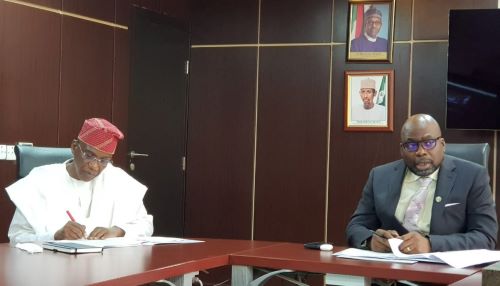
The Chairman of Independent Corrupt Practices and Other Related Offences Commission (ICPC), Professor Bolaji Owasanoye, SAN (right), and the Managing Director/Chief Executive Officer, Asset Management Corporation of Nigeria (AMCON), Mr Ahmed Lawan Kuru at a recent meeting of the Inter-Agency Committee on the Recovery of AMCON debt. The committee set up by the Federal Government is also chaired by Prof. Owasanoye.
Suzuki by CFAO Partners ETAP to Enable Seamless Insurance for Nigerian Drivers

CFAO Motors, the sole distributor of Suzuki cars in Nigeria, has partnered with ETAP, an InsurTech company that creates solutions and incentives to improve the automotive experience across Africa, to enable seamless access to insurance with every new car purchased from the Suzuki network in Nigeria.
As part of the partnership, drivers will now be able to buy insurance in 90 seconds, complete claims in 3 minutes or less and get rewarded for good driving and avoiding accidents, powered by ETAP’s game-changing app. Suzuki by CFAO has embedded insurance into the buying process of each car, removing the need for any additional effort to get insured.
Suzuki is one of the top automobile companies in the world by sales volume and one of the fastest-growing automobile companies in Africa. Since its re-introduction to Nigeria in 2019, the brand has been committed to introducing cutting-edge technology and market-leading innovation to the automotive value chain.
This new partnership with ETAP is part of a broader initiative by Suzuki by CFAO to embed more technology solutions into the driving experience, from sales to after-sales, and improve the automotive value proposition for its drivers.
Leveraging ETAP’s “Shared Value Insurance” model, drivers will be able to earn Safe Driving Points that can be exchanged for shopping vouchers for the most in-demand retail outlets, fuel, cinema and concert tickets, and other exciting experiences.
There is also a leaderboard where drivers are gamified to maintain positive driving behaviour. Drivers can see how well they are doing compared to other good drivers across the country, based on their Safe Driving Points, and get bragging rights for topping the leaderboard of the safest drivers on the road for the week, month or all time.
As part of ETAP’s wider offering, drivers will also have flexible coverage options, including daily, weekly, monthly, quarterly and annual plans depending on their needs. ETAP will also onboard Suzuki repair workshops to the ETAP’s list of partner repair centres for claims repairs and other after sales services for ETAP users.
Commenting on the partnership, Mrs. Aissatou Diouf, General Manager of Suzuki by CFAO Nigeria, said “we are excited to partner with ETAP to drive the adoption of much-needed insurance for Nigerian drivers. As we expand our footprint across Africa, we want to make sure that drivers do not only enjoy driving our cars but that they also enjoy everything that surrounds that experience. Beyond insurance, we look forward to playing an active role in improving the automotive experience for our drivers.”
Ibraheem Babalola, CEO and Founder of ETAP, said: “This partnership speaks to the shared commitment between ETAP and Suzuki to unlocking better experiences for African drivers. We believe that owning and maintaining a car should be an enjoyable and rewarding experience, and we will continue to explore partnership opportunities and develop solutions to make this a reality for more drivers across the continent.”
Emirates Flight Catering Opens World’s Largest Vertical Farm in Dubai

Emirates Flight Catering is opening the world’s largest farm in Dubai.
Bustanica has opened the doors to the largest hydroponic farm on the planet, backed by an investment of over US$40 million.
The facility is the first vertical farm for Emirates Crop One, the joint venture between Emirates Flight Catering (EKFC), one of the world’s largest catering operations serving more than 100 airlines, and Crop One, an industry leader in technology-driven indoor vertical farming.
Located near Al Maktoum International Airport at Dubai World Central, the 330,000sqft facility is geared to produce more than 1,000,000 kilograms of high-quality leafy greens annually, while requiring 95% less water than conventional agriculture. At any point in time, the facility grows in excess of 1m cultivars (plants), which will provide an output of 3,000 kgs per day.
Bustanica is driven by powerful technology – machine learning, artificial intelligence and advanced methods – and a highly specialised in-house team that includes agronomy experts, engineers, horticulturists and plant scientists.
A continuous production cycle ensures the produce is super fresh and clean, and grown without pesticides, herbicides, or chemicals.
Passengers on Emirates and other airlines can look forward to forking these delicious leafy greens, including lettuces, arugula, mixed salad greens, and spinach, onboard their flights from July. Bustanica is not just revolutionising salads in the sky – UAE consumers will soon be able to add these greens to their shopping carts at the nearest supermarkets. Bustanica also plans to expand into the production and sale of fruits and vegetables.
HH Sheikh Ahmed bin Saeed Al Maktoum, Chairman and Chief Executive, Emirates Airline and Group said: “Long-term food security and self-sufficiency are vital to the economic growth of any country, and the UAE is no exception. We’ve specific challenges in our region, given the limitations around arable land and climate. Bustanica ushers in a new era of innovation and investments, which are important steps for sustainable growth and align with our country’s well-defined food and water security strategies.
“Emirates Flight Catering constantly invests in the latest technologies to delight customers, optimise operations, and minimise our environmental footprint. Bustanica helps secure our supply chain, and ensures our customers can enjoy locally sourced, nutritious produce. By bringing production closer to consumption, we’re reducing the food journey from farm to fork. Congratulations to the Bustanica team for their remarkable achievements so far and for setting global standards and benchmarks in agronomy.”
Craig Ratajczyk, Chief Executive Officer, Crop One said: “After significant planning and construction, and navigating the unforeseen challenges of the pandemic, we’re thrilled to celebrate this tremendous milestone alongside our joint venture partner, Emirates Flight Catering.
“It’s our mission to cultivate a sustainable future to meet global demand for fresh, local food, and this first large format farm is the manifestation of that commitment. This new facility serves as a model for what’s possible around the globe.”
The farm’s closed-loop system is designed to circulate water through the plants to maximise water usage and efficiency. When the water vaporises, it is recovered and recycled into the system, saving 250m litres of water every year compared to traditional outdoor farming for the same output.
Bustanica will have zero impact on the world’s threatened soil resources, an incredibly reduced reliance on water and year-round harvests unhampered by weather conditions and pests. Consumers buying Bustanica’s greens from supermarkets can eat it straight from the bag – even washing can damage the leaves and introduce contaminants.
Crop One Holdings Inc. (Crop One), headquartered in Massachusetts, USA, is an established and experienced vertical farming leader with continuous commercial operation exceeding 6 years. Leveraging new technological and biological advancements, Crop One has built a scalable, global model to bring fresh, local produce, to previously ungrowable environment.
Emirates Flight Catering is one of the world’s largest catering operations. Offering airline, events and VIP catering as well as ancillary services including laundry, food production and airport lounge food & beverage, EKFC is a trusted partner for over 100 airline customers, hospitality groups and UAE government entities. Each day, the company’s 11,000 dedicated employees prepare an average of 200,000 meals and handle 210 tonnes of laundry.
SMEDAN Plans Microfinance Bank, 25 Institutions in TINEDEP Program in 2022

Mr. Olawale Fasanya
Director-General
SMEDAN
INTERACTIVE SESSION BETWEEN MR. OLAWALE FASANYA (DIRECTOR-GENERAL), SMALL AND MEDIUM ENTERPRISES DEVELOPMENT AGENCY OF NIGERIA (SMEDAN) AND THE GUILD OF CORPORATE ONLINE PUBLISHERS (GOCOP) AND BUSINESS EDITORS ON JULY 18TH, 2022 AT THE LAGOS AIRPORT HOTEL, IKEJA, LAGOS.
The last report of the SMEDAN/NBS National Survey of the Micro, Small and Medium Enterprises (MSMEs) put the total number of enterprises in the sub-sector at well over 39 million providing a total of over 61 million employments and about 49% of total Gross Domestic Product (GDP) in Nigeria.
As important as the sub-sector is to the national economy, it is still encumbered with several challenges which the COVID-19 pandemic and the ongoing Ukraine-Russia have further worsened.
Essentially, the challenges of MSMEs usually border on access to finance, market, equipment, information, technical and entrepreneurial skills and workspace.
These were some of the fundamental challenges that informed the establishment of the Small and Medium Enterprises Development Agency of Nigeria (SMEDAN) vide the SMIDA Act in 2003.
Having existed for close to two decades, the Agency has had four past Director-Generals to pilot the structured, sustainable and efficient development of the MSMEs in Nigeria.
It will interest ladies and gentlemen of the Press to note that my appointment as the Director-General by Mr. President on June 6th, 2022 is the first time that a staff of the Agency will be at the helms of affairs to drive the sustainable and inclusive development of the sub-sector.
The import of this is that expectations from Stakeholders are expectedly and justifiably high to help address the problems of MSMEs in Nigeria. Having worked very closely with all the past Director-Generals, I owe it a duty to significantly build on the foundations laid by my predecessors so as to cause a positive shift in the MSMEs development narratives in Nigeria.
It is in view of this that I have the rare privilege of engaging with you to enable me share my vision for this very important but highly endangered sector of Nigeria’s economy and also get feedbacks from you.
It may interest you to learn that I have already started engaging with the Staff of the Agency and other MSME-enabling Stakeholders. It is going to be continuous both locally and internationally. I will be paying courtesy visits to key Agencies of Government and non-government stakeholders.
I will be meeting some key Stakeholders here in Lagos tomorrow to enable me harvest inputs directly from real MSME players. I am however aware that they were consulted during the process of reviewing the National Policy but the MSME space is very dynamic requiring regular engagements and feedbacks.
Like you are aware, there are programs and projects in the Agency that were carefully designed to address some of the challenges of MSMEs but it has become necessary to start reviewing such based on the feedbacks that this ongoing engagements from the MSMEs will give us.
Part of what we hope to achieve during my tenure is to ensure that I have capable, competent, skilled and healthy workforce. In this regard, I have instructed the appropriate Department to put in place specific trainings to bridge identified gaps among staff.
I have also directed that every staff of the Agency must be afforded an opportunity to check their health status at least twice a year. This will help in early detection of ailments that could become life threatening and with negative impacts on staff productivity.
D-8 Centre for SMEs is a proposal we have submitted to the D8 Secretariat. D8 also referred to as Developing-8 is an international organisation specifically established for the development cooperation among the following countries: Bangladesh, Egypt, Indonesia, Iran, Malaysia, Nigeria, Pakistan and Turkey.
This is intended to help promote, encourage, advance and support the activities of MSMEs at the national level as well as within the D-8 region to further strengthen economic, trade and commercial integration and linkages.
Therefore, the establishment of the D-8 Centre for Small and Medium Enterprises (SMEs) will unleash substantial development impacts. Synergies between and among the Centre and relevant national agencies/authorities, D-8 Secretariat and other bodies will provide tremendous opportunities for MSMEs to connect and jointly explore opportunities on transforming scientific innovations at the national level into development solutions for the D-8 family.
In line with the foregoing, we are currently working with the Ministry of Foreign Affairs, Ministry of Industry, Trade and Investment, Nigeria Export Promotion Council and other stakeholders to host a D8 SME forum in Nigeria towards the end of August 2022.
Submission of request to the Commonwealth Secretariat to access the Commonwealth’s technical assistance on Women and Youth Support Programs with specific focus on:
- The training of women entrepreneurs on e-commerce known as “Digital Boot Camp” for women to know how to design their website and carry out trade across borders;
- Participation in the activities of the Intra-Commonwealth MSME Association with the mandate to create a platform for MSMEs across the Commonwealth to meet, interact and trade through some partnerships;
- Technical support for research activities by the Agency.
- Phased movement to a more strategically located Headquarters within the IDC, Idu.
The present location of the Agency’s headquarters has become very inadequate and not easily accessible because of the massive vehicular traffic.
The relocation, which is to begin towards the end of the year will create space for the Agency’s proposed Micro Finance Bank, MSME Innovation Hub, Training Resource Centre, SMEDAN FCT office, etc.
Establishment of the SMEDAN Micro Finance Bank is aimed at addressing the peculiar challenges of MSMEs with regards to access to funds.
The Agency had in the time past advocated for special Funding window for MSMEs but this has not been achieved even with the creation of some development banks. Consequently, we are partnering with some BMOs as investors for the seamless take-off of the Bank.
The Agency is present in all the 36 States of the Federation with Zonal Offices in different parts. Part of my focus is to ensure that both the Zonal and State Offices are adequately staffed in enabling environments.
Our Abuja Office will occupy part of the present location of the Agency’s headquarters by the time we conclude relocation to the new Head Office in Idu. Inview of funding constraints, we shall be working more closely with State Governments and development partners to achieve this.
Implementation of the National Business Skills Development Initiative (NBDSI) designed to enhance the operational capacities of MSMEs in Nigeria through intensive training and distribution of starter packs.
The Agency intend to empower a minimum of 90 participants in each State of the Federation. So, we should be able to produce a minimum of 3,330 new and existing entrepreneurs before the close of 2022.
One-Local Government One Product (OLOP) seeks to develop enterprises in rural communities in line with the available resources for wealth creation through tailored enterprise management development skills and access to incremental technology. The target for this year is to assist 214 Cooperatives in 214 LGAs across 29 States of the Federation.
Conditional Grant Scheme essentially seeks to formalise some of the Nano/Micro enterprises that have growth potentials. The package includes tailored capacity building, provision of grants and establishing relationships with the formal banking sector and other critical compliance institutions. The 2022 target is 10,000 beneficiaries that will be spread across 9 States of the Federation.
The implementation of the recommendations of the revised National Policy on MSMEs has commenced with the Honourable Minister of State, Federal Ministry of Industry, Trade and Investment inauguration of the Focal Persons Group.
This will be followed up with a capacity building jointly organised between SMEDAN and the GIZ. The Policy Implementation Coordination Mechanism drives the entire process for delivering the objectives of the National Policy.
The inauguration of the National Technical Implementation Committee, Monitoring and Evaluation Committee and the National Council on MSMEs are scheduled for the later part of the year. Till date, 21 States have inaugurated their State Councils to work closely with the National Secretariat on the implementation of the National Policy on MSMEs recommendations.
Let me use this opportunity to appeal to States that have not inaugurated or with moribund State Councils to establish or reactivate them.
The 1st ever Agency-wide Strategic Plan was initiated in 2021 to position the Agency to perform its primary role of defining the direction for MSMEs growth and development. It is also to help coordinate MSME programs across all relevant MDAs. The Plan which is woven around the revised National Policy on MSMEs and with clear Key Performance Indicators (KPI) is ready for implementation and we intend to implement it to the latter.
As a step towards improving the productivity of the Agency’s staff, we have initiated the process with the appropriate approving authorities for an improved condition of service
One of the major challenges that have stalled most start-ups and hindered the growth of existing enterprises is the poor access to functional workspace. Our target is to re-purpose the 23 Industrial Development Centres (IDCs) into affordable workspaces for MSMEs located within the precinct of the IDCs.
The SMEDAN Tertiary Institution Entrepreneurship Development Programme (TINEDEP) is a component of the Mind Shift Entrepreneurship Programme implemented in partnership with the Enterprise Development Centre (Pan-Atlantic University, Lekki, Lagos.
Our target for 2022 is to ensure that 25 tertiary institutions (Universities and Polytechnics) are randomly and competitively selected to participate in the TINEDEP program.
The objectives include but not limited to the followings:
- Assist students in exhibiting creativity and innovations;
- Help students to identify their potentials early enough and help them develop it;
- Stimulate students to value enduring wealth creating possibilities and become wealth creating warriors;
- Channel the energy of youths to positive and productive ends, etc.
There is no doubt that SMEDAN has done so much with regards to the provision of supports to MSMEs across the country. The National Survey on MSMEs however reported that awareness about the Agency is still relatively low. Regular engagements with the Media, CSOs and other stakeholders will help in publicising some of the achievements of the Agency.
State Level Annual Impact Assessment is an initiative of the Agency that seeks to measure the post-intervention effects on beneficiaries. The report considers the changes in employment, access to new markets, use of improved processing methods, access to funds and several other variables that indicate growth in enterprises.
Participation of MSMEs in local and international fairs allows participating MSMEs to have access to both local and international markets and new technologies. The Agency has facilitated the participation of several MSMEs in different Fairs either within or outside the shores of this country.
The MSMEs Competitiveness Research is to understand the challenges that have over time limited Nigerian MSMEs from taking advantages of the global markets and other initiatives such as the AGOA and AfCTA initiatives. This is expected to address such challenges in a more coordinated and sustainable manner with the hope of increasing their contributions to the national GDP.
The Agency is also working on the possibility of creating a pool of Business Development Service volunteers that will regularly visit MSMEs to provide critical support and advisory services. To complement this, the Agency is to deploy the technically trained staff of the Agency to deliver intensive Business Development Services to MSMEs.
As part of the efforts of the Agency to attend to the challenges of workspace that most MSMEs usually encounter, the Agency is re-purposing the 23 IDCs to provide functional workspace and business incubation to MSMEs either on a temporary or permanent basis.
In the Agency’s attempt to ensure inclusiveness in our programs we have initiated a special capacity building program for people with Special abilities. This is with a view of providing them with an opportunity for economic self-reliance and reduction of the stigma.
The Agric Development Enterprise program seeks to train farmers on necessary technical skills required to develop the value chain of specific agricultural products through the National Agro-Entrepreneurship Training Scheme. It also seeks to, through the Product and Marketing Enhancement Scheme develop products to meet minimum export requirements.
The Matching Fund is an initiative that seeks to bridge the funding gaps experienced by MSMEs through partnership with interested financial institutions. MSMEs are able to access funds with a single digit interest rate. Efforts are also being made to leverage on international grants and funding for MSMEs.
The Garment Cluster initiative of the Agency is targeted at providing support to those in the garment industry through the delivery of tailored capacity building to garment makers with a view to go into mass production for both the local, national, regional and international markets.
Towards bridging the huge information gaps that exist within the MSME community, SMEDAN has built the capacities of Head Office, Zonal and State officers to offer Business Clinic in all the States. This is intended to provide diagnostic solution to business challenges in a structured manner.
As part of the new approach, deliberate efforts will be made to ensure regular inter-Agency cooperation and networking with Stakeholders to leverage on available opportunities and close the gaps that exist among key players within the MSME space.
There is no doubt that the media will help in achieving the mandate of the Agency hence today’s interactive session which is intended to be on a regular basis.
I want to thank you all for your past supports and I sincerely will crave for more support from you all to enable the Agency succeed in achieving her mandate.
NCC, Zoho, Africa Data Centre, IHS for Pan African Digital Summit

The Nigerian Communications Commission (NCC), the regulator of Nigeria’s burgeoning
telecommunications sector; Zoho, leading multinational technology and web-based business
tools solutions provider and IHS, one of the largest independent owners, operators and
developers of shared telecommunications infrastructure in the world are among organisations
that have confirmed participation in Pan African Digital Initiatives Summit and Exhibition
(PADISE) 2022.
The August event with the theme: “Leveraging Right Policies and Technologies in Taming Insecurity & Cyber-Threats” is scheduled for Thursday and Friday, July 21 and 22, 2022 at Oriental Hotel, Victoria Island, Lagos, Nigeria.
Mr. Don Pedro Aganbi, Managing Partner at TechTV, organiser of the project, who revealed this
while speaking to reporters in Lagos applauded firms that have indicated an interest in the
summit and exhibition noting that the goal is to continue to engender conversations that will
enable Nigeria to make the most of growing digital solutions in the country.
He stated that PADISE 2022 which seeks to explore the potential and ways to tackle insecurity
and terrorism whether digital or territorial using existing and emerging technologies is excited to
play host to the biggest names in Africa’s digital space.
On other firms that have confirmed, he mentioned Africa Data Centre, Africa’s largest network of interconnected, carrier- and cloud-neutral data centre facilities and Alpha Technologies, a leading telecommunications services solutions provider helping businesses of any size to brand for maximum profit, communicate intelligently and stand out.
According to Aganbi, other confirmed participants include iTel, renowned mobile phone brand, Ethnos IT solutions, leading IT security and Cyber security management company, and Cedarview Communication Limited, among others.
He explained that several state governments have shown interest in participating with Zamfara,
Yobe, and Kano states in the frontline. The organisers are equally in talks with several other
organisations who are looking at participating to showcase their solutions, share ideas and
engage with others. He called on all security-conscious organisations to lend their voices to the
need to collaborate to make the country safer both online and offline. He hinted that different
branches of Nigeria’s security architecture will be amply represented with the Police, Military
along with private security professionals set to grace the occasion.
Aganbi revealed that the PADISE was established as a platform where the most influential
players in the African information communications technology (ICT) markets can come together
to exchange ideas and positively influence and promote the ICT agenda for optimal good.
According to him, “The theme provides an opportunity to explore how emerging technologies,
such as 5G, AI, IoT and Blockchain, can help the country push back its current security
challenges including cyber-threats and cyber terrorism. It will equally focus on digital protection
for Cloud Hosting, Critical Infrastructure protection, and enabling digital and financial inclusion
in the quest to build a more inclusive and sustainable society.”
This conference provides a platform to bring the issues and working solutions to the fore. It
would bring together key stakeholders in the technology and security sectors to help broaden
engagement.
The seminal conference will run simultaneously with the exhibition.
The two-day Pan African Digital Initiative Summit Expo (PADISE), will close with the 18th annual Titans of Tech Awards and Heroes Night on Friday, July 22, 2022 from 5 pm.
The Titans of Tech Awards, popularly called Nigeria’s Tech Industry Grammy, is held In Nigeria
and given extensive local and international media coverage.
BEDC Alleges Illegal Entry into Premises by Henry Ajagbawa, Others

The BEDC Electricity Plc (BEDC) has alleged that one Henry Ajagbawa and K.C. Akuma, in company of three other persons (Adeola Ijose, Charles Onwera and Yomi Adeyemi) PURPORTEDLY and RECENTLY appointed to the Board of BEDC Electricity Plc (BEDC) recently proceeded to illegally and forcefully break into the premises of the company in Benin, the Edo State capital, DESPITE THE SUBSISTING COURT ORDER GRANTED IN FAVOUR OF VIGEO POWER, AND RESTRAINING THE NAMED INDIVIDUALS AND ENTITIES FROM ANY UNLAWFUL OCCUPATION.
Henry Ajagbawa and others who had refused to ACCEPT SERVICE OF THE court ORDER served by ON THEM by court bailiffs on the premises of BEDC, in the presence of the press, also forcefully broke into the office of the Managing Director and the Board room of the company bragging of government protection.
Journalists who arrived at the scene were also refused entry into the 4th floor where all was happening, even after the journalists had identified themselves.
It would be recalled that the Nigerian Electricity Regulatory Commission (NERC) and the Bureau of Public Enterprises (BPE) had recently announced A PUTATIVE restructuring of the Boards of five DisCos which the Discos were alleged to have been done without inviting any of them to a meeting prior to the announcement which was widely circulated in the media.
The duo had explained that the announcement followed Fidelity Bank’s activation of the call on the collateralised shares of Kano Electricity Distribution Company, Kaduna Electricity Distribution Company and BEDC Electricity Plc (the DisCos) in a bid to take over the respective Boards of the DisCos over the alleged inability to repay loans obtained to acquire majority stakes in the DisCos in furtherance of the 2013 privatisation exercise.
Consequently, the management of BEDC had responded by issuing a press statement explaining that there was no contractual, statutory or regulatory basis for the takeover and appointments.
The company stated that, “For the avoidance of doubt, the shares of BEDC have not been given as security to Fidelity Bank or to any other party.”
According to the management of BEDC, it was “Vigeo Holdings Limited (VHL – a non-shareholder of BEDC)” that “obtained credit facilities from Stanbic IBTC Bank Limited, Fidelity Bank Plc, and Keystone Bank Plc (the VHL Lenders).” It noted further that the said credit facilities (and any enforcement action in relation thereto) have in the meantime become subject of litigation in a Court action instituted by VHL and other plaintiffs (the VHL Action) with Suit No: FHC/L/CS/239/22 – Vigeo Holdings Limited and 4 Ors v. Stanbic IBTC Bank Limited, and therefore, sub-judiced.”
Worried by the development, Vigeo Power Limited, the majority shareholder of BEDC had filed a suit and obtained injunctive orders at the Federal High Court in Abuja to restrain Fidelity Bank Plc, HENRY AJAGBAWA,
and THE other co-defendants from taking over BEDC pending the hearing and determination of the motion on notice dated July 8, 2022.
The other defendants are Nigerian Electricity Regulatory Commission (NERC), Corporate Affairs Commission (CAC), K.C. Akuma, Adeola Ijose, Charles Onwera, Henry Ajagbawa and Yomi Adeyemi.
Igbiti Targets Digital Transformation, Insurance Awareness as CIIN President
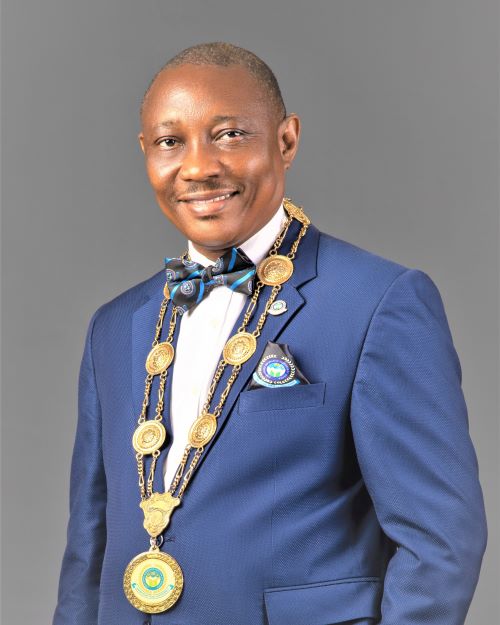
ACCEPTANCE SPEECH OF MR. EDWIN IGBITI ON THE OCCASION OF HIS INVESTITURE AS THE 51ST PRESIDENT OF THE CHARTERED INSURANCE INSTITUTE OF NIGERIA ON JULY 15TH 2022 HELD AT THE LAGOS CONTINENTAL HOTEL, VICTORIA ISLAND, LAGOS
PROTOCOLS
Today is indeed epochal and special for me. I give all glory to God Almighty for the gift of life and His grace to witness this day. God’s blessings and goodness have been abundant in my life and I cannot thank Him enough for His glory upon my life. To Him alone be all the glory, honour and adoration for ever and ever, Amen.
I am humbled and honoured to be invested as the 51st President of the Chartered Insurance Institute of Nigeria by the Governing Council. This is a great honour and expression of trust by the members of the Governing Council in particular and all the members of the Institute as a whole and I do not take this trust lightly. As I stand before you today, I want to assure you that I will serve the Institute to the best of my abilities and work to sustain the legacies of my predecessors and the aspirations of the founding Fathers of the Institute.
Distinguished members of the Governing Council, our esteemed Elders and Guests, your presence at this occasion is most appreciated and I am full of gratitude for this support and expression of love and trust.
I particularly wish to salute my predecessor Sir (Dr.) Muftau O. Oyegunle and other Past Presidents for the exemplary roles they played in the Institute, while I look forward to sharing in their experiences as I proceed on this audacious journey.
My heart is indeed full of gratitude because my sojourn through life has immensely been blessed by God who gave me men and women that played significant roles in bringing me to where I am today. I am forever indebted to my parents who laid the foundation for my success through their trainings, sacrifices, love and support for my dreams to be actualized. I cherish and value the foundation of hardwork, diligence and humility you inculcated in me.
My appreciation goes to Phoenix Insurance Company where I began my professional journey into the Insurance Industry as an Underwriting Trainee. However, my greatest gratitude goes to the Chairman of this Occasion – Chief (Dr.) Oladele Fajemirokun, who gave me the opportunity to work and serve in different capacities in AIICO Insurance Plc for several years, where I garnered valuable and outstanding managerial and strategic leadership skills.
Sir, I pray that God will continue to bless all that is yours and reward you abundantly (Amen). I equally acknowledge Niger Insurance Plc for the honour to serve. My sincere appreciation goes to everyone, who in one way or the other contributed to my successful career in the insurance industry. I say thank you all.
I understand the responsibilities this office confers on me especially, in an increasingly dynamic world, characterized by uncertainty and volatility as evidenced with the advent of the Covid-19 pandemic.
Consequently, we all must adapt and flow with the new order occasioned by the disruptions to our business and personal life leading to the fast digilisation that made the world global village where information and innovation travel at a rapid speed.
We, in the Insurance Industry and Institute, must continue to be at the frontiers of these technological innovations and trends in order to thrive and drive impact our endeavours and ventures. It is in this light that the theme and focus of my tenure will be BUILDING A SUSTAINABLE LEGACY.
The choice of the theme was borne out of the need for continuity to sustain and build on the works of Past Presidents of the Institute. This will guarantee that despite current global uncertainties, the Institute will continue to meet the needs and aspirations of its members. Against this backdrop, my Presidency is going to unlock the potential of this approach by focusing on a (3) three-point agenda as briefly outlined below:
- Digital Reinforcement of Institute’s Operations.
- Insurance Awareness for all – Grassroot, Youths and Insuring Public.
- Infrastructural Development.
- Digital Reinforcement of the Institute:
- Completion of the E-library project.
- Commencement of E-Examinations.
- Active Presence and Use of ALL Available Social Media Platforms.
- Insurance Awareness for all– Grassroot, Youths and Insuring Public:
- Positive Upscaling of the Quiz for Secondary Schools to National Limelight.
- Distribution of Insurance Textbooks to Secondary Schools and effective coordination of the train-the-trainer program for insurance secondary school teachers.
- Deepening and Consolidating Youth Empowerment and Mentorship Initiatives.
- Infrastructural Development:
- Renovating the Lagos Street Building to acceptable standards.
- Getting Necessary Approvals and Clearance from the Lagos State Government to Resume the Building of the Victoria Island Project.
- Significantly Increasing the building fund as would be agreed with the Building Committee.
Indeed, efforts have been made by my predecessors to revamp the digital operations of the Institute. However, we need to continuously upgrade and innovate our processes to deliver excellent customer experiences and members’ satisfaction.
My projection is that my tenure as President of the CIIN will facilitate the transformation of the CIIN Secretariat with the state-of-the-art facilities that would stimulate digital operations and processes, enhance excellent work culture which results in quality customer experiences in all our deliverables. Smart Technologies and digital solutions would be deployed to achieve this together with a viable business model.
Distinguished Ladies and Gentlemen, the recent developments in the world in general and in Nigeria in particular demands strong partnership to move the profession and the industry forward and this can only be successfully executed collectively. The Institute has many programmes in place aimed at creating insurance awreness and training members to be world class insurance professionals, but I cannot achieve the success on my own. Hence, I want to seize this opportunity to appeal to you for your support to help drive the Institute to lofty heights.
Ladies and Gentlemen, before I round off my speech, I would like to draw our attention to the socio-economic situation in our dear country, Nigeria. The need to curb the menace of insecurity and other crimes require that we collaborate with all tiers of government with the aim of re-emphasising the essence of insurance as the infrastructural pillar for the growth and development of country. Distinguished Professional Colleagues, I implore you to collaborate with me in this new dispensation as the task ahead calls for teamwork and effective collaboration.
I cannot end my speech without expressing my sincere gratitude to the Commissioner for Insurance, Mr. O. S. Thomas, all Past Presidents and other members of the Governing Council and my friends for their unwavering support.
My profuse thanks go to all the sponsors of my investiture ceremony. I am humbled by the magnitude of love and well-wishes from all of you, both corporate and individual. Your financial support is unprecedented, and I pray that God in His infinite mercies will shower you with unequalled blessings.
I wish to thank the Investiture Committee Chairman, Lady Isioma Chukwuma, Sub-Committees Chairmen, Members of the Sub-Committees, the Director-General, Mrs. Abimbola Tiamiyu, and everyone that contributed to the success of this ceremony.
My deepest appreciation goes to my family, my beautiful and ever supportive wife and children. You are part of the reasons why I am who I am today. Thank you for your perseverance, understanding and encouragement all through the years.
I thank the Gentlemen of the press who are well represented here for the good publicity given to today’s event as well as all industry programmes.
Finally, I thank you all for your attention and taking time off your very busy schedules to honour me and our great Institute at this investiture ceremony. Do enjoy the rest of the evening with us and may God bless you all.
- EDWIN IGBITI, FIIN
PRESIDENT/CHAIRMAN OF COUNCIL
CHARTERED INSURANCE INSTITUTE OF NIGERIA
Emirates, Air Canada Form First-Ever Strategic Partnership

Emirates and Air Canada today announced the signing of a strategic partnership agreement that will create more options for customers when travelling on the carriers’ networks while also enhancing the customer experience throughout the journey.
Emirates and Air Canada intend to establish a codeshare relationship later in 2022 that will offer enhanced consumer travel choices for Air Canada customers to travel to the United Arab Emirates and to destinations beyond Dubai. Emirates customers will also enjoy an enhanced travel experience when travelling to Toronto or to key destinations across the Air Canada network.
Customers will have the ability to book connecting travel between both airlines’ networks with the ease of a single ticket, seamless connectivity at the carriers’ respective global hubs and baggage transfers to their final destinations.
Sir Tim Clark, President Emirates Airline said: “This is a significant partnership that will enable our customers access to even more destinations in Canada and the Americas, via our Toronto and US gateways. It also opens up many new route combinations for travelers across Emirates’ and Air Canada’s extensive networks in the Americas, the Middle East, Africa and Asia.
“We are pleased to partner with Air Canada, one of North America’s most established airlines and Canada’s flag carrier and we look forward to jointly progressing on various areas to provide even better customer flight choices and experiences.”
Michael Rousseau, the President and CEO of Air Canada stated:
“As we continue pursuing our strategy of expanding our global reach in response to growing opportunities in VFR markets (Visit Friends and Relatives) that serve Canada’s large multicultural communities, we are very pleased to form a strategic partnership with Emirates, a highly respected flag carrier of the United Arab Emirates with a hub in the vibrant city of Dubai.
“This strategic agreement will create network synergies, and Air Canada customers will have additional, convenient options when travelling between Canada and the United Arab Emirates as well as destinations beyond Dubai. We look forward to introducing Air Canada codeshare service on key Emirates flights, as well as adding the EK code on select Air Canada flights, and welcoming Emirates customers on our services later this year.”
To further enhance the customer experience, the carriers will also establish reciprocal frequent flyer benefits and reciprocal lounge access for qualifying customers. Further details of the partnership and specific codeshare routes will be announced when finalized and will be subject to regulatory approvals and final documentation.
Emirates is the award-winning global airline that serves over 130 cities on six continents through its efficient hub in Dubai. It operates the world’s largest fleet of modern wide-body Airbus A380 and Boeing 777 aircraft that are fitted out with the latest comforts in the sky. Emirates has won numerous accolades for excellence across its operations,
Air Canada is Canada’s largest airline, the country’s flag carrier and a founding member of Star Alliance, the world’s most comprehensive air transportation network celebrating its 25th anniversary in 2022. Air Canada provides scheduled passenger service directly to 51 airports in Canada, 51 in the United States and 86 internationally.
It is the only international network carrier in North America to receive a Four-Star ranking from Skytrax, which in 2021 gave Air Canada awards for the Best Airline Staff in North America, Best Airline Staff in Canada, Best Business Class Lounge in North America, and an excellence award for managing COVID-19.
Through its leading travel loyalty Aeroplan program, Air Canada offers the ability to earn or redeem points on the world’s largest airline partner network of 45 airlines, plus through an extensive range of merchandise, hotel and car rental rewards.
Its freight division, Air Canada Cargo, provides air freight lift and connectivity to hundreds of destinations across six continents using Air Canada’s passenger flights and cargo-only flights with its fleet of Boeing 767-300 freighters.
Air Canada has also committed to a net zero emissions goal from all global operations by 2050.
Allianz Plans N12m Digital Upskilling Fund to Drive Youth Employment

L-R: Samuel Ohonusi, Chief Underwriting Officer, Allianz Nigeria; Adeolu Adewumi-Zer, Chief Executive Officer; Kanma Ekpe, Head, Reputation & Transformation and Patience Ugboajah, Chief Customer Officer at the event.
Allianz has restated its commitment to implementation of the Sustainability
Development Goals (SDG 8) across the globe even as it has set aside 28,000 Euros (N11.820 million) under its Social Impact Fund to support youth employability in Nigeria.
This was disclosed by the Managing Director/Chief Executive Officer of Allianz Nigeria, Adeolu Adewumi-Zer, at the 2022 Annual General Meeting (AGM) of the National Association of Insurance and Pension Correspondent (NAIPCO) in Lagos.
She said over the next three years, Allianz will donate 28,000 Euros (N11.820 million) in Nigeria to provide differently-abled persons with digital skills that will enhance their ability to earn a living.
This donation, she said, will be made from the Allianz Social impact Fund which is dedicated to the implementation of Sustainability.
SDG 8 recognises the importance of sustained economic growth and high levels of economic productivity for the creation of well-paid quality jobs, as well as resource efficiency in consumption and production.
She said in Nigeria the SOS Children’s Village will benefit from the fund aimed at strengthening holistic youth development with the view of building an interactive inclusive society.
She said already SOS Children’s Village and Allianz are collaborating to promote youth employability and this has translated to Allianz making an additional donation to the SOS Children’s Village in Nigeria this year.
As part of social impact project, Allianz Nigeria employees volunteer annually to join World Clean-up Day.
In 2021, over 100 employees across Nigeria picked up waste and garbage on a stretch of seven kilometres each in Lagos, Abuja, Port Harcourt, Ibadan and Benin cities.
Adewumi said Allianz is a forward-looking company which cares for the future of its employees through its employee-focussed initiatives aimed at fostering team spirit, bonding and creativity through Cultural Day engagement activities.
“Allianz primary objective is to deliver innovative insurance products that work for our customer,” she said.
CHI Settles Accident Claims of Second Insurance Journalist

Consolidated Hallmark Insurance (CHI) Plc, for the second time this year, has paid accident claims of another member of the National Association of Insurance and Pension Correspondents (NAIPCO), who had an incident recently.
It will be recalled that the company had promptly paid accident claims of a member who had an accident in February this year.
The recent payment however was for a member who had an accident when the vehicle she was commuting in was hit by an articulated vehicle and she fell off the vehicle while still in motion. She sustained injuries and was rushed to the hospital.
However, covered under the free group personal accident cover issued to NAIPCO, CHI stepped in to pay the hospital bills of the member while the victim has been discharged from the hospital and she is now in good health.
It will be recalled that there is a running Group Personal Accident Insurance cover worth N24 million Sum Assured given for free to insurance journalists in the country by CHI.
This gesture, according to the company, is part of its Corporate Social Responsibility (CSR) project, to ensure that journalists who are exposed to danger and hazard in the discharge of their duties are adequately protected.
Speaking on the development, Mr. Eddie Efekoha, the Group Managing Director/CEO of CHI, said the gesture is to show the kind of values and respect his insurance firm has for journalism.
According to him, journalism is a risky profession, hence, the need to adequately provide insurance for those covering the insurance industry.
On his part, Mr. Chuks Okonta, Chairman, National Association of Insurance and Pension Correspondents (NAIPCO), thanked the insurance firm on the claims paid, stating that, this is a testimony that insurance works and that insurers are actually paying genuine claims.
The Group Personal Accident Insurance covers death, permanent disability and medical expenses.
The policy, now in its 10th year, has been running since 2012, and is renewed annually by the company. The cover was renewed on the 1st of October, 2021 and is due to expire on 30th of September, 2022.
The policy covers all members of the National Association of Insurance and Pension Correspondents (NAIPCO) across the country while the company has promised to continue to renew the coverage for the journalists every year.
Sovereign Trust Insurance Organises Career Talk for Igbobi College Students
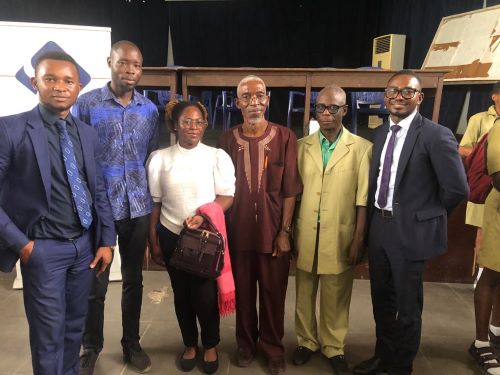
L-R: Justice Omogua, (STI PLC) Babatunde Ajala, Elizabeth Bodede, (STI PLC) Leye Abolade, Folusho Opeodu, (Facilitator) and Jeffrey Onaigben, (STI PLC) at the 2nd edition of the 2022 Quarterly Insurance Talk with Students of Igbobi College, Lagos, organized by Sovereign Trust Insurance Plc as part of the Underwriting Firm’s Corporate Social Responsibility initiative in creating insurance awareness and developing talents for the Insurance Industry in the future.
In line with its commitment to ensure that awareness on insurance as a business and practice is taken to every nook and corner of the country, Sovereign Trust Insurance Plc recently organised the 2nd quarter of its annual Insurance Talk and Career Counselling in 2022 with the Students of Igbobi College in Lagos.
87% of Climate, AI Leaders Believe AI is Critical in the Fight Against Climate Change
A new Report from AI for the Planet Alliance, BCG, and BCG GAMMA Reveals a Strong Appetite for Using AI to Tackle Climate Change, but Organizations Face Obstacles to Achieving Impact at Scale
Climate change will have significant impacts on environmental, social, political, and economic systems around the world. Climate change mitigation, along with adaptation and resilience, is therefore crucial. Efforts to achieve net-zero emissions by 2050 will be essential, as will efforts to prepare for the consequences of climate change and to minimize the resulting harm.
Applying advanced analytics and artificial intelligence (AI) to climate challenges provides a vital way to make meaningful change at this critical moment.
According to a new report from the AI for the Planet Alliance, produced in collaboration with Boston Consulting Group (BCG) and BCG GAMMA, 87% of public- and private-sector leaders who oversee climate and AI topics believe that AI is a valuable asset in the fight against climate change.
The report, titled How AI Can Be a Powerful Tool in the Fight Against Climate Change, is being released today.
Based on survey results from over 1,000 executives with decision-making authority on AI or climate-change initiatives, the report finds that roughly 40% of organisations can envision using AI for their own climate efforts (see the exhibit).
However, even among these experts, there is widespread agreement that significant barriers to broad adoption remain in place: 78% of respondents cite insufficient AI expertise as an obstacle to using AI in their climate change efforts, 77% cite limited availability of AI solutions as a roadblock, and 67% point to a lack of confidence in AI-related data and analysis.
“AI’s unique capacity to gather, complete, and interpret large, complex data sets means it can help stakeholders take a more informed and data-driven approach to combating carbon emissions and addressing climate risks,” said Hamid Maher, managing director and partner at BCG and BCG GAMMA, and a coauthor of the report.
“However, most existing AI-related climate solutions are scattered, tend to be difficult to access, and lack the resources to scale. These shortcomings need to change.”
Uses of AI in Combating Climate Change
Global leaders can use AI to achieve their goals in multiple ways:
Mitigation. One of the most critical uses of AI is in the measurement, reduction, and removal of emissions and greenhouse gas (GHG) effects. More than 60% of public- and private-sector leaders see the greatest business value for their organizations in the reduction and measurement of emissions. According to BCG, use of AI can drive reductions of 5% to 10% GHG emissions, or 2.6 to 5.3 gigatons of CO2e if applied globally.
Adaptation and Resilience. Adapting to climate change is a critical undertaking for policy makers and the public, as it boosts resilience to the effects of both long-term climate trends and extreme weather events. AI is well suited to help project climate-related hazards, whether by improving long-term projections of localized events such as sea-level rise or by upgrading early warning systems for extreme phenomena such as hurricanes or drought.
- AI can be used to support research and education efforts about climate change, helping stakeholders understand the risks and implications involved and encouraging them to share what they learn. These efforts support and magnify ongoing work toward mitigation and adaptation and resilience.
Need for Meaningful Support
A multitude of critical uses for AI exist in the climate change arena, but any successful AI solution must be user-friendly and readily accessible. It must offer tangible benefits to the user and provide clear recommendations that are easy to act on. AI solutions therefore need much more meaningful support, including access to capital investment, decision makers, and trained practitioners.
“AI has strong promise to help solve the climate crisis, but AI alone is not enough. It depends on the will of decision makers to act and make necessary changes—supported in part by AI and other emerging technologies,” said Damien Gromier, founder of AI for the Planet and a coauthor of the report.
AI for the Planet has invited all interested parties to participate in its call for solutions, with proposals in any stage of maturity (if ready for a first pilot, at a minimum) and from any sector, whether private, public, academic, or nonprofit.
Support for each solution chosen will be tailored to its needs and may range from customized commercial or technical support to investor relationships and network development.
SENATE: AMCON Needs More Support on N5tr Debt Recovery Drive
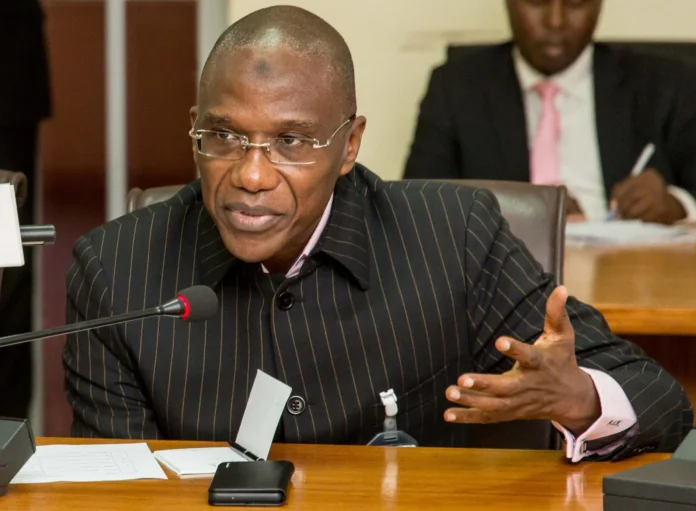
Ahmed Kuru
Managing Director/CEO
AMCON
The Chairman Senate Committee on Banking, Insurance and other Financial Institutions, Senator Uba Sani, has reiterated the willingness of the National Assembly to continually support the debt recovery efforts of Asset Management Corporation of Nigeria (AMCON).
He said the support has become critical because AMCON remains a strategic national institution that plays important, and pivotal role in helping to stabilise the economy.
AMCON is saddled with the tough assignment of recovering nearly N5 trillion owed the country by debtors who for years now hide under all manners of technicalities to tie AMCON up in different Courts to stall repayment. Sani who was represented by Senator Olubunmi Adetumbi however commended the management of AMCON for remaining resolute.
While appealing to sister agencies of the federal government and all stakeholders to support the recovery drive of AMCON, Sani also appreciated the contribution of the Inter-Agency Committee set up by the Federal Government sometime in 2019 to ensure that debtors are held accountable. The work of the committee has brought many obligors to the negotiation table. The Inter-agency Committee is chaired by Prof. Bolaji Owasanoye (SAN) who is also the Chairman of Independent Corrupt Practices and Other Related Offences Commission (ICPC).
The committee is made up of heads and representatives of agencies including the Independent Corrupt Practices and Other Related Offences Commission (ICPC), the Economic and Financial Crimes Commission (EFCC), and the Nigerian Financial Intelligence Unit (NFIU).
Others are heads of the Central Bank of Nigeria (CBN), the Nigeria Deposit Insurance Corporation (NDIC), the Federal Ministry of Justice and AMCON. They were expected to review the status of the huge debts owed to AMCON, deliberate on practical, legal and other strategies for the recovery of the outstanding debts.
Recall that it was also in a bid to tighten the noose on the obligors that in November 2021, President Muhammadu Buhari signed into law the Asset Management Corporation of Nigeria (Amendment) Act, amending the AMCON Act No.4, 2010.
The Act provides for the extension of the tenor of the Resolution Cost Fund (RCF) and grants access to the Special Tribunal established by the Banks and other Financial Institutions Act 2020, which confers on AMCON the power to among others… “to take possession, manage, foreclose or sell, transfer, assign or otherwise deal with the asset or property used as security for Eligible Bank Assets (EBAs), and related matters,’’ just to mention a few.
Sani spoke at one-day retreat, which held recently at the Zuma Rock Resort in Niger State. The retreat was themed: “Asset Recovery as a Tool for Enhanced Growth and Stability of the Banking Sector Sustaining the Impact and Bridging the Challenges of AMCON.”
MTN Partners ETAP to Reward Nigerians for Good Driving

Africa’s leading technology company, has teamed up with ETAP, a mobility technology company that creates solutions and incentives to improve the automotive experience across Africa, to reward Nigerian drivers for maintaining good driving behaviour.
Leveraging ETAP’s game-changing app which uses advanced telematics to monitor driving behaviour such as speed, acceleration, braking, cornering and focus, MTN customers across Nigeria will be able to earn Safe Driving Points that can be converted into vouchers for fuel, shopping vouchers for the most in-demand retail outlets, cinema and concert tickets, as well as vouchers for other exciting experiences. ETAP will also sponsor data for MTN customers to access the app so that it would not consume data from their existing allowance and it would continue to work if they run out of data.
MTN is Nigeria’s largest mobile network operator, connecting over 68 million people across the country with each other and to the world. It is committed to using its vast coverage to enable improved experiences across the country.
As part of this partnership with ETAP, MTN customers will also get a free 35-point car inspection at AutoFast locations in Total filling stations, making it easier to keep their vehicles in the best condition. ETAP also has a leaderboard where drivers are gamified to maintain good driving behaviour.
Drivers can monitor the leaderboard in real time to get actionable insights on their driving behaviour, access tips to improve their driving behaviour and get rewarded for driving better.
In addition, drivers can also challenge each other on who the better driver is based on their leaderboard ranking.
ETAP’s business model is based on the concept of Shared Value Insurance, which focuses on incentivising people with rewards to reduce their insurance risk by adopting good behaviour. Along with the rewards, drivers can buy insurance in 90 seconds and complete claims in three minutes or less, with flexible coverage options including daily, weekly, monthly, quarterly and annual plans depending on their needs.
ETAP also uses machine learning to build intelligent risk profiles that determine appropriate premiums for each driver, allowing them to achieve lower premiums by driving safely.
Adia Sowho, Chief Marketing Officer of MTN Nigeria said, “We want to connect our customers to exciting products and services that enable the best experiences, and this partnership with ETAP aligns perfectly with this mission. We are excited to be working with this innovative company to inspire behaviour change on Nigerian roads and ultimately improve the day-to-day experience of millions of Nigerians.”
Ibraheem Babalola, CEO and founder of ETAP, said “beyond driving much-needed insurance penetration in Nigeria, we are committed to inspiring behaviour change on our roads. We strongly believe that our shared value insurance model combined with MTN’s vast reach has the potential to catalyse improved driving behaviour on Nigerian roads. We are thrilled to have partnered with arguably the biggest company in Nigeria and we are looking forward to working together to drive real change across the country.”
Stanbic IBTC Bank Nigeria PMI Dips to 17-month Low in June
The Nigerian private sector remained in growth territory at the end of the second quarter, although recent challenges around cash shortages led to weaker new order growth and a renewed decline in output.
As a result, business conditions improved at the weakest rate for almost a-year-and-a-half. Companies responded by raising their staffing levels, purchases and stocks of inputs at softer rates in June.
On the price front, steep cost pressures persisted with overall input price inflation quickening to a four-month high.
The headline figure derived from the survey is the Purchasing Managers’ Index (PMI). Readings above 50.0 signal an improvement in business conditions on the previous month, while readings below 50.0 show a deterioration.
At 50.9 in June, down from 53.9 in May, the headline PMI signalled a twenty-fourth successive monthly improvement in business conditions in Nigeria’s private sector. That said, the latest result was indicative of the weakest improvement for 17 months.
Central to the moderation was a renewed contraction in output which fell for the first time in 19 months. Although marginal overall, the latest fall contrasted with sharp expansions in recent months. Firms overwhelmingly blamed weaker inflows of new work, but there were also mentions of cash shortages.
Meanwhile, new orders rose for the twenty-fourth month in a row. The rate of growth was marginal and eased to the softest in this sequence, however, as elevated costs deterred some clients from placing orders.
Turning to prices, overall input price inflation quickened from May, and was the fourth- steepest in the series history. Firms reported higher purchase costs (particularly for fuel and raw materials) and rising staff costs.
Subsequently, and in line with weaker inflows of new work, purchasing activity rose at the weakest pace since January 2021. Stocks of purchases continued to rise sharply however, and at a rate that was in line with the long-run series average.
Staffing levels rose for the seventeenth month in succession during June amid efforts to boost output. That said, the rate of growth was modest with some firms engaging in restructuring efforts.
Modest expansions in new business, paired with another uptick in headcounts led to a twenty-fifth successive reduction in backlogs. Shortages of some key parts resulted in the weakest decline in backlogs for 17 months, however.
Finally, sentiment regarding output in the year ahead remained firmly in positive territory in June. Although, there were some signs that soaring inflation weighed slightly on hopes with the degree of optimism moderating from May.