Friday, January 23, 2026
34.5 C
Lagos
Home Blog Page 156

Sovereign Trust Insurance: N7.3bn Premium, N946m Claims, N609m Profit in Q1 2022

0

No doubt, the year 2022 has commenced on a remarkable note for Sovereign Trust Insurance Plc going by the first quarter unaudited account recently released by the underwriting company.

For Sovereign Trust Insurance Plc, things are actually looking up considering the Company’s first quarter performance in 2022 when compared to the same corresponding period in 2021.

The Total Gross Premium written in the first quarter of 2022 amounted to N7.35b while in 2021, the total Gross Premium written was put at N5.37b in the same period under review, giving a 37% growth rate over the performance of 2021.

Profit Before Tax grew by 19% in the first quarter of 2022 to the sum of N609m as against the sum of N510m in the same corresponding period of 2021, while Profit After Tax rose from N392m in the first quarter of 2021 to N489m in Q1 of 2022, with a growth rate of 25% respectively. The Total Equity also grew by 12% from N9b in the first quarter of 2021 to N10.1b in the same corresponding period of 2022.

Interestingly, as a result of the Company’s improved claims administration and processes backed by top-notch technology, the claims payout in the first quarter of 2022 stood at N946m as against the figure of N1.26b paid on claims in the same corresponding period of 2021, while the Net Claims Expense also reduced by 16% from N965m in the first quarter of 2021 to N808m in the first quarter of 2022.

Earnings per Share grew from 3.45kobo in Q1 of 2021 to 4.3kobo in the same corresponding period of 2022. The Net Assets per Share also grew from 79.4kobo in the first quarter of 2021 to 88.9kobo in Q1 of 2022.

Notwithstanding the harsh operating environment that has beclouded the operations of so many insurance companies and other corporate organizations in the first quarter of the year especially at a period when the country is preparing for another general election come 2023, Sovereign Trust Insurance Plc has been able to record meaningful appreciation in all its financial indices going by its first quarter unaudited financial statements.

The future indeed, looks very promising.

Nigerian Insurance Brokers at BIBA Conference 2022

0

L-R: Mr Ayo Akande, Hon Treasurer of The Nigerian Council of Registered Insurance Brokers (NCRIB): Mrs Ekeoma Ezeibe, Vice President of NCRIB; President Rotimi Edu, mni; Nigerian High Commissioner to UK, Sarafa Tunji Isola, NCRIB Past President, Dr Bola Onigbogi; Hon Auditor, Mrs Olufunke Adenusi and Executive Secretary, Tope Adaramola, when the Council’s delegation led by its President, Mr Rotimi Edu visited the Nigerian High Commissioner in London in the course of attending the BIBA Conference in UK.

AfDB Seeks US Support for $1.5bn Emergency Food Plan for Africa

0

The president of the African Development Bank Group, Dr. Akinwumi Adesina, made a compelling case for the United States to back the institution’s $1.5 billion emergency food production plan. The plan seeks to avert a looming food crisis in Africa caused by Russia’s war in Ukraine.

The Bank chief, and a panel of witnesses, testified about global food insecurity and persisting impacts of the Covid-19 pandemic before the US Senate subcommittee on State, Foreign Operations and Related Programs. Among others, senators Chris Coons (Delaware), Lyndsey Graham (South Carolina), Dick Durbin (Illinois), Chris Van Hollen (Maryland) and Roy Blunt (Missouri) participated in the hearing.

Senator Coons, Chair of the Senate subcommittee, stressed that the US should move fast and provide sufficient funding. “We should be concerned and even alarmed about the widening food security crisis that this war is causing for hundreds of millions far beyond Eastern Europe,” he said. Senator Graham expressed support for the establishment of a global fund for food security.

Speaking live via videoconference from Accra, Ghana, Adesina said the proposed Africa Emergency Food Production Plan would result in the rapid production of 38 million tons of food across Africa over the next two years. “The African Development Bank, with your support, is prepared to meet this new challenge and others head-on,” he said.

The plan is anchored on the provision of certified seeds of climate-adapted varieties to 20 million African farmers. With the disruption of food supplies arising from the Russia-Ukraine war, Africa faces a shortage of at least 30 million metric tons of food, especially wheat, maize, and soybeans imported from the two countries.


An African Emergency Food Production Plan

Adesina said the African Development Bank would invest $1.3 billion in the plan’s implementation. He called on the US to make up the funding balance. “With US support to reduce the $200 million financing gap – we can ensure the Africa Emergency Food Production Plan’s success,” he said.

The Africa Emergency Food Production Plan is currently before the African Development Bank’s Board of Directors for approval.

Also providing testimony were David Beasley, Executive Director of the World Food Programme and Ms. Tjada D’Oyen McKenna, Chief Executive Officer of non-governmental organization Mercy Corps.

McKenna said, “A perfect storm is leading to heightened global food insecurity, worse, much worse than the previous food crises over the past decade.”

She cited the Covid-19 pandemic and climate change as factors sharpening the current food insecurity.

Beasley said food insecurity had already begun to rise sharply before the war. He said 135 million people were acutely food-insecure before the onset of the pandemic. “Covid comes along and that number went from 135 million to 276 million people marching toward starvation.”

Adesina emphasized that the African Development Bank’s food production plan would foster the production of nutritious food rather than simply calories. “One of the things we will be supporting through this emergency food production plan is bio-fortified foods. Sorghum fortified with iron. Nutritional supplementation is important,” he said

The Bank president said the Bank was setting up meetings with international fertilizer companies to discuss ways to ensure that African farmers continued to have access to such inputs. “If we don’t solve the fertilizer problem, we cannot solve the food problem.

According to Adesina, the Africa Emergency Food Production Plan would have a long-term impact on Africa’s food productivity. The initiative will “drive the structural changes in agriculture, to unleash the full potential of Africa to become a breadbasket to the world,” he said.


LIRS Meets FMCG, Gaming, Multi-level Marketing Sector on Withholding Tax

0

L-R: Director, New Growth Areas, Mr Olujimi Aina, Executive Chairman, LIRS, Mr Ayodele Subair, Managing Director, O. M Associates, Mr Olufemi Oguntade during a meeting on Deduction of Withholding Tax on Commission with Stakeholders within the FMCG, Gaming and Multi-level Marketing Sector held at Ikeja on May 12, 2022.

Gobet247: New Betting Platform Launches in Nigeria, Promises Exciting Rewards

0

The burgeoning betting industry will inevitably experience an intense revolution when Gobet247 makes its grand entry into the Nigerian market on May 14, 2022, the new betting firm has said.

Gobet247, a Nigerian company, said it is committed to rewarding the passion of Nigerians by creating a world-class and hassle-free experience for the betting populace.

With more bonuses, great odds and instant payouts, the firm said Gobet247 is raising the bar in the Nigerian betting industry, with offerings that are mouth-watering and the delivery that is stimulating.

The company noted that fans would get a N250 welcome bonus once they sign up via the user-friendly platform; https://gobet247.com with no deposit required. Upon first deposit, punters would also get a 100% bonus.

According to the General Manager of the betting firm, Damian Okosun, “Gobet247 online platform is an easy-to-use on desktop and mobile phones as bookmakers can seamlessly register, deposit, place their bets and withdraw their winnings without hassles.

“We are committed to providing the fastest payout in the industry and that is an experience our customers will find out by the time we roll out nationwide on May 14.”

“We are creating a brand that the gaming populace will trust; a platform that offers the pundits the opportunity to access their winnings in a twinkle of an eye. More so, punters can earn more using our platform for their gaming activities because our odds are highly competitive.”

He said the customers can’t be worried about the security of their identities and funds, insisting that the top-class technology deployed by the firm makes the platform among the most-secured betting websites in the country.

“Choosing Gobet247.com, one of the most secured online betting sites in Nigeria, you can be sure of getting 250% accumulation bonus and sign-up bonus with no deposit required,” the online gambling platform manager noted.

Okosun added that although Nigerians are more passionate about football, the platform covers many sports including volleyball, tennis, basketball, ice hockey, boxing, MMA, and table tennis among others.

“Our offerings also capture those who like to play casino; there is an opportunity for those that play lotto. They can play these games live. We certainly have more markets and our customers are going to enjoy more matches and leagues compared to our competitors,” he added.


PenCom: Continuation of Contributor Data Recapture Exercise by PFAs

0

The National Pension Commission (PenCom) is pleased to invite all Retirement Savings Account (RSA) holders to visit any branch of their Pension Fund Administrators (PFAs) to participate in the ongoing Data Recapture Exercise (DRE).

The exercise is for both active contributors and retirees whose data have not been recaptured. The DRE is in compliance with the directive of the Federal Government that all data generating organisations should harmonise their databases with the National Identity Management Commission (NIMC).

It is also consistent with the need to have a credible database of all RSA holders in Nigeria.

Consequently, all active contributors are hereby advised to visit their PFAs and provide the following documents to complete the data recapture:

Staff Identity Card or any one of the following:

  1. National Driver’s License;
  2. Permanent Voter’s Card;
  • International Passport (mandatory for non-Nigerians).
  1. Enrollment Slip issued by NIMC
  2. Birth Certificate or Sworn Affidavit of Age Declaration.

For retirees, who are either on programmed withdrawal or annuity, they are expected to present the following documents:

  1. National Driver’s License or any one of the following:
  2. Permanent Voter’s Card;
  • International Passport (mandatory for non-Nigerians).
  1. Enrollment Slip issued by NIMC
  2. Letter of Retirement issued by the employer to the retiree.

All RSA holders, who have had a name change (either their surnames or first names or both after registration), they should present the following documents to their PFAs:

  1. Marriage Certificate (only applicable in the case of marriage)
  2. Newspaper publication for change of name
  • Sworn affidavit iv. Confirmation letter for change of name from employer (if still in employment)

All PFAs have been directed by PenCom to issue Acknowledgement Slips to RSA holders who submit complete documents for their data recapture. The RSA holders will be notified of the status of their data recapture (successful or not successful) within five working days of submission of documents.

Two agents, Payone Solution Systems Limited and Afritech Multi Concept Limited, have been engaged by PFAs to carry out the DRE consistent with PenCom’s approval.

The agents are authorised to establish data recapture centres. RSA holders are allowed, therefore, to have their data recaptured at such centres by the agents (if they are unable to visit the offices of their PFAs).

Stanbic IBTC N15bn Infrastructure Fund Series II Offer Opens

0

Stanbic IBTC Asset Management Limited, a subsidiary of Stanbic IBTC Holdings PLC, is pleased to announce that the N15 billion Series II Offer under its Stanbic IBTC Infrastructure Fund N100 billion Shelf Programme is now open and scheduled to close on Friday, 10 June 2022.

The Fund is designed to bridge the gap between the long-term funding needs of promoters of infrastructure projects and the needs of investors with long-term capital. The Fund, which is structured as a close-ended collective investment scheme, seeks to provide competitive returns above the benchmark Federal Government of Nigeria 10-year bond yield. The Fund Manager successfully closed its Series I offer in September 2021 and raised N6.745 billion across diverse investors, including Pension Fund Administrators, Asset Management Companies, Insurance Companies, and High Net-worth Individuals. The proceeds of the Series I offer were deployed towards the energy and healthcare sectors.

Speaking about the development, Dolu Olugbenjo, Chief Investment Officer, Stanbic IBTC Infrastructure Fund, said, “Subsequent to the deployment of Series I proceeds, we are pleased to present the Offer to investors to support a robust pipeline of investment opportunities currently under our review. These include infrastructure and infrastructure-related project opportunities in healthcare, transport, logistics, renewable power and energy, amongst others.”

“We encourage institutional investors to continue participating in the Stanbic IBTC Infrastructure Fund by partnering with us to bridge the existing infrastructure asset gap that could deliver positive social and economic multiplier effects,” he added while aiming to deliver competitive investment returns to investors within acceptable risk thresholds.”

Stanbic IBTC:  Winners Emerge in Reward4Saving Promo Season 2

0

Stanbic IBTC Bank Plc, a subsidiary of Stanbic IBTC Holdings Plc has rewarded several of its new and existing customers with cash prizes of ₦100,000 in the maiden draw of the season 2 of its savings promo, Reward4Saving.

The first draw of this season, which took place at the Stanbic IBTC Head Office in Lagos, saw 70 customers win cash prizes of ₦100,000 each. The Bank aims to maintain this throughout the 12-month promo time by which a total of 840 customers would have been rewarded with ₦100,000 during the monthly draws.

The Bank also aims to reward 28 customers with ₦1 million each in the quarterly draws, and seven customers with ₦2 million each in the grand finale draw.

Speaking at the May 2022 draws, the Chief Finance Officer of Stanbic IBTC Holdings, Kunle Adedeji, said the bank recognises saving as an important aspect of its customers’ journey to financial freedom, and it is for this reason that Stanbic IBTC has decided to continue with a second season of the Reward4Saving Promo to reward and inspire more customers to reach for their dream of financial freedom by improving their savings culture.

“Our aim is to promote a savings culture by rewarding our existing and potential customers as they save for the future. As an end-to-end financial solutions provider, Stanbic IBTC is committed to creating channels and means of financial empowerment for its millions of customers while rewarding them for their dedication. Simply put, we put our money where our mouth is.

Reward4Saving 2.0, as we like to call it, is themed “Bigger and Better”. This is because we have increased the expected wins to allow more customers from across the geo-political zones of the country walk away with cash prizes worth a total of N156 million, with individual wins ranging from N100,000 to a whooping N2 million.,” he added.

The Chief Finance Officer further stated that existing and prospective customers can take advantage of this opportunity by saving a minimum of ₦10,000 in their savings account or @ease wallet, for at least 30 days. One electronic raffle ticket is issued for every N10,000 saved, thereby increasing the chances of winning. New customers would also be rewarded with ₦500 worth of airtime and three months of free interbank transactions when they open a Stanbic IBTC Bank account.

Stanbic IBTC Bank is a subsidiary of Stanbic IBTC Holdings and a part of the almost 160-year-old Standard Bank Group.


2023: Emefiele’s Case Against INEC, AGF Set for May 12

0

Justice A. R. Mohammed of the Federal High Court in Abuja has asked the Independent National Electoral Commission (INEC) and the Attorney General of the Federation (AGF), Abubakar Malami, to show cause on why the Central Bank of Nigeria (CBN) Governor, Godwin Emefiele should not be allowed to contest the presidential election slated for next year.

This is contrary to a trending and misleading report that a Federal High Court has refused Emefiele’s request to restrain the INEC and the AGF from his presidential ambition.

Justice Mohammed has only summoned INEC and AGF to appear in court on May 12, to show cause on why status quo antebellum should not be granted to the CBN Governor.

The case, instituted to seek clarification about Section 84 (12) of the Electoral Act as amended, 2022, which according to the Counsel to the CBN Governor, Mike Ozekhome, does not affect him, being a public servant and not a political appointee, and thus, he could run for the post of the President of the Federal Republic of Nigeria without vacating his position as the CBN Governor.

Specifically, the Judge has summoned INEC & AGF to show up in the court on May 12 to explain why Emefiele should not be allowed to run.

Emefiele, through the suit, sought seven reliefs from the court, one of which was to declare him qualified to contest for the presidential post.

The reliefs include: “A DECLARATION that the Plaintiff can only be governed by or subject to the provisions of section 137(1) (g) and 318 of the Constitution of the federal republic of Nigeria, 1999 (as altered), which require a public officer seeking election into a political office to resign, withdraw or retire from his appointment at least 30 days to the presidential election, rather than by the provisions of section 84(12) of the Electoral Act, 2022 or the guidelines, rules, criteria, measures or conditions made by the plaintiffs political party or any political party,” read the court filing.

“A DECLARATION that the Plaintiff can validly participate in the primary election of a political party and is entitled to vote and be voted for as candidate of any political party of his choice for the purpose of the nomination of candidates for the election to the office of President or any other office under the constitution of the Federal Republic of Nigeria (as amended).

Having heard the Plaintiff, the court directed the Defendants, including INEC and AGF, to come to court on Thursday, 12th May, 2022, to show why the order for maintenance of status quo ante bellum should not be granted.

The Court also ordered the Plaintiff to deliver all processes to the Defendants, including a hearing notice.


elev8 Joins AWS Program to Develop, Transform Cloud Tech Sector in Africa

0

elev8 education, a leading global digital skilling and transformative education partner announced it had joined the Amazon Web Services (AWS) Training Partner program.

Through this program, elev8 will deliver cloud computing skills training, developed and maintained by AWS, to organisations and learners in Nigeria and Rwanda.

Many companies have accelerated their digital transformation plans this year; however, innovation and security remain a top challenge and priority. elev8 is working with AWS to help learners and organisations navigate and adapt to the ever-changing landscape and create meaningful change by responding to evolving work requirements by reskilling and upskilling employees.

As cloud technologies continue to help organisations transform their businesses rapidly, employees with the necessary cloud skills are in high demand. According to Global Knowledge, 90% of IT managers have a plan to address the skills gap, and 56% believe the answer is training existing staff.

In addition, ESG (Enterprise Strategy Group) research shows that 93% of organisations say supporting AWS Certification improves team recruitment, and 96% agree their decision to certify cloud-focused staff on AWS has improved retention (ESG 2021 report).

Elemi Ani, Global Head of Solutions, Design and Digital Transformation at elev8, commented on working together with AWS, saying, “As the future of work progresses, the cloud has proven to be a vital online technology. When it comes to cloud adoption, infrastructure, and development, the cloud computing market has been on a rapid upward trajectory since the beginning of the pandemic. This has made it critical to bring best practices and training to our partners and clients throughout Africa. With the support of AWS, we will bridge the gap and ensure that we help businesses improve how they operate, store, and access data while maintaining a high level of security.”

According to Maureen Lonergan, Vice President of AWS Training and Certification, “Organisations need individuals with cloud skills to help transform their business. There is a growing demand for IT professionals with AWS Cloud skills. AWS Training and Certification, along with our AWS Training Partners like elev8, aims to equip the builders of today and tomorrow with the knowledge they need to leverage the power of the AWS Cloud. AWS Training, designed by the experts at AWS, teaches in-demand cloud skills and best practices and helps learners prepare for AWS Certification exams to advance their careers and transform their organisations.”

elev8 is committed to making a positive social impact on the communities we work with. In partnership with governments, enterprises and leading technology companies, elev8 delivers transformative digital skilling and education programs that provides workers with the essential digital skills to be successful in technology roles.

elev8 operates as an AWS Training Partner in Nigeria and Rwanda.


2023: Emefiele Mum as Rice Farmers Purchase N100m APC Presidential Form for CBN Gov

0

Ahead of the 2023 presidential race, three different groups have purchased the All Progressives Congress (APC) Expression of Interest and Nomination Form for the Governor of Central Bank of Nigeria (CBN), Godwin Emefiele.

The groups, Rice Farmers Association of Nigeria, Friends of Emefiele and Emefiele Support Group, said Emefiele is the only responsible and responsive person to succeed President Muhammadu Buhari at the 2023 general election.

The forms were procured for the CBN boss for N100 million on Thursday in Abuja.

However, the CBN governor has not officially indicated interest in running for presidency.

Emefiele had said that he was focused on strengthening the nation’s economy amid calls by supporters that he should contest for the nation’s topmost office in 2023.

According to the groups, Nigeria is passing through a lot of economic and security challenges, and the parties and electorates must bring in experience, dynamism, energy, equity and fairness in the choice of who becomes the next President of Nigeria.

Expressing the reason for their push for Emefiele, they said the CBN governor’s tenure as head of the Nigeran apex bank, has shown capacity, focus, courage and worked tirelessly with the economic team of President Mohammadu Buhari to keep the economy of our great country afloat above recession and outright collapse.

Other aspirants of the APC presidential tickets are Vice President Yemi Osinbajo, former Senate President, Ken Nnamani; former Lagos State governor, Bola Tinubu and Governor Kayode Fayemi of Ekiti State, State Minister for Education, Emeka Nwajiuba, Labour and Employment Minister, Chris Ngige, former Imo governor, Rochas Okorocha, Governor Dave Umahi of Ebonyi State and former Abia governor and serving senator, Orji Uzor Kalu.

Minister of Transportation, Rotimi Amaechi, Governor Ben Ayade of Cross River, former Governor Adams Oshiomhole of Edo State, and Minister of Niger Delta Affairs, Godswill Akpabio, Governor Yahaya Bello of Kogi State and Governor Abubakar Badaru of Jigawa State are also in the race.


Linkage Assurance: N42bn Total Assets, N5bn Premium in Q1 2022

0

Underwriting firm, Linkage Assurance Plc has announced 16 percent year-on-year (YoY) growth in Gross Written Premium for the first quarter ended 31ST March, 2022 to N4.61 billion from N3.98 billion in the same period in 2021.

The company’s audited result for the period reveals an underwriting profit of N193 million, a turnaround performance compared to N480 million loss as at Q1 2021, and this has been attributed to improvement in core business activities on the backdrop of healthy business underwriting decisions, reinsurance optimization and efficient claims management process.

Profit Before Tax was N157 million, compared to N950 million loss before tax in Q1 2021.

The Company’s total Assets rose to N42.0 billion in Q1 2022 from N38.7 billion in in full year 2021, representing 9 percent YoY growth, just as total equity stood at N25.3 billion, a 1 percent YoY growth, compared to N 25.1 billion in FY 2021.

According to the management, the business witnessed a tremendous growth in investment income through efficient and effective allocation of cash flows and investment portfolios, which served as a boost to the bottom line.

In his remark, the MD/CEO, Daniel Braie said, as a leading player in the Nigerian Insurance Industry, the Company is well positioned to provide sustainable insurance solutions to the varying needs of the market through its strong capital base, innovative products, and digital platforms.

“Our Strategy is to consistently grow our revenue and deliver strong returns and excellent customer experience, while leveraging on technology, strategic alliances, and capabilities to provide world-class insurance & risk management solutions.”

Our guiding principles are our core values and vision. They underpin our desires, ambitions and aspirations aimed at reinforcing the trust of our stakeholders.

He said, the company will also continue to develop innovative products, alternative channels of distributions and strategic initiatives that will enable us to achieve our corporate goals and objectives. With a medium-to-long term perspective, we believe that the Company will have improved growth from these initiatives.

“In line with our corporate ambition, we will continue to leverage on technology, committed workforce and strong capital base to increase market share, enhance corporate visibility, and achieve operational excellence towards a more viable and successful Company, Braie said.

Sanlam, Allianz Partners to Create African Insurance Giant

0

Sanlam, the largest non-banking financial services company in Africa, and Allianz, one of the world’s leading insurers and asset managers with a century of history in Africa, have agreed to combine their current and future operations across Africa to create the largest Pan-African non-banking financial services entity on the continent.

This combination means that customers across Africa will benefit from the expertise and financial strength of two respected and well-known brands.

The joint venture will house the business units of both Sanlam and Allianz in the African countries where one or both companies have a presence. Namibia will be included at a later stage and South Africa is excluded from the agreement.

  • STRONG SYNERGIES

The combined operations of Sanlam and Allianz will create a premier Pan-African non-banking financial services entity, operating in 29 countries across the continent. The joint venture will be the largest Pan-African insurance player and is expected to be ranked in the top three, in the majority of the markets where the entity will operate.

The entity is expected to have a combined total group equity value (GEV) in excess of 33 billion South African rand (approximately 2 billion euros).

Sanlam and Allianz will leverage each other’s strengths to unlock synergies and provide customers with best-in-class, innovative insurance solutions and technical excellence. The joint venture will create value for all stakeholders through greater economies of scale, broader geographic presence, larger combined market share, and a more diversified product offering.

Combining Sanlam’s expertise in Africa with Allianz’s global capabilities and insurance solutions, particularly for multinational businesses, the partnership aims to increase life and general insurance penetration, accelerate product innovation and drive financial inclusion in high-growth African markets.

“In line with Sanlam’s stated ambition to be a leading Pan-African financial services group, the proposed joint venture will enable us to take a significant step towards realising that ambition. It will also strengthen our leadership position in multiple key markets that are core to our Africa strategy, building quality and scale where it matters. We are delighted to have Allianz as partners and believe their expertise and financial strength will add tremendous value to our businesses,” says Sanlam Group CEO Paul Hanratty.

“In accordance with our enterprise strategy to expand our leadership position through scale and new partnership models, Allianz is pleased to accelerate its growth in this important region through a partnership with the undisputed market leader. Sanlam’s capabilities extend our local reach and market penetration, and the joint venture allows us to establish leading positions in key growth markets for Allianz,” says Member of the Board of Management of Allianz SE Christopher Townsend.

“Further, Sanlam shares our company values, our purpose of securing the future for our clients, and our long-term, generational approach to growing in new markets.”

The chairmanship of the joint venture partnership will rotate every two years between Sanlam and Allianz. The CEO of the entity will be named in due course.

The agreement is subject to certain conditions precedent, including but not limited to the receipt of required approvals from competition authorities, financial/insurance regulatory authorities and any customary conditions that Sanlam and/or Allianz would be required to fulfil for each jurisdiction.

Good Corporate Governance Practices Make Businesses Sustainable – Sulaiman

0


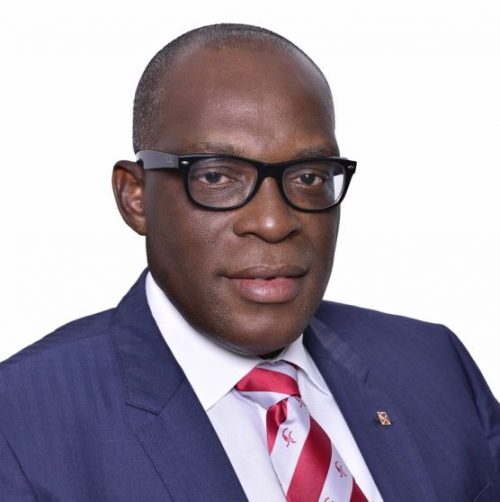
Adedotun Sulaiman

Chairman

Absa Nigeria

The Chairman, Absa Nigeria, Adedotun Sulaiman, speaks on his career growth, transformative contributions to the enterprises and the public sector as well as Absa operations in Nigeria in this interview.

  • Congratulations on your 70thbirthday; how does it feel to be 70?

Honestly for me, it feels good because at 70 I am in good shape without any health or other challenges. However if you put it in the context of the environment and the times we live in, I don’t feel as good as I could or should. I am not happy that the country is facing diverse and numerous challenges, many of them self-inflicted and needless. As I speak, we are all currently struggling to cope with heightened and extreme forms of those challenges at every level.

The problem is that I cannot be okay or as happy I could or should be when all is not well with the community of which I am an integral part. That is how I feel about Nigeria in my 70th year.

  • Can you take us through your professional career up till date?

I started my professional career in 1975, 47 years ago, first in the Nigerian diplomatic service. The first two and half years of my working years were spent in the service, most of that as an attaché at the Nigerian Embassy in Washington DC. However, I discovered soon enough that a career in the diplomatic service was not my calling considering that my university degree was in business administration.

Consequently, I joined Arthur Andersen & Co., a new audit, tax and consulting firm just setting up in Nigeria in 1978 and my career in management consulting began. It has been an amazing growth journey at my career, living through and being a part of and witness to the all changes in the country, the industry and the firm. In 1993, I took over from the founding Managing Partner as the Office Managing Partner and successfully ran the firm until 1999 and upon the split of the global firm the consulting half of the business until my retirement in 2005.

  • What has kept you busy after retirement?

Soon after retirement, I decided I was going to continue doing what we did excellently well at Arthur Andersen/Andersen Consulting/Accenture – identifying, training and developing young talent, this time through enterprise. So far, Arthur Andersen and its succeeding firms have done a very good job at training leaders for Nigeria and I wanted to continue contributing to that, this time through enterprise, instead of the professional services setting in which I grew up. By this, I work with young entrepreneurs and help them get their businesses off the ground and grow them into thriving enterprises with some remarkable success to point to, including Interswitch, SecureID and Parthian Partners among several others.

My latest entrepreneur venture in that regard is a video streaming service called SuperTV working with 2 brilliant co-founders one of whom got killed in very tragic circumstances last year.

I have also done a quite a bit in the public space, latest one of which was my role as the Chairman of the Financial Reporting Council of Nigeria for four years. In 2012, after the fuel subsidy removal riots, the then Petroleum Minister, Diezani Alison-Madueke set up some adhoc committees one of which was review the structure the Nigerian National Petroleum Corporation (NNPC) and parastatals in the Petroleum Ministry. Some of the ideas and recommendations from the work of that panel which I chaired have found their way into the recently enacted Petroleum Industry Bill/Act (PIB/PIA), a full ten years after the work was done.

I also headed the committee set up by the Securities and Exchange Commission of Nigeria (SEC) in 2009 to reorganize the structure and processes of the Nigerian capital market and rebuild confidence of Nigerian investors following the global capital market crash in 2008. The recent demutualization of the Nigerian Exchange (NGX) is the one of the outcomes of the work that the committee did.

  • Tell us about your role in Absa

I was approached by Absa to facilitate their re-entry into the Nigerian market. It was then known as Barclays Africa.  The intention then, and still is, to launch a commercial bank in Nigeria.  At present, we offer trade finance, securities trading and investment banking services, through our 3 licensed entities.  The ultimate ambition of Absa in Nigeria is to establish a full scale commercial banking presence, this will come to fruition in due course. 

  • How do you see corporate governance becoming a more serious part of the financial services industry? 

Corporate governance is an evolving development and I believe we have made significant progress to make it work more effectively in Nigeria. Taking an overview across the various sectors, you will discover that some sectors have stricter rules of governance than others.

As Chairman of the Financial Reporting Council of Nigeria, we introduced the National Corporate Governance Code for Nigeria, which harmonised the disparate sector-focused corporate governance frameworks and codes operating in the economy. The code is initially focused on Public Interest Entities (PIEs) which we defined as entities that are regulated and operate under a license or concession. That covers sectors such as the banking, insurance, pensions, telecommunications, listed companies, pharmaceutical, aviation etc. The codes for the public sector and the civil society/not-for-profit sector remain outstanding and still need to be done.

Of course, there continues to be corporate governance failures every now and then, but I will say that as a country we have not done too badly especially in the more formally organised sectors and large corporates but we still have a long way to go. We can start with making our regulations and the work and approach of our regulators more facilitative, nurturing and development-oriented rather than being heavy-handed, punitive and IGR-focused.

Where the real progress of corporate governance practice still needs to be made is with indigenous businesses, especially with the larger, more successful family-owned businesses. That is where corporate governance is still weak. The National Corporate Governance Code was fashioned on the principles-based, ‘apply and explain’ model. Although compliance is mandatory the codes are not specific or prescriptive. It establishes and defines good corporate governance principles and including explanations as to why it makes sense to apply and follow them.

The remaining and on-going challenge is to sell the imperative and usefulness of good corporate governance practices to entrepreneurs and businesspeople so as to promote institutionalisation of their businesses. It means ‘depersonalizing’ the enterprises so businesses do not have to die with the demise of the owners/founders. That SuperTV example I mentioned earlier is a veritable test case of a business, a startup for that matter, which survived the sudden and unexpected demise of its principal founder and largest shareholder because we were sufficiently advanced in establishing the management and governance structures and processes that depersonalised the fledgling enterprise. The need to enlighten Nigerian entrepreneurs and business owners on the professionalisation of management and the importance of an effective board cannot therefore be over-emphasised.

  • There is so much talk now about Green Energy as an alternative power source. What specific roles is Absa playing to ensure Nigeria becomes a very strong player in this area?

First of all, we have signed up to all sustainability movements and other related matters. One of the roles we play is to finance technologies that promote green and renewable energy. This invariably means we begin to step down on the financing of what is now getting to be called dirty industries. For example, financing the building of a solar-powered electricity generating farm in Sokoto is going to be much easier and on much better terms than opening up a coal mine in Enugu.

Basically, what we do in Absa is to use financing to direct investment towards more developmental, more environmentally-friendly and sustainable projects and businesses.

  • The Coronavirus pandemic seems to have accelerated the adoption of digital technology across industries. How far gone is Absa in terms of transforming into a digital entity?

Transforming into a digital entity is a movement that is not going to be reversed. What the pandemic did was to open us to other possibilities and alternative ways of doing things that we have done in a certain way over the years. Fortunately, the basic technology to enable that was available and rapidly developed in response to the crisis. At Absa we rose to the challenge, leveraging technology to fill the void created by limited personal contact.

Our processes are being digitised and we will continue to invest in the technologies that enable and facilitate that possibility. We will get it right not only in technology but even our connectivity, broadband, speed, power, and others. This is the direction that the world is going. It does not just work, it is the future.

However, what we still need to do is to find cheap and affordable technological solutions that will enable people at the bottom of the pyramid to join the digital revolution and continue to work, learn and be entertained regardless of their placement on the economic totem pole. We will need therefore to find ways to democratise access to digital platforms for education, entertainment, work, communication, socialisation and to make sure that everyone has access to the use of such technologies.

  • Are there any significant deals that Absa has consummated in the last two years?

I will give you some of the highlights. For example, Dangote Cement issued a N50 billion bond last year, Absa acted as the lead issuing house in that transaction.

Dangote Cement also offered a N41 billion commercial paper; Absa acted as a dealer in that senior secured commercial paper. On the Access Bank US$500 billion bond, priced at 6.125% per annum, Absa acted as the joint lead manager.

IHS, the towers company, had a $378 million initial public offering (IPO) on the New York Stock Exchange (NYSE); Absa acted as the only African bank on the transaction.

IHS also issued a $1 billion bond; Absa took part in that transaction. In addition, Absa acted as a joint financial adviser and provided financing support to the IHS acquisition of MTN Towers in South Africa. That transaction entailed the sale of 5,700 MTN towers comprising 4000 greenfield and 1700 roof-tops sites.

  • Environmental and sustainability issues have become entrenched these days. Can you speak to this regarding what Absa is doing?

It is something that we subscribe to and take very seriously. Of course, this is facilitated by the fact that Absa Nigeria is part of a large continental banking organisation. In Absa Nigeria, we have domesticated those policies and practices for Nigeria, hence, we take environmental and sustainability issues seriously in our business operations and decisions.

It is also one of the metrics that we look at in transactions. We make sure that when we are evaluating counterparties for transactions, we evaluate them on their own compliance with and adherence to acceptable global and local ESG standards. I can confidently say that we hold ourselves and our customers to a very high ESG standards.

  • Can you outline two or three important lessons we can learn from your wealth of experiences, either private or public life?

Nigeria is a tough environment to do business in, however, if you are diligent and you work hard Nigeria is still an exciting place to do business and make lots of money. If you take a long term view and are willing and able to pay the price by working hard, working smart and doing this on a consistent and sustained basis you can be sure of outsized returns and rewards. That is the way to go. In everything you do, you have to have a long-term mindset.

If you are going to be successful, you must do what successful people do. There is a formula to it, long term success requires giving it your best and paying the price, short cuts won’t get you very far nor keep you at the top very long.

I remember in 1988, I had the opportunity of being part of the Nigerian delegation to the Seoul Olympic Games in South Korea and on return my boss, Dick Kramer, now of blessed memory, asked me a question: “what lessons did you learn?”

I told him I learned that there is only one standard for the Olympic Gold. There is no Nigerian standard, no different or special standard for Africa to win that gold medal, you have got to work for it, you have got to give it what it takes, you have to be the best. There is no other way. And that is a mindset we must entrench in Nigeria.

I happen to hold the very strong view that for every wrong step that we have taken and continue to take in Nigeria in our national affairs, we knew the right thing to do but chose not to do that because it was/is not convenient, was/is ‘too hard’, it was/is going to take too long or more often than not, did/does not serve the interest of some narrow group or sub-group, however you define that. That is why we are where we are today as a country, as a people. Think on it.


Telecom Sector: Post-pandemic Economy Unlocks Growth Potential, Fresh Opportunities

0

Over the past decade to 2020, digitalisation was in full swing, transforming the way we live and interact. The coronavirus pandemic in 2020 seemed to speed up the digitisation process and has irreversibly changed the world the way we know it.

Today, the way we work, live, socialise and interact have changed completely. Now, people talk about the new normal.

At the height of the pandemic, technology held up admirably, allowing people to carry out many of their key activities seamlessly. The telecommunications industry provided the connectivity that helped drive human interactions and business transactions during this period.

Virtual meetings, remote financial transactions, healthcare delivery, and knowledge transfer were all made possible by the telecommunications industry, thus significantly boosting the industry’s contributions to the economy.

Data by the Nigerian Communications Commission (NCC) showed that the telecommunications industry contributed 12.45% to Nigeria’s GDP in 2020. In 2021, according to the National Bureau of Statistics, the information and communications sector contributed N11.23 trillion or 15.51% to the real GDP.

The industry’s contribution to the economy is expected to continue to grow, driven by a growing population and increasing use of smart devices, increasing urbanization, the rise of Internet of Things, the development and deployment of 5G network, increasing adoption of artificial intelligence, and the growth of the content ecosystem, among other key drivers.

“The outlook for growth in Nigeria’s telecoms industry is strong. The gaps in last-mile telecoms infrastructure are largely untapped. The current momentum of emerging technologies and financial services delivers boundless growth horizons for telcos to upgrade their infrastructure and expand their reach,” said Sadiq Abu, Chief Executive Officer of Absa Nigeria.

The capacity for growth in the industry is huge and, according to Abu, “The telecommunications industry is generating interest from local and foreign investors. This is because the capacity for growth in the industry is limitless.”

For instance, The Rise Fund, the investing platform of leading alternative investment firm, TPG, early last year announced plans to invest $200 million (about N84 billion) in Airtel Africa’s mobile money subsidiary. Google, early this year, revealed plans to buy a 1.28% stake in Airtel Africa.

Much of these investments will be utilised by the Nigerian subsidiary of the telecoms giant, considering that its Nigerian operation is the biggest on the continent. MTN’s recent public offer was oversubscribed by as much as 139.5%, according to the telecoms company.

This renewed interest, following a lull in FDI, was no doubt mainly triggered by the industry’s strong showing during the pandemic, which highlighted its resilience. A report by Agusto & Co showed that the industry attracted about $4 billion (about N1.7 trillion) in investments in the five years to 2020.

The industry is expected to “provide recovery support to key economic sectors post-pandemic,” the Agusto & Co report showed, which will help drive investments in the sector.

In 2021, Chairman of MTN Nigeria, Dr Ernest Ndukwe, revealed that the company plans to invest over N600 billion to upgrade its network infrastructure in the next three years to enable the telecoms giant to take advantage of the growing opportunities in the industry.

To help put the growth prospect and the growing interest in the sector in perspective, the Absa banking group, which operates two licensed subsidiaries in the country, Absa Capital Markets Nigeria Limited and Absa Securities Nigeria Limited, organized a media roundtable session recently in Lagos.

The session, themed The Nigeria Telecoms Sector: Exploring the Opportunities, examined the Nigerian telecommunications sector, the trends, the opportunities for new businesses, the challenges, as well as Absa’s expertise in and contributions to the sector. Absa’s executives from South Africa and the United Kingdom joined in the session virtually to help throw more light on the sector activities across the African continent, and Nigeria in particular.

Hasnen Varawalla, the co-head of Investment Banking Origination for Absa, stated that the telecommunications’ industry in Nigeria is one of the largest in Africa, and believes it can drive a healthy foreign direct investment, wider job creation, and financial inclusion. “As of 2021, the sector reportedly contributed around 17% of the GDP,” Varawalla said.

Varawalla said the industry supports fintech activities, integrates cities, and aids the ongoing explosion in e-commerce sector. He highlighted some of the attractive propositions in the industry to include telecommunications infrastructure (data centres, fibre networks, etc) and the imminent rollout of 5G technology. Also, there is a new interest in digital work tools to meet the demands for remote work arrangements.

Abu highlighted some of the issues plaguing the smooth operations of telcos in the country to include power deficit, vandalism of transmission infrastructure assets, theft, and multiple taxation, regulatory environment, among others.

In spite of these operating challenges, Abu said the sector has enormous growth potential, particularly in relation to broadband internet, last mile connectivity and telco infrastructure (data centres, fibre optic networks, etc).

And most importantly, the broadband penetration is still very weak in the country, at about 34%, and there remains a vast and growing demand for data, despite the apparent maturity of voice revenue streams.

“Meanwhile, the various challenges that are bedeviling the smooth operations of telcos provide expansive opportunities for smart entrepreneurs who possess an innovative and unerring vision of what can be done to help the players maintain cost advantage or protect critical transmission infrastructure assets through the provision of services that hedge against disruption in the supply chains,” Abu said. According to the Absa CEO, the telcos are already strategically developing useful business vehicles to take advantage of emerging opportunities in the industry.

On the expertise and role of Absa in the industry, Varawalla said the financial institution provides support to the industry on multiple levels: as a capital provider, helping to finance some of the landmark projects; providing advisory on key industry deals, especially capital raising activities by players; and playing an active role in helping to midwife the listing needs of some of the continents big players.

“Absa is a significant capital provider to the entire telecoms sector in Africa. Our role is not limited to providing capital though. We are among the most active advisers to telco/telco infrastructure companies having led and/or participated in many landmark transactions across the continent,” Varawalla said.

Varawalla highlighted some of these deals to include the GBP 595m Airtel IPO on the Nigerian Exchange (NGX), the sale of 9mobile to Teleology, Vodacom’s IPO on the Tanzania Stock Exchange, the US$ 378 IHS IPO on the NYSE, the acquisition by IHS of MTN’s tower portfolio in South Africa, amongst others.

Foreign and local investments in the country’s telecoms industry at $107.46 million in 2021 was the lowest in the three years to 2021, driven by the uncertain regulatory environment and forex issues.

However, as more opportunities for investments and growth unfolds in the sector, Absa assured it would “continue to make available our deep telecoms sector expertise to help telcos take advantage of emerging opportunities that will fast track the timely achievement of their growth aspiration.”