Sunday, December 28, 2025
25.1 C
Lagos
Home Blog Page 144

Nova Merchant Bank ED, Funke Okoya, Named Chairperson, Women’s Empowerment Commission

0

Mrs. Funke Okoya, an Executive Director, NOVA Merchant Bank has been appointed Chairperson, Women’s Empowerment Commission of the Women in Finance Nigeria.

Okoya’s appointment was announced along with four other new executives at a recent signing of the International Partnership/Affiliation with the Women Working for Change.

The Women Working for Change is an organ of the African CEO Forum, the largest international forum of the African private sector.

The newly appointed Exco Members were selected from committed Senior Executive members of the organisation and have been charged with the specific duty of chairing the Association’s five new Commission.

Okoya’s appointment as Chairperson is a major push for the capacity development of women in Nigeria and it is expected to drive initiatives that advance women’s cause, pursuit of financial literacy and inclusion for women while promoting gender parity.

Speaking at the event, the Chairperson, Women in Finance Nigeria, Mrs. Toyin Sanni, said, “We are very excited about the launch of these important commissions under the leadership of these dynamic senior executives as well as the election of our new national secretary all of whom served creditably, over time at WIFNG.”

Funke Okoya who expressed excitement at the appointment said, “This appointment is designed to speak to the yearnings of women in Nigeria and further enrich the conversation around capacity building, provide access to finance, broaden value realization, add relevance, recognition and network for women.”

She added that the expanded executive committee demonstrates the association’s commitment to supporting women across the country by providing leadership and sustainable professional development for women, through creative coalition and partnerships with international women organizations like Women Working for Change.

Funke is an Executive Director, Investment Banking and Subsidiaries at NOVA Merchant Bank, and has been driving key initiatives that are transforming the Bank into leadership position.

While congratulating Mrs. Okoya on her appointment, the Chairman of NOVA Merchant Bank, Mr Phillips Oduoza, said Funke has been at the forefront of gender diversity, sustainability and female inclusion, adding, “As a board, we are glad for the recognition which will elevate the commission to the next level under her chairmanship.”

NOVA Merchant Bank is a leading merchant bank in Nigeria that offers an integrated suite of financial solutions covering Financial Intermediation, Wholesale and Investment Banking, Asset and Wealth Management, Trade Services, Transaction Banking, Cash Management and Digital Banking.

Women in Finance Nigeria (WIFNG) is a non-profit organization registered in 2016 to provide policy advocacy for greater representation of women in the financial sector and in financial roles in Public and Private Sector Organisations.

WIFNG advocates for positive economic policies and is a platform for women in financial roles to collectively tackle workplace and societal challenges affecting women. WIFNG also provides Capacity Building, Networking and Economic Empowerment opportunities.

In 2019, it established and registered its UK Chapter, WIFNG UK, a vibrant body for African women working in the United Kingdom Financial Services Sector.

Business Journal Newspaper Public Presentation Set for Sept 16

0

The public presentation of Business Journal Newspaper will on Friday, September 16, 2022 at Radisson Hotel (former Protea), 42/44, Isaac John Street, GRA, Ikeja.

The event would be Chaired by Mr. O. S. Thomas, the Commissioner for Insurance/CEO, National Insurance Commission (NAICOM) while Professor Umar Danbatta, Executive Vice-Chairman/CEO, Nigerian Communications Commission (NCC) will deliver the keynote address on: The Media in National Development: A Case Study of the Telecom Revolution in Nigeria.

Mr. Tim Akano, Managing Director/CEO, New Horizons Limited will also deliver a paper on: Digital Challenge: Media in the Age of AI, Cloud and Robotics while renowned economist and financial expert, Dr. Biodun Adedipe will review the preview edition of Business Journal newspaper.

Commenting on the development, Prince Cookey, Publisher/Editor-in-Chief of Business Journal said:

“We are already in the spirit of the countdown to the public presentation of Business Journal newspaper and the invite is a worthy testimony to that. We look forward to a great event on Friday, September 16, 2022.”

Rosatom Hosts 2nd International Fishing Tournament near Russia’s Largest Nuclear Plant

0

The 2nd International Fishing tournament was concluded on September 7-8 in the PRO ANGLERS LEAGUE format, and brought together athletes from 10 countries (including Russia) at the Gulf of Finland.

The European tournament for spinning for fish from boats, was held close to the Leningrad NPP, Russia’s largest operating nuclear power plant in terms of installed capacity and one of the first in the world to receive cutting-edge Generation III+ VVER-1200 reactors offered by Rosatom globally.

The geography of the tournament has expanded greatly. In total, 26 amateur athletes took part in the competition. They are representatives of Russia and countries where Rosatom implements or plans to implement nuclear power plant construction projects: Armenia, Hungary, Egypt, India, Bangladesh, Kazakhstan, Uzbekistan, South Africa and Turkey.

This year, fishermen from India Arunabha Sannigrahi and Santosh Jaiswar came first. The representatives of the Fishermen’s Association of India thanked the organisers for the amazing event:

“During these two days, we lived through some incredible experiences, did our favorite thing – fishing, did it not far from a nuclear power plant, visited the station itself, which, of course, amazed us with its size and high technology. We hope that Rosatom will continue to hold such tournaments, and we will be happy to take part in them.”

At the end of the event, the official awards ceremony took place. Fishermen from Egypt and the combined team of Russia and Egypt scored second and third prizes, respectively. A participant from India was awarded a special prize for the “biggest catch.”

A team from Uzbekistan was awarded a prize in a special nomination “the determination to win.”

Fishing competitions allow, on the one hand, to strengthen the bonds of people’s diplomacy, to demonstrate that the inhabitants of the countries of Rosatom’s business interests belong to the global nuclear community, and, on the other hand, to demonstrate the safety of nuclear power plants for the environment, including the flora and fauna of nearby water bodies.

The participants of the tournament were able to verify not just the richness of the Gulf of Finland with fish, but also its cleanliness thanks to the dosimetric control. After weighing, the fish was released back into the sea.

In total, 203 fish were caught with a total weight of more than 7 kg. Vladimir Inozemtsev, the two-time world champion and seven-time winner of world championships, head coach of the Russian national team, was the chief judge of the competition.

President of the Rusatom International Network Vadim Titov noted: “Although the event is held on such a wide international scale for the second time, Rosatom has been organizing fishing competitions in near-station water bodies for more than 10 years. We attach great importance to such events, because for us it is an opportunity to demonstrate that nuclear energy is a clean source of energy, that nuclear technology and nature complement each other. And we are happy that our guests from nine countries were able to see for themselves that clean fish lives in the immediate vicinity of the nuclear power plant, which has been operating for almost half a century.”

As part of the tournament, the participants visited the Leningrad NPP, located in the town of Sosnovy Bor, and were able to get acquainted with the work of the nuclear power plant. Today, the Leningrad NPP is a unique engineering structure that combines two types of reactors on its site.

The participants also visited the town itself, where industrial nuclear power has been developing for half a century, and new types of reactors are being put into operation. They met with local authorities and got acquainted with the inhabitants of the city.


Crown Flour Mill’s ‘Seeds for the Future’ Programme Achieves 1st-Year Target

0

Crown Flour Mill (CFM) Limited, the wheat milling subsidiary of Olam Agri, a global agribusiness in food, feed, fiber, has unveiled an impressive first-year report of its ‘Seeds for the Future’ programme.

The report was unveiled during the third edition of the agribusiness stakeholders’ consultative forum, the Olam Agri Greenland Webinar Series that held virtually on Thursday, September 8, 2022.

The report showed that the initiative achieved its first-year milestone of producing 10Kg of pre-multiplication wheat seed varieties that suit the unique local topography and climate.

Developing and cultivating wheat seed varieties that suit Nigeria’s unique topographic and climatic conditions, in addition to a wider engagement of smallholder farmers and adoption of modern agronomic practices, have been the bane of wheat production self-sufficiency in Nigeria. CFM seeks to address these challenges through the Seeds for the Future initiative, its signature N300 million wheat value chain development project that was launched in 2021.

On the project’s report, Ashish Pande, the Country Head for Olam Agri Nigeria, said, “We have made quite an impressive stride on the Seeds for the Future programme going by the first-year report. It is a journey. We will continue to inject human, financial, and technical resources into the programme to ensure we meet our targets and derive the best results in the years ahead.”

According to Pande, “There are challenges currently in the global food value chain. What this means is that we must look inward to ensure a consistent supply of food to feed our population by channeling investment into agriculture. At CFM and Olam Agri, we are committed to investing at the production level of the wheat value chain, in line with the Federal Government’s food security and agriculture development agenda.”

Unveiling the project report, Filippo Bassi, a professional seed breeder from the International Center for Agricultural Research in the Dry Areas (ICARDA) and consultant on the project, revealed, “The 10 Kg pre-multiplication wheat seed varieties produced so far will be planted next season in 1,000m2 plots at the Azumbu farm research station in Jigawa. However, to ensure larger quantities of seeds as backup, a subset will be planted also during the rainy season in August.”

As well, Dr. Kachalla Kyari Mala, the Principal Research Officer at the Lake Chad Research Institute (LCRI), who is the project lead researcher, said his team conducted a detailed survey into the agronomic practices of local smallholder farmers at the commencement of the project to understand the realities in the wheat value chain. He stated that the approach of combining data from multiple stations across the West African region helped the team identify and resolve bottlenecks in the value chain.

“The outcome of the first-year trial and testing of the seed varieties gives some assurance that the investment of Olam Agri will accelerate seed production while pre-release yields actual improvement in productivity in the country’s wheat farming belt,” Mala said.

Harping on factors necessary for achieving improved local wheat production self-sufficiency, Dr Zakari Turaki, the Director of Agricultural Research at LCRI, a panelist at the forum, mentioned strong partnerships and collaborative efforts between public institutions and private firms as key to raising the current level of the local wheat harvest. He added that the current partnership framework adopted for the execution of the Seeds for the Future programme is the best he has seen so far in the industry.

Another panelist, Alhaji Munir Babba Dan Agundi, the Chairman of the Agricultural Colleges and Institutions Committee of the Federal House of Representatives, called for policy consistency in the industry as well as synergy among critical stakeholders. He said focused legislation to back value chain development policies would ensure changes in government would not affect policies.

Mr. Tiberio Chiari, Former Manager of the Agricultural Value Chains Programme in Oromia, Ethiopia; Dr Yusuf Jubril Rurum, Commissioner for Agriculture, Kano State; Alhaji Salim Muhammed, Chairman, Wheat Farmers Association of Nigeria; and Hafiz Muhammed, Senior Special Adviser to the Kano State Governor on Agriculture, were the other panelists at the forum.


NCC-CSIRT Alerts on Google Chrome Extensions Malware

0

The Nigerian Communications Commission’s Computer Security Incident Response Team (NCC-CSIRT) has identified five malicious Google Chrome Extensions that surreptitiously track online browser’s activities and steal their data.

According to NCC-CSIRT, the five malicious extensions which the McAfee Mobile Research Team earlier discovered are Netflix Party with 800,000 downloads, Netflix Party 2 with 300,000 downloads, Full Page Screenshot Capture Screenshotting with 200,000 downloads, FlipShope Price Tracker Extension with 80,000 downloads, and AutoBuy Flash Sales with 20,000 downloads.

The NCC-CSIRT said the five google chrome extensions identified have a high probability and damage potential and have been downloaded more than 1.4 million times and serve as access to steal users’ data. The telecom sector-focused cybersecurity protection team alerted telecom consumers to be cautious when installing any browser extension.

“The users of these chrome extensions are unaware of their invasive functionality and privacy risk. Malicious extensions monitor victims’ visits to e-commerce websites and modify the visitor’s cookie to appear as if they came through a referrer link. Consequently, the extensions’ developers get an affiliate fee for any purchases at electronic shops,” the advisory said.

In addition, the advisory stated that, although the google team removed several browser extensions from its Chrome Web Store, keeping malicious extensions out may be difficult. The NCC-CSIRT, thus, recommended that telecom consumers observe caution when installing any browser extension.

“These include removing all listed extensions from their chrome browser manually. Internet users are to pay close attention to the promptings from their browser extensions, such as the permission to run on any website visited and the data requested before installing it. Although, some extensions are seemingly legit, due to the high number of user downloads, these hazardous add-ons make it imperative for users to ascertain the authenticity of extensions they access.” the advisory stated.

Google Chrome extensions are software programmes that can be installed into Chrome in order to change the browser’s functionality. This includes adding new features to Chrome or modifying the existing behavior of the program itself to make it more convenient for the user. They serve purposes such as block ads, integration with password managers and sourcing coupons as items sent to a shopping cart.

The Computer Security Incident Response Team (CSIRT) is the telecom sector’s cyber security incidence centre set up by the NCC to focus on incidents in the telecom sector and as they may affect telecom consumers and citizens at large.

CIIN Empowers Over 50 Young Insurance Professionals at Boot Camp 3.0

0

L-R: Guest Speakers; Mr. Boniface Amadi, Head, Business Systems Automation, Continental Reinsurance Plc, Mr. Bola Oniyide, Head, Treaty, Continental Reinsurance Plc, Mrs. Adetutu Arusiuka, Council Member, Mr. Edwin Igbiti, President/Chairman of Council, CIIN, Mrs. Funmi Omo, Managing Director, Enterprise Life Nigeria, Mr. Segun Omosehin, Chairman, Education Committee, CIIN, Mrs. Abimbola Tiamiyu, Director-General, Guest Speaker, Dr. Adeoye Oyewole, CEO, Lifecare Consult and Mr. Nurudeen Jamiu, CIIN Ambassador.

The Chartered Insurance Institute of Nigeria (CIIN), in line with its mandate of training insurance professionals has empowered over 50 young insurance professionals at the third edition of its youth mentorship programme tagged ‘Boot Camp 3.0’.

The CIIN youth mentorship programme is a two-days annual event organised for the young insurance practitioners to learn from mentors, industry giants, network and have fun.

Delivering his welcome address at the Programme on Friday, September 9, the President/Chairman of Council, CIIN, Mr. Edwin Igbiti, said that the mentorship programme was established by the Education Committee of the Institute with the aim to; develop/train young professionals in the industry to become leaders, equip them with managerial and leadership skills for career advancement and include them in the activities of the Institute and Industry in order to encourage active participation.

According to Mr. Igbiti, digitalization has become a force that is driving massive changes in the insurance sector and grooming young insurers who are technologically savvy will aid the fast transitioning of the insurance industry in this digital economy.

“Hence, this year’s Boot Camp with the theme ‘The Millennial Insurance Leader in a Digital Economy’ sought to train young insurance professionals with the aim to generate enthusiasm in them as technology natives, key into CIIN strategic long-term goals of breeding and retaining empowered professionals, create social bonding through lifestyle conversations, team bonding activities to generate renewed vigour; in the end that young professionals will continue to pursue insurance as a career and a platform to create ideas and suggestions that would be pillars for the furtherance of new generation of insurance professionals in the industry.

On his part, the Chairman, Education Committee, CIIN, Mr. Segun Omosehin, said the mentorship programme which birthed the boot camp was out of the desire to encourage young professionals to bring in fresh ideas, innovations and be actively engaged in the affairs of the industry so as to increase the insurance awareness and penetration the sector desires.

“The essence of this boot camp is to bring young insurance professionals into an environment where they can interact, x-ray the issues affecting the industry with a prospect to providing solutions that are transformative and ingenious because these young ones are more energetic so, we must get them encouraged and interested in the industry affairs.

“Many of us in the industry will soon be exiting so, we need to mentor the young ones, give them opportunities for them to take over leadership. The beauty of a leader is the ability to find successors who will take over the mantle of leadership; and this is our goal for the industry with this boot camp”, he stated.

The programme which attracted participants from insurance companies had many interactive sessions and presentations from top insurance leaders and other sector’s thought leaders.

The highlight of the programme was the Group Seminar where participants who were grouped into teams battled for a prize on selected topics which can positively disrupt the operations of the industry.

Emirates’ Exclusive Agreement with Dom Pérignon Champagne

0

As the only airline with an exclusive agreement to offer luxury champagne brand Dom Pérignon on-board, Emirates is currently presenting First Class passengers with the unique opportunity to enjoy a very special vintage -Dom Pérignon Plénitude 2, on board select routes until the end of October.

The exceptionally rare 2003 vintage in its second plénitude is a limited release, forming part of Emirates’ award-winning portfolio of exclusive wines, champagne, and spirits.

Dom Pérignon is one of the most respected, luxurious champagnes in the world and Emirates is the only airline with an exclusive agreement to serve it on board. In the 17th century, a Benedictine monk named Dom Pierre Pérignon, nurtured an ambition to create ‘the best wine in the world’.

Three centuries later, Dom Pérignon vintages are still produced using the best grapes on the estate. Each vintage has its own style and identity- a uniqueness that lies in the way it evolves, through successive windows of expression.

Cellar master Vincent Chaperon refers to these points in time as ‘plénitudes,’ with Plénitude 2 representing the secondary phase of aromatics developed through evolution. After close to 15 years of slow maturation in the cellars, Dom Pérignon describes Plénitude 2 as ‘wider, deeper, longer, more intense – and gifted further with an extended longevity’.

Rich and multi-layered, Plénitude 2 provides a complex spiral of aromas that reveal over time in the glass. First the softness of lime tree, then a toasty minerality followed by dried apricots and apples, along with candied raspberry and fig. Lemon verbena, rosemary and white pepper appear for an instant, followed by dark spices and liquorice root.

These develop in the glass into a profound and mineral-toned harmonious bouquet. Its vibrant yet generous palate, powerful and precise with great energy, leads to a persistent, spicy, and saline finish.

First Class passengers can discover if Plénitude 2 will be served on their flight, by checking the ‘What’s on your flight’ option on www.emirates.com or on the Emirates app.

For the last 16 years, Emirates has invested more than $1 billion into its wine program, buying exceptional wines at the earliest opportunity to let them mature, allowing them to express their full potential before serving them on board.

The Emirates Wine Cellar is in France, and currently houses 6.5 million bottles of fine wines, some of which will not be ready for tasting until 2035. Emirates currently offers 37 different varieties of French wines and champagnes on board its aircraft. Business Class Bordeaux red wines remain in Emirates’ cellar for an average of 8-10 years, while those reserved for First Class are only served an average of 12-15 years after purchase.

Emirates also has a vintage collection which includes Château Margaux 2004, Château Cos d’Estournel 2005 and Château Montrose 2005.

To complement the wine and champagne collection, Emirates also offers an enticing Spirits menu on board, which includes a mix of niche, hand-crafted brands, as well as popular and well-loved spirits such as Hennessy cognacs, served in all classes.


Danbatta: NIPR Fellowship to Muoka, Ibietan Meritorious

0

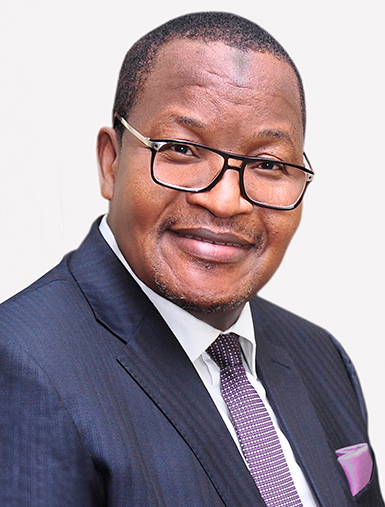
The Executive Vice Chairman of the Nigerian Communications Commission (NCC), Professor Umar Garba Danbatta, has hailed the conferment of the Fellowship of the Nigerian Institute of Public Relations, (fnipr) on two management staff of the Commission, as meritorious and a testimony to the Commission’s promotion of professionalism and excellence in its scheme of management.

The NCC EVC’s assertion followed the recent investiture and induction of Mr. Reuben Muoka, Director of Public Affairs, and Dr. Omoniyi Ibietan, Head, Media Relations in the Public Affairs Department of the Commission, as Fellows of the Chartered Institute during its AGM and Conference at the International Conference Centre in Abuja.

Danbatta, in congratulating the duo, said the Commission is proud to have produced these two individuals who have been considered worthy of elevation to the fellowship cadre of the prestigious institution like the NIPR, and that their emergence resonates with two of the Commission’s core values; Excellence and Professionalism; which the Commission coincidentally shares with the NIPR.

The NCC boss, a Professor of Electrical and Electronics Engineering, with many Fellowships like: Nigerian Society of Engineers, Nigerian Academy of Engineering, Institute of Electrical and Electronic Engineering, and Renewable and Alternative Energy Society of Nigeria, expressed delight at the level of performance of the Commission’s staff in their different areas of professional calling.

He commended the NIPR as a body for its commitment in the regulation of the practice of public relations in Nigeria for which it has found an ally in NCC. “This can only rekindle the healthy collaboration and partnership existing between the NCC and NIPR, especially in the area of capacity-building and commitment to appropriate national social orientation”, Danbatta stated.

Muoka, the Director of Public Affairs Department of the NCC, holds M.Sc. in Mass Communication from the University of Lagos with specialisation in Public Relations and Advertising, after a Postgraduate Diploma in the same field from the same University; and he had earlier obtained a Bachelor’s degree in Performing Arts from the University of Ilorin.

Besides being a fellow of NIPR, he is also an associate of the Registered Practitioners of Advertising, (arpa).

He had worked for many years as Communications Editor in Vanguard Newspapers during which he also chaired the League of Communications Correspondents, one of the platforms that championed the deregulation of the telecom industry in Nigeria.

He also worked for MTS First Wireless, Nigeria’s first mobile network operator, where he rose to the position of Deputy General Manager. In 1999, Muoka received a fellowship involving a Pan-African training and tour, leading to the award of a Diploma in Journalism, at the instance of the Egyptian Ministry of Information, and the African Journalists Union (AJU), in Cairo, Egypt.

Ibietan earned a PhD in Communication from North-West University in South Africa. He had earlier obtained MA in Communication and Language Arts from the University of Ibadan, a BA in Communication Arts from the University of Uyo, and a Journalism Diploma from the Moscow-based International Institute of Journalism, Abuja Campus.

A noted advocate of freedom and democracy, he was Freedom House Nigeria Project’s Regional Media Researcher in the Niger Delta until his appointment in 2006 as Special Media Assistant to the Federal Minister of Information and Communication, during which he popularised the use of new media for public communication in Nigeria.

He is a member of the African Council for Communication Education (ACCE) and the International Institute of Communications (IIC).


Ibietan joined the NCC in 2008 and was deployed to Legislative and Government Relations (LGR) Department where he was frontline liaison staff of the Commission with the National Assembly. Much later after the merging of the LGR Department with the Public Affairs Department in 2010, he served as Manager Media and Public Relations under Muoka’s supervision and became Senior Manager Media Management until January 2017 when he was redeployed to PAD’s emergent Online Media and Special Publication Unit, and subsequently designated as the head of the Unit. He also worked at the Consumer Information and Education Unit of the Commission’s Consumer Affairs Bureau (CAB) until his redeployment to PAD. He became an Assistant Director in January 2021 and was appointed Head Media Relations in July 2022.


NDIC Clinches FG Platinum Award for Outstanding Performance in Corporate Governance, Service Delivery

0

L-R: Managing Director/ CEO, Nigeria Deposit Insurance Corporation (NDIC), Bello Hassan; Board Chairman, NDIC, Mrs. Ronke Sokefun; Special Adviser to the President on Policy and Coordination, Dr. Habiba Lawal and Director General, Bureau of Public Service Reforms (BPSR), Dr. Dasuki Arabi, during the official presentation of Report and Award on the Deployment of the Self-Assessment Tool to Nigeria Deposit Insurance Corporation (NDIC) at the NDIC Headquarters in Abuja.

The Nigeria Deposit Insurance Corporation (NDIC) has been presented with the Federal Government Level Five (5) Platinum Level award for outstanding performance in corporate governance and accountability by the Bureau of Public Service Reforms (BPSR).

The award is based on the Corporation’s outstanding score of Ninety-Three Percent (93%) in the BPSR Self-Assessment Tool (SAT) that was deployed to Federal Ministries, Departments and Agencies (MDAs) to assess and enhance service delivery.

Presenting the award to the Corporation, the Secretary to the Government of the Federation (SGF), Barr. Boss Mustapha represented by the Special Adviser to the President on Policy and Coordination, Dr. Habiba Lawal congratulated the Board, Management and Staff of the NDIC for the courage and commitment during the exercise. She added that the Corporation’s exceptional achievement serves as an impetus for other government agencies to take the opportunity of the BPSR Self-Assessment Tool to assess their strengths and weaknesses, and employ the outcome of the self-evaluation to achieve the Federal Government’s objectives of effective service delivery to the citizenry.

The Honourable Minister of Finance, Budget and National Planning, Dr. Zainab Ahmed, represented by the Director, Home Finance, Mr. Stephen Okon commended the Corporation for the award and expressed the Ministry’s continued commitment and support to the NDIC towards the implementation of the recommendations of the BPSR SAT report.

While presenting the SAT report, the Director-General of the BPSR, Dr Dasuki Arabi, stated that the Corporation is the first and only agency under the supervision of Federal Ministry of Finance, Budget and National Planning to submit itself to the SAT assessment.

He explained that the Corporation’s 93% score which represents the rating of “Far Exceeded Expectations” is a direct result of the Management’s commitment to high standards in corporate governance and staff’s diligence and hard work.

He added that the assessment, which commenced in September 2021, focused on broad areas of strategic governance including financial management, operational and service delivery process, human resource management & planning, procurement process and change management.

The Chairman, NDIC Board of Directors, Mrs. Ronke Sokefun and the MD/CE, NDIC Mr Bello Hassan both congratulated the NDIC Board, Management Team and staff for the feat achieved. The MD/CE, Mr. Hassan said since the assessment from the BPSR, the NDIC has continued to benchmark itself with International Standards and Best Practices through a culture of continuous process improvement and service delivery to its various stakeholders.

Meanwhile, The Board Chairman, Mrs. Sokefun said the NDIC would continue to strive for excellence in delivery of its mandate while implementing recommendations of the BPSR report.

NAICOM, Katsina State Partner on Takaful Insurance

0

The National Insurance Commission (NAICOM) has kick-started a sensitisation programme in katsina State for top government functionaries, traditional rulers, Khadis, Ulamas, NLC, NARTO, market trader association, law enforcement agencies and relevant shareholders on Takaful insurance. Also in attendance were CEOs of Takaful companies.

‘Ecobank Will Continually Support, Collaborate With Innovative Fintechs, Start-Ups’ – GCEO

0

Chief Executive Officer, Ecobank Group, Ade Ayeyemi, has said the Pan African bank will continue to support and collaborate with innovative Fintechs and start-ups in Africa.

The GCEO who was speaking on the launch of 2022 edition of bank’s Fintech Challenge last week said “Ecobank believes that the only way to transform financial services in Africa is for Pan-African banks like Ecobank to continually support and collaborate with innovative Fintechs and start-ups. We invite and welcome Africa’s best Fintechs to work with us through the 2022 Challenge.”

Also, Operations and Technology Executive, Ecobank Group, Dr. Tomisin Fashina, said, “The uniqueness of the Challenge is that it welcomes both early stage and mature start-up Fintechs alike and seeks to align them with different kinds of partnership opportunities within Ecobank that match their differing levels of maturity.”

Pan-African banking group, Ecobank Group, last week launched the cl edition of the Ecobank Fintech Challenge and encourages African Fintech entrepreneurs to enter the i. Fintechs that are aligned with the Bank’s strategic objectives stand a chance to win an overall cash prize of US$50,000 for the top winner and the opportunity to partner and scale their solutions across Ecobank’s 33 African markets.

Fintech companies and developers originating from any of Africa’s 54 countries, as well as global Africa-centered Fintechs, are eligible to enter the Fintech Challenge by visiting: https://Ecobankfintechchallenge.com

Ten finalists will be inducted into the Ecobank Fintech Fellowship after the finals and awards ceremony which will take place in October 2022.

In addition, all Fellows will qualify to explore the following opportunities with the Bank and its partners: multinational products roll out: an opportunity to pursue integration with Ecobank and potentially launch products in all or part of Ecobank’s pan-African 33-country ecosystem; service provider partnerships:  Ecobank may select some Fintechs as pan-African service partners within the Bank’s ecosystem; access to Ecobank’s Pan-African Banking Sandbox: Fellows will be given access to Ecobank’s APIs to test and improve their products for the pan-African market., and priority access to Ecobank’s Venture Capital partners for funding exploration.

The Ecobank Fintech Challenge was designed in partnership with international advisory firm, Konfidants and is supported by partners across Africa and globally. So far 46 Fellows have been admitted into the Ecobank Fintech Fellowship programme since it was launched in 2017.


ProvidusBank, Mastercard, Interswitch, Thales Launch Contactless Tap-to-Pay Transactions in Nigeria

0

In a move to further reduce dependency on cash transactions, stimulate innovation and drive the growth of digital payments in Nigeria, ProvidusBank together with Mastercard, Interswitch and Thales Group, today announced the introduction of a new Tap-to-Pay service.

The service allows cardholders to make fast, secure, and convenient in-store payments by tapping their NFC enabled smart device at any contactless-enabled payment terminal.

The solution works by enabling a connected device such as a smartphone or wearable device to act as a safe and secure payment method in the same way as a physical card.

Leveraging Mastercard’s Digital Enablement Service (MDES), and Interswitch’s tokenization capability, ProvidusBank customers can enjoy a new level of convenience, no longer needing a card or a physical wallet during shopping trips.

For each transaction, Mastercard’s tokenization and digitization technology replaces primary account numbers (PANs) with tokens to provide a faster, more secure, and seamless checkout experience while rendering card numbers useless to fraudsters.

“Technology has evolved greatly in Sub-Saharan Africa in the last decade with the mobile phone technology playing a significant role in that space. As a Bank, our collaboration with Mastercard and Interswitch to provide additional value through the mobile device is a strategy to leverage existing infrastructure, while delivering simplified payment through their advanced digital and tokenisation services,” said Walter Akpani, Managing Director/CEO, ProvidusBank.

All Mastercard transactions are made with industry-standard EMV-level security and are protected using standards-based payment tokens.

“The convergence of physical and digital commerce is not in the future, it’s happening now. At Mastercard, we understand that consumers want to make digital payments when, where and how they want, with the same protection and security offered with a physical card,” says Ebehijie Momoh, Country Manager & Area Business Head, West Africa at Mastercard. “As a pioneer of mobile commerce innovation, we are excited to work with ProvidusBank to deliver a new payment experience that is both seamless and secure, in turn speeding the adoption of digital payments in Nigeria.”

Akeem Lawal, Managing Director, Interswitch Purepay also commented on the collaboration. According to him: “With the increasing adoption of digital payments, there has been the corresponding need for players in the payments ecosystem to heighten the safety and security of payment platforms and channels. This notion is the underpinning rationale behind Interswitch’s collaboration with Providus Bank, Thales Group and Mastercard to deliver the tokenization technology, providing an added security layer and ensuring safer and more seamless payment transactions. At Interswitch, we continue to leverage key partnerships that push the boundaries of innovation.”

To use the service, customers need to first digitize their card as a once off set-up by following instructions in their banking app. Once the card credentials are provisioned to a mobile device, a cardholder can tap to pay simply by opening their banking app, selecting NFC payments, tapping their phone at the Point of Sale and entering their PIN to complete the transaction. They can also make safe and seamless in-app and e-commerce payments.


Business Journal Unveils Official Invite for Public Presentation Event

0

Business Journal has unveiled the official invite for the public presentation of Business Journal Newspaper on Friday, September 16, 2022 at Radisson Hotel (former Protea), 42/44, Isaac John Street, GRA, Ikeja.

The event would be Chaired by Mr. O. S. Thomas, the Commissioner for Insurance/CEO, National Insurance Commission (NAICOM) while Professor Umar Danbatta, Executive Vice-Chairman/CEO, Nigerian Communications Commission (NCC) will deliver the keynote address on: The Media in National Development: A Case Study of the Telecom Revolution in Nigeria.

Mr. Tim Akano, Managing Director/CEO, New Horizons Limited will also deliver a paper on: Digital Challenge: Media in the Age of AI, Cloud and Robotics while renowned economist and financial expert, Dr. Biodun Adedipe will review the preview edition of Business Journal newspaper.

Commenting on the development, Prince Cookey, Publisher/Editor-in-Chief of Business Journal said:

“We are already in the spirit of the countdown to the public presentation of Business Journal newspaper and the invite is a worthy testimony to that. We look forward to a great event on Friday, September 16, 2022.”

How Custom Charges, FX Scarcity Aggravate Manufacturers’ Woes, Food Price Inflation

0


Overview

As Nigerians grapple with rising food prices amid aggravated level of insecurity in the country, there is growing concern that arbitrary imposition and implementation of import and excise duties by the Nigeria Customs Service (NCS) could indeed be a key factor in the high cost of food and associated items in the country.

For instance, in December 2021, the South-East Amalgamated Markets Traders Association (SEAMATA) raised alarm and flatly rejected what it called unreasonable increase in import duty imposed by the NCS on imported cargoes into the country.

In a statement signed by Chief Gozie Akudolu, President-General and Mr. Alex Okwudiri, Secretary-General of SEAMATA, the traders’ body accused the NCS of bad faith in calculating import duty payment on 40ft containers as against what was earlier agreed to by both parties.

The statement by SEAMATA read in part:

“Between 2020 and now, the amount charged on cargoes as import duties has risen in geometric proportion from N750,000 to N2 million, again to N3 million and presently, to N3.3 million for 40ft containers; while 20ft containers jumped to N1.8 million. The Nigeria Customs, on their own, work out payable import duty now based on ‘estimated’ invoice value of consignment as against the actual invoice value of goods from the country of origin.

This development is not only bringing untold hardships to importers but also compounding the pains of the citizens as it dovetails to astronomical increase in prices of imported goods as the Nigeria Customs Service estimated invoice value is always far above the actual cost of the imports. The indiscriminate estimate of value of goods by Nigeria Customs Service is adversely affecting the price of goods in the markets today. We are appealing to the Honourable Minister of Finance, Budget, and National Planning to prevail on the Nigeria Customs Service to, as a matter of urgency, suspend the exercise. This is to save Nigerian citizens from further economic hardships as further economic pains that follow such situations could lead to social unrest, which our nation doesn’t need now.”

Recently, the National Bureau of Statistics (NBS) put the inflation rate in Nigeria at 19.64% in July 2022, the highest level in 17 years, from 17.7%in May, raising fears that millions of Nigerians could fall deeper into poverty. The NBS report also stated that the composite food index rose to 20.60 percent in June 2022 on a year-on-year basis.

Graphically, the NBS report stated that the average price of 1kg of beans (white, black eye, sold loose) in July 2022 was N547.38, an increase of 23.22% from N444.21 in July 2021. On a month-on-month basis, this increased by 2.09% from N536.17 in June 2022. The average price of 1kg of Tomato in July 2022 was N446.81, an increase of 7.71% from N414.83 in July 2021. On a month-on-month basis, the average price of this item increased by 1.94% from N438.33 in June 2022.

Similarly, the average price of 1kg beef (boneless) in July 2022 was N2,118.84, an increase of 27.58% from N1,660.76 recorded in July 2021. This price rose by 1.87% on a month-on-month basis. In addition, the average price of Groundnut oil: 1 bottle stood at N1,078.17 in July 2022, showing an increase of 40.24% from N768.81 in July 2021. On a month-on-month basis, it rose by 1.44% from N1,062.90 in June 2022.

Counting the Cost on Businesses

Businesses operating in Nigeria remain on the verge of collapse and bankruptcy due to a long list of anti-business policies ranging from multiple taxation, unreliable power supply leading to massive investment in generating sets, high cost of diesel and the prevailing unreasonable import duty charges of the Nigeria Customs Service etc.

When the outcry on multiple taxation became louder, the Federal Inland Revenue Service (FIRS) claimed that amendment to Section 68 of FIRS Establishment Act by the Finance Act 2021 has settled the matter of multiple taxation.

The Executive Chairman of FIRS, Muhammad Nami said: “The amendment to Section 68 of the FIRS Act by the Finance Act 2021 has made it clear that FIRS is the only agency responsible for tax assessment, collection, and enforcement. As such, taxpayers are to expect a streamlined tax administration regime going forward.”

Quite recently, Mr. Ebrima Faal, Director, African Development Bank (AfDB) in Nigeria put the cost of running generating sets in the country (generators + Fuel) at $14 billion, lamenting that the power sector has not improved even marginally despite the process of privatisation.

But the huge power burden on businesses in Nigeria was better explained by the former Director-General, Lagos Chamber of Commerce and Industry (LCCI), Mr. Muda Yusuf:

“The cost incurred to provide alternative sources of power are inevitable if industrialists are to remain in business in Nigeria. This, perhaps, is the biggest single factor impeding the growth of industrialisation.

“The issue has made our industries very uncompetitive in recent times. That is one of the reasons our industries cannot produce for export unlike their counterparts abroad. Also, our industries contribute less than 10 per cent to the country’s Gross Domestic Product (GDP.)”

The International Monetary Fund (IMF) also lamented that Nigeria has suffered economic losses of over $29 billion due to lack of access to regular supply of electricity.

A major consequence of this unfavourable business climate is that businesses, especially manufacturers will shut down because of high cost of production.

Indeed, a report by the Nigerian Chambers of Commerce, Industry, Mines & Agriculture (NACCIMA) stated that 800 companies closed shop in Nigeria in a period of just three (3) years: 2009 to 2011. Secondly, the decision of the Central Bank of Nigeria (CBN) to limit official forex access to importers of prohibited 41 items also led to the collapse of 272 companies, with 50 of them manufacturers according to the Manufacturers Association of Nigeria (MAN). Another 222 small-scale firms also shut down for the same reason, leading to over180, 000 job losses.

The job losses attracted the attention of the NBS which says the country’s unemployment rate rose from 27.1 percent in the second quarter of 2020 to 33 percent in March 2022.

Can Manufacturers Save the Day?

It has been proven in other climes that manufacturing is the productive bedrock of any sustainable economy. In essence, Nigeria cannot record higher level of Gross Domestic Product (GDP) and better living conditions for its people without favourable industrial policies and substantial investment in manufacturing.

And as food prices become unreachable to millions of families, there is a consensus that the right policy framework, especially for the wheat milling and food processing industry in the agricultural value chain for instance, could unlock the productive capacity of that sub-sector, leading to massive food production, supply, and raw materials for industries. This would naturally translate to food security for millions of Nigerians and generate job opportunities in the economy.

The Need for FG Intervention

Given the present state of the economy in terms of food inflation, closure of manufacturing firms due to inputs and unemployment amongst others, it becomes imperative for the Federal Government to intervene through immediate reversal of the existing anti-business policies of its agencies, especially the NCS.

In this regard, manufacturers and importers are therefore seeking the Federal Government’s intervention on import duty valuation of some critical raw materials as they believe that the NCS has already overstretched them by basing duty valuation on spot price in place of the transaction value of critical imported commodities.

They are equally calling for immediate implementation of near zero duty on raw materials meant for manufacturing of food and related inputs to enhance food production in the country, provide needed raw materials for manufacturers and generate jobs.

It also important for the Federal Government to address the serious allegations of arbitrary fixing of duties on importers of food related items given the rising tide of food inflation in the country today.

Specifically, some manufacturers have variously accused the NCS of deploying uneconomic and arbitrary system of arriving at the duty value of goods in form of relying on the current Spot prices as a benchmark. They allege that such method of value and duty computation via the Consumer Price index (CPI) model drives up the cost of duty payable on such goods and has direct impact on the cost of production and consumer food prices.

Final Analysis

Beyond the complaints and lamentations, there is the need for stakeholders in the economy such as NACCIMA, MAN, LCCI and other relevant industry bodies to seek immediate audience with the leadership of the Nigeria Customs Service to openly discuss the negative impact of the prevailing custom duties and tariff on the manufacturing sector and larger economy.

Such a parley will provide each side the opportunity of one-on-one interaction to critically analyse the issues and find amicable solutions to the problem areas.

It will also create an enabling environment for future engagement between them in the interest of the sector and national economy.


Stanbic IBTC Bank Shows Determination to Support Agro-allied Economy

0

Stanbic IBTC Bank Plc, a member of Standard Bank Group intensified has its efforts in providing financial products and services for businesses in the agro-allied industry in determination to expand and support the agriculture and agro-allied industrial sector in Nigeria

The agro-allied industries are central to sustainable development. The agricultural sector is critical for generating employment, supporting the economy in farming communities, and providing food and nutritional security.

Wole Oshin, Head, Agribusiness, Stanbic IBTC Bank Plc said that Nigeria’s ambitions for accelerated and inclusive economic growth was contingent on achieving a vibrant agro-allied sector that can support extensive enterprise development and employment.

Wole stressed that Stanbic IBTC offered various credit facilities across the agricultural sector that aid value chain players to thrive.

“The available loan facilities are targeted at agribusinesses to provide short-medium term financing needs of crop and livestock producers, processors, their distribution chain and other value chain players. The loans provide revolving working capital (to meet day-to-day operational needs and purchase inputs like seeds, fertilizers, raw materials) and equipment finance solutions to farmers and agribusinesses,” Wole said.

According to him, some benefits of the Stanbic IBTC agribusiness finance include the availability of gap funding for unforeseen financial needs, maintenance of cash flow and flexibility of repayment terms based on the type of funding. He added that the facility was also versatile and can be utilised for funding resources for small and medium-sized enterprises (SMEs), vehicles and farming equipment.

Furthermore, Wole added that Stanbic IBTC had intensified efforts towards the improvement of the agro-allied sector by offering free capacity-building sessions to SMEs in the industry, noting that most sessions helped in educating SME owners on key business skills.

Wole noted that Stanbic IBTC Bank equally provided financing solutions for agricultural enterprises to suit their requirements concerning the availability of resources to purchase mechanised farming equipment, as well as the enhancement of seasonal cash flow for industrial production.

“For instance, Stanbic IBTC committed ₦50 billion to launch a nationwide agricultural finance scheme. The Nigerian Incentive-Based Risk Sharing System for Agricultural Lending (NIRSAL) and signed a memorandum of understanding to boost agricultural productivity and modernisation by facilitating increased bank lending to the sector.”


Wole said that Stanbic IBTC has committed these funds for the takeoff of the scheme. The first phase of the scheme is projected to impact thousands of lives through job creation and boost the revenue of farmers and businesses in the agro-allied industry, which is a testament to the financial institution’s efforts to drive inclusive economic growth through agriculture.

He explained that Stanbic IBTC envisioned that the programme would increase farmland output, diversify the revenue base, and provide vital resources and raw materials to the manufacturing sector. He said that the idea of providing financial solutions for agriculture and agro-allied industries as a strategy for accelerated economic growth is gradually beginning to take hold.

“Stanbic IBTC understands that funding the agro–allied industries is a sure way to diversify the Nigerian economy, as these industries are primed to spark off rapid enterprise development in Nigeria,” Wole noted.

Enhancing credit access to small farmers and agro-based enterprises at low rates of interest will have a far-reaching impact on the micro and macro economy. The growth of the agricultural sector is pivotal to economic development. Stanbic IBTC recognises this and that is why the organisation is intentionally developing initiatives and fostering partnerships that support players in the industry.