Tuesday, April 7, 2026
29.6 C
Lagos

Banks, Telcos Disagreement Hindering Mobile Money Services

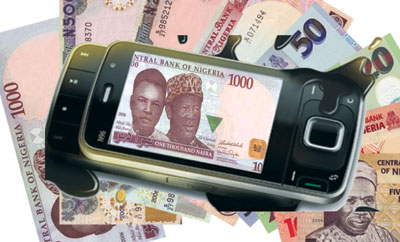
The inability of banks and telecom operators to agree on modalities for mobile money operations is hindering the potential of such transactions in Nigeria, compared to the acclaimed success of M-pesa in Kenya.

Mobile money transactions need legislations and approvals from both the Central Bank of Nigeria (CBN) which regulates the banking sector and the Nigerian Communications Commission (NCC) that oversees telecom services in the country. Giving an insight into the success of M-Pesa in Kenya at the Commonwealth Broadband Forum 2015 in Abuja, Mr. Joseph Tiampati Musuni, Principal Secretary, Ministry of Information, Communications and Technology, Kenya, said their country experienced a similar Banks-Telcos disagreement at the outset of mobile money services in Kenya. But he added that the government was able to facilitate an amicable and working arrangement between them to pave way for roll-out of the service.

Musuni recalled that commercial banks in Kenya argued that money in circulation should be deposited in banks for them to earn interest instead of residing and being transferred through mobile phones which meant loss of revenue. A stakeholder in the Nigerian market lamented that lack of smooth relationship between telcos and banks affects mobile money services in the country, mainly because the economy is bank-led, rather than telecom-led.

Reeling out the figures on Mpesa, the Kenyan official said the scheme recorded a total of 26 million users as at December 31, 2014 while the mobile money penetration in Kenya stood at 82.6 per cent at the same period under review. In terms of revenue, he put the annual transactions at $25 billion, translating to $68 million per day through a nationwide network of 120, 000 mobile money agents.

Musuni listed speed, convenience, safety and cost as four key benefits of mobile money service. He also cited cyber-security threats and issue of regulation between the financial and telecom regulators as some of the challenges of realising the full potential of mobile money in any given environment.

Image Credit: Businessday

spot_img
spot_img
spot_img

Hot this week

World Health Day 2026: CEMESO Calls for Health Equity, Bold Investment, Collective Action

As the global community marks World Health Day 2026...

FCCPC and Digital Theft: Time to Act

By Segun Adediran For those who studied Economics at the...

Truecaller Opens Global Market Access for its Business Chat Platform

Truecaller, the leading global communications platform, today announced the...

DBI Unveils Nigeria Digital Economy Outlook 2026: Q1 Intelligence Report

DigitalSENSE Business Intelligence (DBI), an initiative of ITREALMS Media,...

APC National Chairman, Nentawe Yilwatda, Donates N15m to Jos Attack Victims, Vows End to Killings in Plateau State

The National Chairman of the All Progressives Congress (APC),...

Topics

Veritas Kapital Assurance Reports N5bn Profit in H1, Targets Top 5 in 2025

Veritas Kapital Assurance Plc has reported profit after tax...

Pension Assets Hit N7.7tr in Feb 2018

Hajia Aisha Dahir-Umar Acting DG PenCom The National Pension Commission (PenCom) says...

Actions Taken by NCDMB Towards Addressing Sterling Oil’s Non-Compliance Issues

The Nigerian Content Development and Monitoring Board (NCDMB) has...

SUNU Group Holds Mass to Mark Anniversary of Founder’s Death

From Left: Head, Corporate Services, SUNU Assurances Plc, Japari...

Boeing Projects Demand for 1.5m Pilots, Technicians Next 20 Years

Boeing released its 2016 Pilot and Technician Outlook and...

Equities Market Records 1st Positive Performance in H2:2018… NSE ASI up 0.7%

The domestic bourse halted a three consecutive day bearish...

Intercontinental Bank Plc: Death so Painful

The banking entity was officially proclaimed DEAD by the Central Bank of Nigeria (CBN) in 2009. It was a mysterious and painful demise. But the soul of the bank has refused to Rest-in-Peace. Today, the living dead skeleton of the bank are rumbling in the belly of Access Bank Plc, fueling ghostly imaginations of resurrection or reincarnation. The Early Years Intercontinental Bank Plc was born in 1989 to the family of Dr. Erastus Akingbola. Early in life, the young bank exhibited elements of excellence, profitability and leadership in the banking sector. And when the whistle was blown on Banking Consolidation in 2005, the bank merged seamlessly with three other banking institutions: Equity Bank of Nigeria, Gateway Bank and Global Bank in October of that year. Naturally, the merging process made it bigger in terms of size, branch network, customer base and profitability.

The 39th Annual Conference/General Assembly, African Insurance Organisation (AIO)

African insurance professionals and their partners from Europe, Asia,...
spot_img

Related Articles

Popular Categories

spot_imgspot_img