Friday, May 1, 2026
32.7 C
Lagos

African Union Unveils All-Africa Passport to Boost Travel, Trade

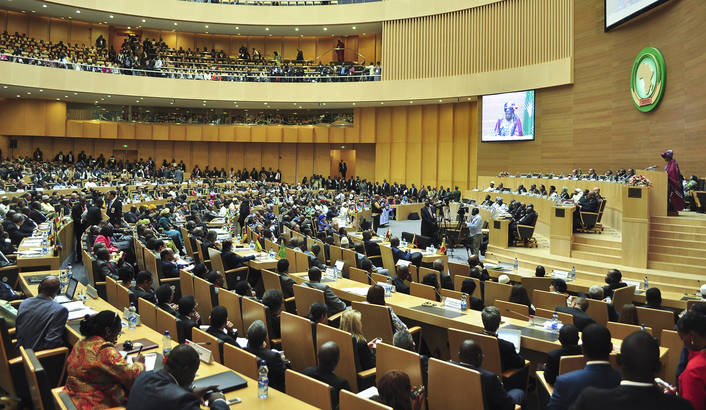
While is U.K. was busy separating from the European Union, Africa wants to become more unified with the introduction of an all-Africa passport. The idea, first approved in 2014, will launch at the 27th AU Summit in Rwanda this month.

The electronic passport is proposed as an anecdote for dissolving border restrictions, thus building greater opportunities for trade within the continent, in hopes of boosting the overall economy.

Anyone with a A.U. passport would be allowed to travel freely within the union’s 54 countries without a visa. Government officials and heads of state at the A.U. headquarters in Ethiopia, will be the first to use the all-Africa passport, which is expected to expand to all citizens in 2018.

Despite the economic benefits, the passport could have an opposite effect given the threat of terrorism.

The Motherland continues to be vulnerable to increased acts of terror, with recent attacks in Nigeria, Somalia, Kenya, and the Ivory Coast.

— Latifah Muhammad,Vibe

spot_img
spot_img
spot_img

Hot this week

NGX Shareholders Commend Leadership at 65th AGM, Seeks Continued Growth

Shareholders of Nigerian Exchange Group Plc (NGX Group) have...

Sovereign Trust Insurance Set for Market Leadership via N5bn Rights Issue

Sovereign Trust Insurance Plc has completed the structuring phase...

All Set for Ecobank 2026 National Schools’ Team Chess Championship

L–R: Austen Osokpor, Head, Marketing and Corporate Communications, Ecobank...

Guinea Insurance Signals Recovery Momentum Amid Elevated Claims

Guinea Insurance Plc has announced its unaudited financial results...

TeamApt CEO says Financial Inclusion is Dependent on Reliable Payment Ecosystem

L-R: Mr. Chike Onwuegbuchi, Chairman, Nigeria Information Technology Reporters’...

Topics

GOCOP 2025: Conference on Governance Challenges, Prospects Set for October 9

The Guild of Corporate Online Publishers (GOCOP) has announced...

NEXIM, AFREXIM, ICCO to Revamp Cocoa Sector

“There is a need for cooperation and input from...

Financing Development under President Buhari: The Role of Pan African DFIs

By Roberts Orya, MD/CEO Nigerian Export-Import Bank (NEXIM) The Central Bank of Nigeria (CBN) has prognosticated a possible economic recession in 2016. This possible worst outcome of the present slump is something I am sure President Muhammadu Buhari would do everything to prevent. No president wants to be known in history as a 'Recession President.' However, this undesirable economic situation can sometimes become a reality, even inspite of the best efforts of a well-meaning leadership.

PenOp Elects Christopher Bajowa as New President

Following the retirement of the previous PenOp President and...

NCC EVC, Aminu Maida, Urges Nokia to Invest in Nigeria’s ICT R&D

L-R: Finnish Deputy Minister for International Trade, Jarno Syrjala; Executive Vice...

Law Union & Rock Insurance Unveils Travel, Teen Policies

Law Union & Rock Insurance Plc has released more...

Global ICT Leaders to Share Insights at ITU Telecom World 2015

The rapid pace of digital transformation is creating new ecosystems, players and even industries – all holding tremendous potential. But how can this potential be harnessed for the benefit of all? And what should the top-level priorities be? An outstanding line-up of speakers spanning government, industry, entrepreneurs and innovators at the ITU Telecom World 2015 Leadership Summit on 12 and 13 October, 2015 will debate how best to accelerate ICT innovation, open up the digital economy to all the world’s citizens, and work together to enable digital entrepreneurship as a driving force for socio-economic development.

Nigeria Must Rethink Forex Policy to Spur Investment

There is need for Nigeria to seriously rethink her Forex policy to spur investment and quicker economic recovery. At the same time, the country recorded growth of only 3.96% y/y in Q1, 2015, down from 5.9% in Q4-2014, according to Razia Khan, Economist at Standard Chartered Bank, London. She said Nigeria’s oil sector contracted by 8% y/y in Q1, following growth of 1% in the previous quarter. “Decelerating growth was seen across most sectors in Q1, with the exception of crop production. Q2 growth may be slower still, reflecting a slowdown in activity around the elections, and the transition to a new government.”
spot_img

Related Articles

Popular Categories

spot_imgspot_img