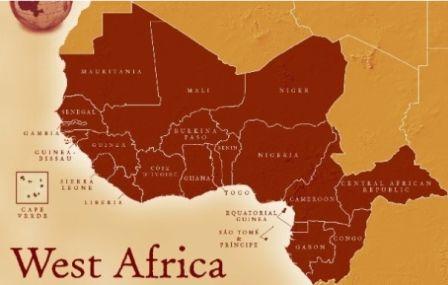

Despite West Africa’s enormous investment potential, its integration into the global economy is low. One sign of this is that the region captures only 5% of Africa’s total Foreign Direct Investment (FDI). The main hurdles for national, regional, and foreign investors are cross-border constraints. Small businesses and service providers are especially affected.
“In Nigeria, burdensome and non-transparent administrative procedures, land, the clearance of goods and services at ports and airports, and access to finance are some of the obstacles hampering investors,” said Bala Bello, Deputy Director for Policy and Advocacy at the Nigerian Investment Promotion Commission.
With its Improved Business and Investment Climate in West Africa Project, the Trade and Competitiveness Global Practice of the World Bank Group is looking at ways of addressing these problems by supporting both regional organizations and individual West African countries. It wants to help them address a range of investment policy issues that constitute barriers to private sector investment across the region.
“This project seeks to take pragmatic steps to facilitate the emergence of a conducive and predictable investment climate in advancement of the ECOWAS Common Investment Market vision,” said Kalilou Traore, Commissioner of the Industry Private Sector Directorate at the Economic Community of West African States (ECOWAS).
At the heart of its work is the establishment of a strong, regional public–private dialogue mechanism. “The participation of the private sector in contributing their opinions and practical experiences is essential,” said Iyalode Alaba Lawson, Vice-President of the Federation of the West African Chambers of Commerce and Industry.
“Since 1979, the private sector has held observer status at the ECOWAS Heads of State Summit, contributing the view of business to the Trade Liberalisation Scheme,” she said. “Regional-level private sector involvement, from investment policy initiation to formulation through to execution, allows for easier implementation when introduced into the business environment.”
The first forum for this was at an inaugural technical workshop in the Senegalese capital of Dakar in June 2015, and has since been moved up to national level. National reform action plans have been made by six, pilot countries—Cote d’Ivoire, Mali, Senegal, Ghana, Nigeria, and Sierra Leone—for a formal commitment to a regional monitoring scorecard.
Non-pilot countries have been invited as observers to help them prepare for future reform. A regional workshop with national governments and private sector associations deepened their familiarity and understanding of investment policy and promotion. Countries explored how they can promote and retain new and existing investment, and how they can leverage FDI for domestic business environment reforms.
Another avenue for convergence is the launch of the ECOWAS Investment Climate Scorecard. Over 70 public and private sector representatives from 15 member states, as well as representatives from the ECOWAS Commission, the West African Economic and Monetary Union (WAEMU), the European Union, and the World Bank Group, have formally endorsed the scorecard as a tool for deepening regional investment integration.
The scorecard is an innovative instrument that enables both the ECOWAS Commission and national policymakers to identify investment barriers and track the progress of national and regional reforms.
A digital dashboard will aggregate its data to facilitate analysis and decision making.
“At the national level, we must make our countries more attractive to investors, each focusing on its own unique potential,” said Zeinabou Keita, Head of the Technical Unit of Business Climate Reform at Mali’s Ministry of Investment Promotion in Private Sector, who added that removing constraints would make individual economies and the region more competitive. “The scorecard is an indispensable tool to help countries refocus efforts on issues that result in too much red tape for investors,” she said.
“West African countries have enormous potential to strengthen competitiveness and increase investment, which can drive growth, reduce poverty, and deliver jobs to the region,” said Eme Essien, International Finance Corporation Country Manager, Nigeria. She said the project was using a unique, hybrid approach to support the ECOWAS Commission to further regional integration by working simultaneously at regional and national levels to identify, address, and monitor the elimination of specific barriers to the expansion of cross-border investment.
The Improved Business and Investment Climate in West Africa Project is a four-year initiative that was launched in November 2014. The project is funded by the European Union and implemented by the World Bank Group.
Arne Hoel