
Annual IT spending in the Middle East and Africa (MEA) is forecast to reach $110.94 billion this year, representing year-on-year growth of 5.1%, according to the latest ‘Worldwide Semiannual IT Spending Guide: Vertical and Company Size’ from International Data Corporation (IDC).
The global technology research and advisory services firm expects the market to total $133.56 billion in 2020, expanding at a compound annual growth rate (CAGR) of 4.8% over the 2015–20 forecast period.
Overall IT spending reached $105.51 billion in 2015, with consumers accounting for just over $50 billion of the total, or 47.6%. The consumer sector exhibited strong growth over the 2012–15 period, with spending increasing at a CAGR of 19.1%; however, IDC expects that rate to slow considerably to 3.5% for 2015–20, with faltering smartphone demand largely to blame.
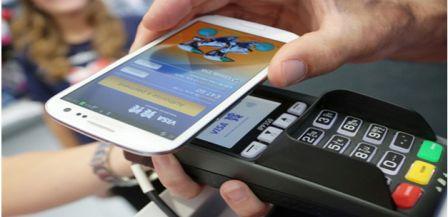
“The high rate of growth seen in the consumer sector over the last few years was driven by a surge in demand for smartphones, with the devices accounting for a majority share of consumer spending,” says Jebin George, a senior research analyst for industry solutions at IDC Middle East and Africa. “However, market saturation and a challenging economic climate have led to a slowdown in demand for new smartphones, a trend that is expected to continue over the coming years.”
Spending by the business sector is expected to total $57.69 billion in 2016, with IDC forecasting a five-year CAGR of 6.0% through 2020. The telecommunications ($12.88 billion), finance ($9.27 billion), government ($8.85 billion), and manufacturing ($7.13 billion) sectors will account for the largest share of spending this year.
However, the fastest-growing sector over the coming years will be healthcare, with IDC expecting IT spending by the industry to increase at a CAGR of 7.9% over the 2015–20 forecast period.
“Organisations across the region are increasingly focusing on reducing costs and driving efficiency improvements as they try to come to terms with the prevailing economic environment,” says George. “Businesses no longer see IT as a cost center, but rather as an enabler of innovation and efficiency, and this change in perspective is helping to drive IT spending growth in the region.”
In terms of size, IDC expects large businesses (more than 500 employees) to account for 56% of total business IT spending in 2016. Medium-sized businesses (100–499 employees) will contribute close to 20% of the total, while small businesses (less than 100 employees) will account for the remainder.
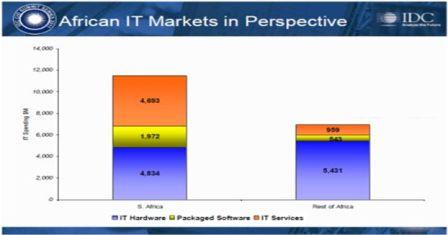
Hardware traditionally dominates IT market spending, and IDC expects this trend to continue with hardware accounting for 69% in 2016. However, looking forward, the growth in hardware spending is expected to be slower than for other technology categories, with IDC forecasting a CAGR of 3.3% for the 2015–20 period. Consumers and telecommunications organisations will remain the source of greatest opportunity for hardware vendors.
Spending on IT services and software is expected to be more buoyant, with IDC anticipating respective GAGRs of 7.5% and 6.4% through 2020. The strongest demand for IT solutions will come from the finance, telecommunications, and government sectors.
The ‘Worldwide Semiannual IT Spending Guide: Vertical and Company Size’ is IDC’s flagship all-in-one data product, capturing IT spending across 100+ technology categories and 53 countries. It provides a granular view of IT market spending from country, industry, company size, and technology perspectives. The comprehensive database delivered via pivot table format or IDC’s custom query tool allows users to easily extract meaningful information about various technology markets and industries by viewing data trends, relationships, and making data comparisons across more than 3 million data points.