

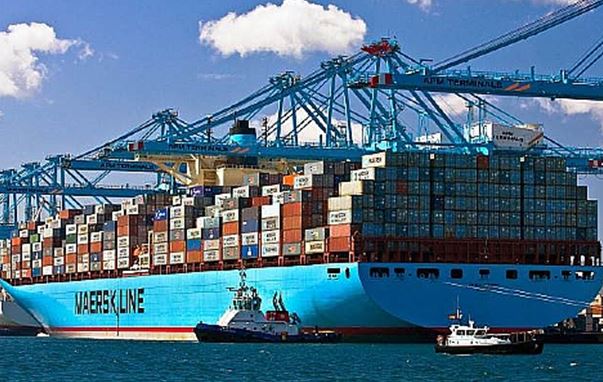

On January 1st, 2019, Damco’s Supply Chain Services and Maersk Line’s Ocean Product will be integrated and their respective value-added services will be combined and sold as Maersk products and services. This will ensure an improved customer experience with fewer touch points and a more comprehensive service offering.
The integrated commercial organisation will operate with one management team, one sales force, a strong product organisation and one customer experience organisation, headed by Vincent Clerc, Chief Commercial Officer of Maersk. Klaus Rud Sejling, CEO of Damco, will take on a new position as Head of Maersk’s Logistics and Services Products, reporting to CCO, Vincent Clerc.
Søren Skou, CEO of A.P. Moller – Maersk said: “Today we are taking further steps in the transformation of our business on a structural level and how we go to market, enabling us to offer more solutions to our customers in a simpler way. Our employees play a key role in making this happen and therefore we are at the same time empowering our frontline organisation who is closest to our customers.”
The regional organizations will be responsible for solutions engineering and product bundling to ensure that the company can take decisions faster, further enhancing the customer experience.
Damco’s freight forwarding business, which serves customers requiring air freight or multi-carrier options in ocean freight, will continue to be run as a separate and independent business under the Damco brand. By allowing Damco to focus fully on freight forwarding, A.P. Moller – Maersk aims to build a well performing and global freight forwarding business that can grow and prosper. Saskia Groen In’t Woud will be the CEO of Damco Freight Forwarding, she is currently Chief Operating Officer in Damco.
In addition to these changes, three of A.P. Moller – Maersk’s regional carrier brands, including MCC Transport, Sealand and Seago Line will gotomarket as “SeaLand – A Maersk Company” as of October 1, 2018. The simplified naming structure for these brands will help strengthen brand recognition and ensure clarity of choice for customers.
“This integration marks a big milestone on Maersk’s current growth journey towards operating as one integrated company. We are in a strong position to deliver solutions that meet our customers end-to-end supply chain management needs, thereby tapping into markets covering the whole journey from producer to consumer by building on our business strengths,” Søren Skou added.
With a wider product offering from one team, a clearer brand structure, and a strong digital foundation, A.P. Moller – Maersk is poised for growth.