


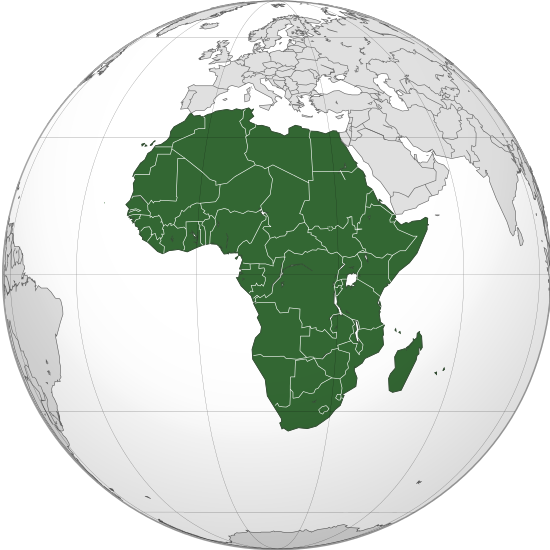
Sub-Saharan Africa Sees International Debt Stock Reach $402.8bn 2014

At the end of 2014, the international debt of sub Saharan Africa (South Africa excluded) reached $402 billion, an update published by World Bank revealed. This volume exceeds that of Middle-east and Northern Africa ($187.8 billion) but is still lower than that of developing countries ($5,393 billion).

Though making only 24.5% of national gross income, the sum, over the period considered, represented 87% of overall export in the Region ($462.7 billion).

Moreover, sub Saharan Africa (SSA) had only $172 billion of foreign reserves while Latin America had $720.4 billion and developing countries had $6,100 billion. Also, between 2008 and 2014, SSA’s external deficit soared from 5 billion to 52.4 billion dollars.

A good point however is that short-term international bonds made only 14.5% of overall debt. In regard to this, SSA is better ranked than developing countries that had a 53% rate.

In sight of the plunge in prices of commodities, the International Monetary Fund now insists on the necessity for African countries to adopt a more prudent method in their strategies for international debts.


Hot this week

What Every Brand, Tourism Board, Communications Leader Can Learn from Ojude Oba 2026

The Ojude Oba Festival is no longer merely one...

Understanding Why Corporates Need Credit Rating

As we transition into the second half of 2026,...

SERAP Sues NNPCL Over Alleged ‘Failure to Account for N5.9bn Rebranding Cost’

The Socio-Economic Rights and Accountability Project (SERAP) has filed...

RMB Supports Ministry of Finance Nigeria in Unlocking Regional Trade

RMB recently played a central role in concluding a...

Obasanjo Calls for National Drive to Develop Nigeria’s Adire Industry at Ecobank Adire Lagos Experience

Former President of Nigeria, Olusegun Obasanjo, has called for...

Topics

Stanbic IBTC Unveils New Tagline “It Can Be”

Stanbic IBTC Holdings Plc, a member of Standard Bank...

Insurance CEOs Query 10-Year Tenure Draft

Chief executives of insurance firms in the country have sharply disagreed on the draft legislation by the National Insurance Commission (NAICOM) for CEOs to leave office after 10 years. A similar measure was executed in the banking sector under Mallam Sanusi Lamido Sanusi. Many CEOs who craved anonymity queried the rationale for the measure by NAICOM, insisting that insurance should not equated with the banking sector. Click here to make lazy tweet.

Market Closes Flattish as Banking Stocks Rebound… NSE ASI up 2bps

The Local Bourse extended gains from the previous session...

Ecobank Named ‘Agric Lender of the Year 2020’ by BAFI Awards

Ecobank Nigeria has emerged the winner of “Agric...

Union Bank Core Investors to Transfer 89.39% Equity to Titan Trust Bank

The Board of Union Bank of Nigeria Plc (Union...

New Bills Threaten N6.5trn Pension Assets

The Pension Fund Operators Association of Nigeria (PenOp) has...

A Tale of Three Regimes

Since 2004 to date, the banking sector and Central Bank of Nigeria (CBN) have welcomed three different Governors of three different governing styles. In essence, Chukwuma Soludo, Lamido Sanusi and Godwin Emefiele represent three dimensional regimes in one critical sector-Banking.For those that lived through the Central Bank of Nigeria (CBN) regimes of Professor Chukwuma Soludo and Mallam Lamido Sanusi, it was always a difficult act to objectively locate the successes and failures of both administrations in terms of curing the banking sector of its endless Ebola diseases and building strong bricks for sustainable future growth.

NSE Migrates UBA, Access Bank to Premium Board Today

The Nigerian Stock Exchange (NSE) is pleased to announce...





