








By Tanimu Yakubu
Director-General
Budget Office of the Federation
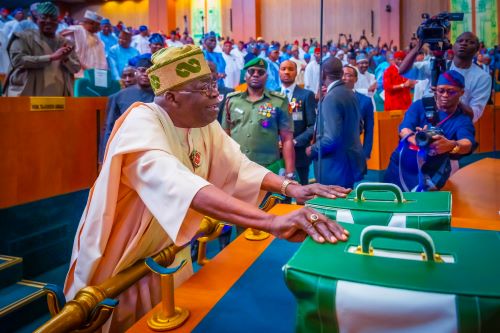
I am pleased to address you today on the 2025 Federal Government Budget Proposal, aptly themed “Budget of Restoration: Securing Peace, Rebuilding Prosperity.”
This budget reflects the Federal Government’s unwavering commitment to addressing the nation’s pressing challenges while laying a solid foundation for inclusive and sustainable economic growth.
A Framework for Stability and Prosperity
The proposed 2025 budget is set at ₦49.7 trillion, a historic figure representing an ambitious yet pragmatic approach to Nigeria’s current economic realities.
This financial blueprint is centered on three strategic priorities: security, infrastructure development, and human capital investment. These priorities are designed to restore stability, rebuild trust in governance, and create the conditions necessary for broad-based prosperity.
Revenue and Expenditure Projections
The Federal Government projects a total revenue of ₦36.35 trillion for 2025, anchored on improved non-oil revenue generation.
This includes expanded tax collections, customs duties, and independent revenue from government-owned enterprises, alongside oil revenue projections based on a crude oil benchmark of $75 per barrel, a production target of 2.06 million barrels per day, and an exchange rate of ₦1,500 per USD.
The total expenditure of ₦49.7 trillion includes significant allocations to critical sectors while targeting a fiscal deficit of ₦13.39 trillion (3.96% of GDP). This deficit will be financed through domestic and external borrowings as well as innovative public-private partnership (PPP) arrangements.
Key Budgetary Priorities
- Security
Recognising that peace is the bedrock of progress, the Federal Government has allocated ₦5 trillion to security. These funds will strengthen the capabilities of the armed forces, police, and intelligence agencies to combat insurgency, banditry, and other forms of insecurity. The goal is to restore law and order and create an environment conducive to economic growth.
- Infrastructure Development
A significant portion of the capital expenditure—estimated at ₦16 trillion—will focus on infrastructure. This includes the completion of critical road projects, expansion of rail networks, enhancement of power infrastructure, and investments in housing. These initiatives aim to reduce transaction costs, stimulate investment, and create jobs.
- Human Capital Development
The government is prioritising education and healthcare to build a productive and resilient workforce. The budget earmarks over ₦6 trillion for social services, targeting improved access to quality education, modernised healthcare infrastructure, and expanded social safety nets.
- Agriculture and Food Security
To ensure food sufficiency and reduce reliance on imports, ₦826.5 billion has been allocated to agricultural mechanisation, irrigation projects, and value-chain development. This will not only boost food production but also support economic diversification and rural development.
Reforms for Fiscal Sustainability
The 2025 budget builds on critical reforms initiated by President Bola Ahmed Tinubu’s administration, including:
- Tax Reform: The government is expanding the tax base, improving compliance through technology, and aligning taxation with equity and efficiency principles.
- Fuel Subsidy Removal: Savings from this bold policy are being redirected to targeted social programs, such as conditional cash transfers and public transportation initiatives, to protect vulnerable Nigerians.
- Debt Management: While borrowing remains a key tool to bridge the fiscal deficit, the government is committed to ensuring that debt servicing does not crowd out investments in critical sectors.
Conclusion: A Restorative Vision
The “Budget of Restoration” is not merely a financial plan—it is a declaration of intent. It embodies the government’s resolve to tackle insecurity, close infrastructure gaps, and empower the Nigerian people through targeted investments in human capital and economic development.
However, the success of this ambitious proposal depends on disciplined implementation, transparency, and collaboration with all stakeholders. I am confident that with the support of Nigerians and our partners, we can restore peace, rebuild prosperity, and secure a brighter future for our nation.
















