Friday, March 13, 2026
31.9 C
Lagos

Shared Value Shift: Time for Business to Take the Lead in Africa

The business world is changing, and those who do not stay ahead of the curve are sure to be left behind. It is no longer sufficient to take a profit-first business approach: not only is it not sustainable for the long term, but consumers at all levels are now demanding that the business world develop a conscience. Government regulations are slowly following suit, outlining development criteria to begin this critical shift – but is this enough?
The Shared Value business model is the key to unlocking the business growth and profit in addressing social issues. By identifying challenges that intersect with the business’ purpose and then integrating solutions into the business’ operations at every level of the value chain, doing good becomes part and parcel of doing good business. In essence, Shared Value reconnects the business agenda and the social agenda, intertwining profit and progress.
Corporate social responsibility has become entrenched in our public mindset. Business, having played a role in creating some of the challenges faced by society and the environment today, is now expected to lead the charge in facing and solving them.

The instinctive response is often external policies – good works that rely on allocated resources, often as ephemeral as the feel-good PR they generate. This has its place, of course, but in order to make a real change, business must rewrite its strategic DNA.
This is not about ticking a box, doing just enough to get by. This is about going above and beyond to set new standards, and embedding the profit with purpose model in the core business strategy.
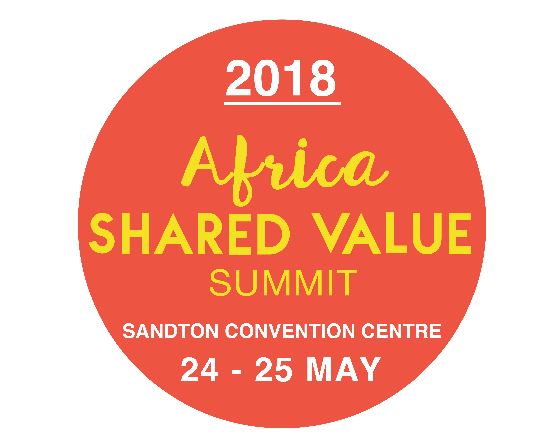
This approach is at the centre of the 2018 Africa Shared Value Summit taking place from 24-25 May 2018 at The Maslow conference centre in Sandton, Johannesburg. The Summit brings together business thought leaders, executives and changemakers, including keynote speaker and co-author of the ground-breaking Harvard Business Review article that first outlined the Shared Value strategy, Mark Kramer, to share insights from their business’ Shared Value journey.
Headline sponsor Absa is just one of the notable businesses throwing their weight behind the Summit – other sponsors are Nando’s, Old Mutual, Enel, Discovery, Woolworths and the World Food Programme. Tiso Blackstar, JCDecaux and SAfm are media partners, while OneTravel and The Maslow are travel partners.

The programme (which can be found on the Summit website) features highlight speakers from across the African continent, sharing insights and case studies that focus on the implementation and impact of Shared Value – and how it can align business to the achievement of the UN Sustainable Development Goals.


spot_img
spot_img
spot_img

Hot this week

NGX Group, IFC, CSCS, WIMBIZ Convene Leaders to Advance Gender Equality at 2026 Ring the Bell Ceremony

Nigerian Exchange Group Plc (NGX Group), in collaboration with...

Union Bank of Nigeria Marks Int Women’s Month 2026 with Inclusion-First “Give to Gain” Campaign

L-R: Chief Talent Officer, Union Bank of Nigeria, Omayuli...

NAICOM: 20 Insurance Firms Seek Capital Verification Ahead July 31 Recapitalisation Deadline

The National Insurance Commission (NAICOM) says 20 operators in...

FG Inaugurates Committee on Grid Asset Management Company to Boost Power Sector

President Bola Tinubu has constituted an 11-member committee to...

Tinubu Approves Posting of 31 Career, 34 Non-Career Ambassadors

President Bola Ahmed Tinubu has approved the postings of...

Topics

US Oil Import from Nigeria Down 67%

The United States decreased its oil import from Nigeria by 67 per cent in 2014, signaling growing economic pain and sustained pressure on foreign reserves, already down to $29.3 billion as at April 15, 2015, its lowest point since 2010. Figures from the US Department of Commerce suggest that U.S. total trade in 2014 (exports plus imports) with sub-Saharan Africa (SSA) also went down by 18 per cent to $52.1 billion compared to 2013. “In 2014, U.S. imports from SSA decreased by 32 percent, falling to $26.7 billion and representing only 1.1 percent of total U.S. imports from the world. This decrease was mostly due to a 51 percent decrease in U.S. mineral fuel and oil imports from SSA. U.S. imports from SSA originated, for the most part, from South Africa Nigeria, Angola, Côte d’Ivoire, and Chad,” the report says.

UBA Delivers N538bn PAT, Robust Balance Sheet in Q3 2025

Following its recently released half-year financials, Africa’s Global Bank...

NIA Breaks Ground for Building Project

The Nigerian Insurers Association (NIA), the umbrella body of...

Sovereign Trust Insurance CEO, Olaotan Soyinka, Preaches Caution, Safety in the Ember Months

Mr. Olaotan Soyinka, Managing Director of Sovereign Trust Insurance...

NEXIM: Sealink Project Set for 1st Qtr 2023 to Counter Foreign Domination

Abubakar Bello Managing Director/CEO Nigerian Export-Import Bank (NEXIM) Mr. Tayo Omidiji, the...

FG Tasked on National Protein-led Nutrition Policy

The Federal Government has been called upon to urgently...

40 African Bankers Discuss Partnership, Growth at Confab

The Mauritius Commercial Bank Group (MCB) hosts 40 top...

Nuclear Tech Milestone with Installation of Core Catcher at El-Dabaa NPP Unit 2

  Nuclear energy technology has hit a major milestone as...
spot_img

Related Articles

Popular Categories

spot_imgspot_img