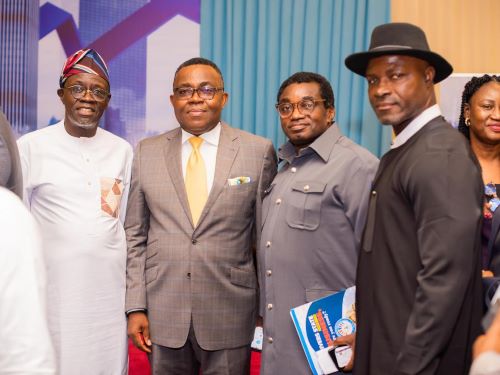

Dr. Chamberlain Peterside, Director-General, Rivers State Investment Promotion Agency (RSIPA)-2nd Left; Mr. Tony Epelle, Managing Consultant & CEO, SAMUELSON Advisory Services (2nd Right) and other participants at the interactive session for MDAs and OPS organised by RSIPA in Port Harcourt.
An interactive session organised in Port Harcourt by the Rivers State Investment Promotion Agency (RSIPA) has called for a single tax window, competitiveness and strategic partnerships to ensure growth and development in Rivers State.
The participants at the forum said there is need to curb multiple taxation, especially at the local government level and harmonisation of taxes in the State to encourage local and foreign investment.
Other major drivers of inclusive development canvassed at the session include:
- Export logistics
- The optimal use of the high seas for effective participation in the Blue Economy
- Timely processing of land documents
- Effective planning for waste & environmental management
- RSIPA should be part of creating an enabling environment for businesses and investment
In his closing remarks, the Chairman of Rivers State Investment Promotion Agency (RSIPA), Dr. Lawrence Fubara Anga said the Government and people of Rivers State must hold their destiny in their hands to drive sustainable development of the State.
“We cannot continue to be a transit point. We must build Rivers State beyond oil & gas.”
The programme was attended by Elder Statesmen, State Commissioners, Permanent Secretaries, Representatives of Government Agencies, Legal Practitioners, Bankers, Labour Leaders, Management Consultants & major organisations in Rivers State.
Goodwill messages were received from the President of Port Harcourt Chamber of Commerce; President of Bonny Chamber of Commerce and the Bank of Industry (BOI).
The objectives of setting up RSIPA include:
- Initiate, promote, facilitate, co-ordinate and create a conducive environment for investments and development in the State through Greenfield, Brownfield, Public-Private Partnerships, privatisation. commercialisation of State-owned assets and concessions, enterprise development schemes and employability programmes
- Encourage and promote domestic, national and foreign investments in Rivers State to effectively strengthen and diversify the economy of Rivers State
- Promote large-scale production, economic growth and development, realise self-sufficiency and self-reliance; and penetrate direct and indirect employment for Rivers’ people and contribute to economic empowerment and eradication of poverty in the State.