






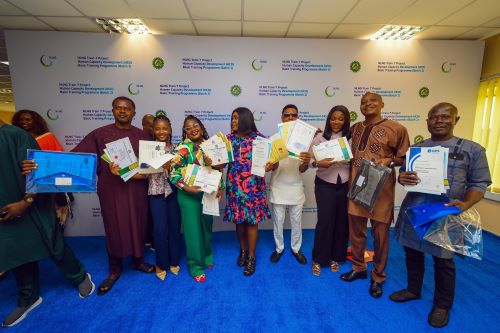


Some graduands of the NLNG Train 7 Project Human Capacity Development (HCD) Basic Training Programme during the Batch 2 Closeout Ceremony.
Seventy young professionals have graduated from the NLNG Train 7 Project Human Capacity Development Basic Training Programme, completing an intensive one-year programme in Data Analysis and Supply Chain Management. The milestone underscores NLNG’s commitment to developing a skilled, industry-ready workforce and strenghtening Nigeria’s capacity to compete in an increasingly dynamic global energy sector.
Beyond their core specialisations, the graduates received practical exposure in key oil and gas support areas, including Health, Safety and Environment, Business Management, Information Technology, Document Management, Nigerian Content awareness, and on-the-job training, a blend of technical and workplace skills critical to the industry value chain.
Speaking at the close-out ceremony, Sophia Horsfall, NLNG’s General Manger, External Relations & Sustainable Development stated that the successful completion of the 12-month programme demonstrated what strategic investment in human capacity can achieve.
She noted that the graduates had been equipped with the professional intellect, discipline, and character required to contribute meaningfully to their chosen fields. She charged them to see themselves as products of a national investment and to apply their skills with integrity, precision, and excellence.
“You started this journey as candidates, and today, we are showing you off as professionals. From here, I urge you to continue to demonstrate the discipline you have learnt and never forget that you are the dividends of a national investment,” she said.
Project Director, NLNG Train 7 Project, Engr. Ali Uwais, stated that the programme showed the strength of NLNG and NCDMB’s collaboration in closing critical competency gaps in the oil and gas industry. He noted that with 401 candidates trained across Batch 1 and Batch 2, the initiative had strengthened Nigeria’s pool of industry-ready professionals. He urged the graduates to remain committed to innovation and continuous learning in a fast-changing technology-driven industry.
“The success of this programme is a testament to the effective collaboration of NCDMB and NLNG to close competency gaps in relevant industry skills,” he said.
Engr. Uwais also commended the Oil and Gas Trainers Association of Nigeria, OGTAN, as custodian of the training standards, for ensuring that the programme delivered the required competencies.
Speaking on behalf of the Executive Secretary of the Nigerian Content Development and Monitoring Board, Ms. Alexis Emelle, General Manager, Human Capacity Development, applauded the strong collaboration between NCDMB and NLNG.
She described the Human Capacity Development component of the Train 7 Project as a practical demonstration of the successful implementation of the Board’s Human Capital Development Guideline, 2020, which mandates major oil and gas projects to deliberately support the training, empowerment and capacity development of Nigerians.
Emelle noted that the Train 7 Project, one of the largest gas infrastructure developments in Africa, had not only created jobs but also provided a platform to groom young Nigerians with advanced technical and managerial competencies.
“The training provided hands-on experience on a live LNG project, complementing the trainees’ academic and theoretical knowledge. It also exposed them to specialized advanced technical disciplines, project management, health and safety, and emerging technologies critical to the future of the industry,” she said.
The close-out ceremony brought the NLNG Train 7 Project Human Capacity Development Basic Training Programme to a formal conclusion, with 70 trainees graduating from Batch 2 and the total number of beneficiaries under the NCDMB/NLNG-sponsored initiative rising to 401.
The programme adds to Nigeria’s pool of local talent trained in technical, safety, business, and professional areas relevant to the oil and gas value chain, while reinforcing NLNG’s support for the country’s human capital development agenda and NCDMB’s mandate to deepen local capacity and close industry skills gaps.
















