Thursday, April 9, 2026
29.5 C
Lagos

Nigeria, Niger Republic Sign Agreement on Border Frequency Co-ordination

Nigeria and Republic of Niger have signed a bilateral agreement in Abuja for co-ordination of frequency utilisation along their borders to ensure seamless deployment of services around within the two countries.

The agreement signing ceremony was one of the highlights of the two-day Digital Economy Regional Conference, hosted by the Nigerian government and facilitated by the Federal Ministry of Communications and Digital Economy, which ended in Abuja.

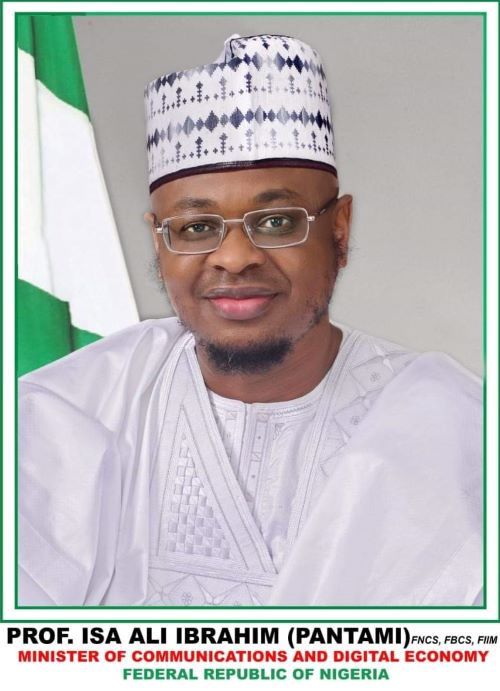
Nigeria’s Minister of Communications and Digital Economy, Prof. Isa Ali Ibrahim Pantami, signed on behalf of Nigeria, while his Nigerien counterpart, the Minister of Post and New Information Technologies, Mr. Moussa Baraze, signed on behalf of his country.

The Executive Vice Chairman and Chief Executive Officer (EVC/CEO) of the Nigerian Communications Commission (NCC), Prof. Umar Danbatta and Niger Republic’s Chairperson of the National Council for Regulation of Electronic Communications and Post, Mrs. Aichatou Oumani, were witnesses to the agreement, which applies to the co-ordination of frequencies existing in the Nigeria-Niger transboundary areas between 87.5 megahertz (MHz) to 30 gigahertz (GHz).

The agreement indicated it will help in effective coordination and sharing of frequencies and channels in the ‘buffer zone or area’ on borderlines between the two countries and also help to address one of the major issues of signal interference regulation that may arise in telecoms signal transmissions by terrestrial telecoms service providers, as it spells out the procedures for regulating such cases.

The agreement, according to the two parties, provides, in part, that in case of harmful interference affecting one of the parties, the affected party shall inform the other party in writing for necessary action to be carried out.

“Also, the party from whence the interference is originating shall ensure that all necessary means are used to resolve the harmful interference within 30 days of receipt of the notice”, the agreement says.

While the Agreement is without prejudice to the rights and obligations of the parties specified in the Convention, the Constitution of the International Telecommunication Union (ITU) and other inter-governmental arrangements, it states, however, that the land and mobile services whose use is restricted for security, maritime and national defence or for which information is not available, shall not be subjected to the provisions of the agreement.


 

spot_img
spot_img
spot_img

Hot this week

Mutual Benefits Highlights Power of Structured Financial Planning as Nigerians Struggle to Save

A growing number of Nigerians are struggling to build...

APC Chairman: Party is Nigeria’s Only Tested Vehicle for Stability, Progress, National Renewal

The National Chairman of the All Progressives Congress (APC),...

RHUCE Taps into Africa’s $3b Creator Economy with New Monetisation Platform 

RHUCE, a new social platform designed for African creatives,...

FG Tasks PenCom on N28tn Pension Assets at Board Inauguration

The Federal Government has inaugurated the Governing Board of...

Inspenonline Retirement Summit 2026: Experts to Brainstorm on Turning Dreams into Reality for Workers

How to turn dreams into reality through insurance; pension...

Topics

Access Holdings Reports ₦2.5tn Gross Earnings in H1 2025

Access Holdings Plc has announced its half-year audited financial...

Guild of Editors Demands Special Protection for Journalists Covering Covid-19 Pandemic

  On the occasion of this year’s World Press Freedom...

Banks, Telcos Disagreement Hindering Mobile Money Services

The inability of banks and telecom operators to agree on modalities for mobile money operations is hindering the potential of such transactions in Nigeria, compared to the acclaimed success of M-pesa in Kenya. Mobile money transactions need legislations and approvals from both the Central Bank of Nigeria (CBN) which regulates the banking sector and the Nigerian Communications Commission (NCC) that oversees telecom services in the country. Giving an insight into the success of M-Pesa in Kenya at the Commonwealth Broadband Forum 2015 in Abuja, Mr. Joseph Tiampati Musuni, Principal Secretary, Ministry of Information, Communications and Technology, Kenya, said their country experienced a similar Banks-Telcos disagreement at the outset of mobile money services in Kenya. But he added that the government was able to facilitate an amicable and working arrangement between them to pave way for roll-out of the service.

CBN Approves Weekly FX Sale of $150k to BDCs to Enhance Market Liquidity

The Central Bank of Nigeria (CBN) has approved the...

Wema Bank Wins 2022 Highest Dividend Yield at PEARL Awards

L to R:  Chairman, Lasaco Assurance Plc & Former...

NCC, NAICOM, LASG, Experts Identify Importance of Media in National Development, Seek Adoption of AI

L-R: Maureen Chigbo, President, Guild of Corporate Online Publishers...

NEXIM Bank to Generate $5bn Yearly via Export Facilities

The Nigerian Export-Import Bank (NEXIM Bank) recently launched two intervention products targeted at promoting the country’s non-oil exports. The funds are the N500 billion Export Stimulation Facility (ESF) and the N50 billion Export Rediscounting and Refinancing Facility (ERRF). These intervention funds by Central Bank of Nigeria (CBN) are part of the efforts of the Federal Government to address the persistent overdependence of the economy on revenue from crude oil exports.
spot_img

Related Articles

Popular Categories

spot_imgspot_img