Thursday, March 12, 2026
33.5 C
Lagos

N300m Insurance Rebranding Project Stirs Market

The N300 million rebranding project by the insurance industry in Nigeria has reinvigorated the hope of operators in the market for better days ahead.

Mr. Oye Hassan-Odukale, chairman of the sub-committee on Publicity and Communications of the Insurers Committee, said the project has an initial three-year lifespan to change the perception of the Nigerian public about insurance and the insurance industry itself.

Odukale maintained that Nigeria cannot attract sustainable Foreign Direct Investment (FDI) without insurance protection for the investors.
N300m Insurance Rebranding Project Stirs Market
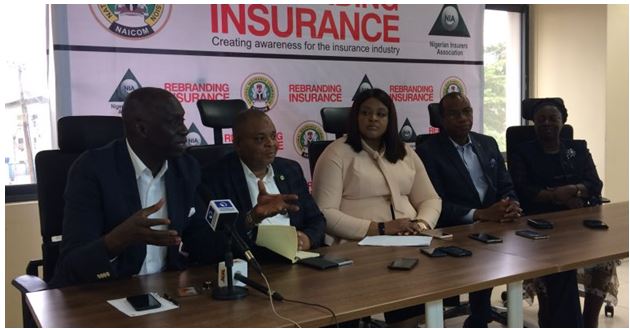
L-R: Chairman Sub-Committee on Publicity and Communication, Insurers Committee, Hassan Oye- Odukale; Deputy Director/Head, Corporate Affairs, NAICOM, Rasaaq Salami; Vice Chairman Sub Committee, Publicity, Ebelechukwu Nwachukwu; Managing Director, Custodian & Allied General Insurance Limited, Toye Odunsi and Director-General, Nigerian Insurers Association (NIA) Mrs Yetunde Ilori.

“We want insurance to move the economy forward. Investment cannot come into Nigeria without insurance protection for the investors. If we achieve one percent insurance penetration in Nigeria, it is huge given our population of 180 million. Indeed, claims payment is the best advert for insurance companies in the country.”

The insurance rebranding project will focus on four key planks:

  • Changing the mindset of Nigerians on the business of insurance
  • Ensuring the public understands the importance, values and benefits of insurance
  • Showcasing the advancements made delivering efficient services within the insurance sector to encourage more Nigerians to take up insurance
  • Propagating insurance as the engine that drives key sectors and keeps them in business

Odukale, who is also the managing director/chief executive of Leadway Assurance Company Limited added:

“The low insurance penetration rate in Nigeria is as a result o the wide financial protection gap; hence we must work hand-in-hand to ensure that risk protection and insurance education are readily accessible to the average man on the street. We need to look beyond making sales to reversing the negative perception many Nigerians have of the insurance industry.”

The rebranding project will also showcase insurance firms and chief executive officers operating in the industry, their contacts and create an avenue for them to respond to questions from members of the public.


 

spot_img
spot_img
spot_img

Hot this week

NGX Group, IFC, CSCS, WIMBIZ Convene Leaders to Advance Gender Equality at 2026 Ring the Bell Ceremony

Nigerian Exchange Group Plc (NGX Group), in collaboration with...

Union Bank of Nigeria Marks Int Women’s Month 2026 with Inclusion-First “Give to Gain” Campaign

L-R: Chief Talent Officer, Union Bank of Nigeria, Omayuli...

NAICOM: 20 Insurance Firms Seek Capital Verification Ahead July 31 Recapitalisation Deadline

The National Insurance Commission (NAICOM) says 20 operators in...

FG Inaugurates Committee on Grid Asset Management Company to Boost Power Sector

President Bola Tinubu has constituted an 11-member committee to...

Tinubu Approves Posting of 31 Career, 34 Non-Career Ambassadors

President Bola Ahmed Tinubu has approved the postings of...

Topics

Emirates Skywards Celebrates 20th Anniversary, 27m Member Milestone

Emirates Skywards, the award-winning loyalty programme of Emirates and...

Independents to Account for 25% Oil Production by 2020

Independents are projected to account for about 500kbpd by the year 2020, representing 25% of crude oil production in Nigeria, from the current level of 10%. The development is seen as a reflection of the changing landscape of the oil and gas industry in Nigeria. Key Recommendations: • Integration of the upstream to other parts of the value chain may eventually be driven by the independents. • Challenges such as security, especially for independents operating in shallow waters. Local companies reiterated that security and community challenges have greatly altered their cost of production which cannot be fully ascertained. When coupled with Government take and interest from loans the cost per barrel increases. • Government is to ensure that an enabling environment is created - independents need to be able to deliver on capacity growth and funding.

Local Bourse Sustains Positive Momentum… ASI up 1.1%

Yesterday, the local bourse maintained its positive performance as...

Oil Prices Driving Lower Growth in Sub-Saharan Africa

Latest report by the World Bank Group suggests that low oil prices have considerably reduced growth in commodity-exporting countries in Sub-Saharan Africa, especially in Nigeria and Angola etc. and have also slowed activity in non-oil sectors. The report says that although South Africa is expected to be one of the main beneficiaries of low oil prices, growth is being held back by energy shortages, weak investor confidence amid policy uncertainty, and by the anticipated gradual tightening of monetary and fiscal policy. Growth in the region is forecast to slow to 4.2 percent, slower than previously expected.

Market Statistics: Thursday, 12th October 2017

Market Cap (N'bn)              12,643.9 Market...

SEC, NGX Group Reinforce Commitment to Capital Market Digital Transformation

The Securities and Exchange Commission (SEC) and Nigerian Exchange...

Financial Inclusion and The Rise of Payment

By Elvis Eromosele Technology is an almost indispensable part of...
spot_img

Related Articles

Popular Categories

spot_imgspot_img