








One of the unfortunate consequences of more people surviving childhood and living longer lives is that you start to see cases of cancer steadily increase.
But while medical advances are helping to improve survival rates of cancer patients in high-income countries, the limited access to screening and treatment across Africa means that a growing number of people are dying young from largely preventable and treatable diseases. Because of this Africa is now in serious danger of sleepwalking into a cancer crisis.
This is particularly the case with women and cervical cancer, which in many countries is the most common cancer affecting women. Currently 266,000 women die horrible deaths of this disease every year – one every two minutes – of which 87% are in low- and middle-income countries, with the eight highest rates of incidence all in Africa.
In Nigeria alone more than 14,000 women are diagnosed with the disease each year, more than 8,000 of whom die. And yet, tragically most of these deaths could be prevented thanks to the existence of an affordable and effective vaccine.
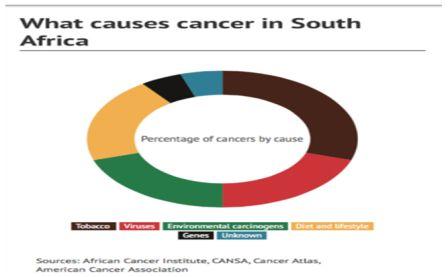
Human Papilloma Virus (HPV) vaccines targets the virus that is responsible for 70-90% of cervical cancers, depending on the vaccine. It is safe and one of the most effective and high-impact vaccines that exist, preventing 1,500 deaths for every 100,000 girls vaccinated. So then why aren’t African girls getting it?
Historically one of the major barriers was price. In wealthy countries, this relatively new vaccine can cost more than US$ 100 for each of the two doses required.
Today it costs just US$ 4.50 per dose for poorer countries, bringing it within reach of those most in need, thanks to the efforts of Gavi, the Vaccine Alliance, of which I am Board Chair. In addition to this the age of the target population has also posed challenges. HPV vaccine is most effective when given to women before they become sexually active, so campaigns are aimed vaccinating adolescent girls, typically between 9-14 years old.
Since this falls outside the age range when infants receive most of their vaccinations, it has meant finding reliable ways to reach these girls, such as working with civil society organisations, community health workers and youth friendly services to establish school-links and develop health platforms for adolescents.
Since 2013, this sort of approach has enabled more than 1 million school-aged girls in poor countries to be vaccinated against HPV, with more planned for 2017.
However, progress so far has largely been achieved through dozens of relatively small-scale “demonstration projects”. If we want to make a long-term dent on mortality rates, and prevent cervical cancer from continuing to rise, to the point where it kills more women than childbirth, then HPV programmes need to be scaled-up to a national level.
Countries like Rwanda and Uganda have already demonstrated that this can be achieved by first recognising the scale and severity of the problem, and then to acting on it. If other countries do the same, Gavi hopes to reach 40 million girls between now and 2020, preventing 900,000 deaths.
We saw a significant step in the right direction exactly one year ago, when on World Cancer Day, the then UN Secretary General Ban Ki-Moon issued a rallying cry to eliminate cervical cancer once and for all.
Then this week, the African Union, which is made up of 55 states, endorsed the Addis Declaration on Immunization, a commitment to ensure that all Africans – no matter who they are or where they live – can access the vaccines they need to live healthy and productive lives. The next step is for governments to earmark funds and commit to national HPV vaccine introductions.
Across Africa there remains a desperate need for cancer clinics offering women affordable screening and treatment, but compared to immunisation these are much more expensive to set-up. This is one reason why in Nigeria, for example, far more women die of cancer than men, even though Nigerian women tend to drink and smoke less, and are on average more physically active.
So, prioritising HPV will not only contribute to the social and economic development of countries and help governments meet the Sustainable Development Goal of reducing premature deaths from non-communicable diseases, such as cancer, by one third, but it will also go a long way towards addressing the terrible gender gaps that exist across Africa.
A development economist and former Finance Minister of Nigeria, Dr. Ngozi Okonjo-Iweala has served as Board Chair of Gavi, the Vaccine Alliance, since January 2016
















