









Way back in my college days, we were taught that every man needs three basic things for normal living: Food, Clothing and Shelter. For me and my folks then, the teacher was only teaching us to pass our exams and move on to the next class.
Why should we really bother about the teacher’s sermon of Food, Clothing and Shelter as three basic needs of man when our Daddy and Mummy were there for us 24/7, providing all the food we need, the clothing to cover our bodies and shelter to sleep in overnight.
Indeed, that was the headache of Daddy and Mummy-not our problem. But as I grew up, l began to see the sense in the Three-Basic-Needs-of-Man sermon of our long forgotten teacher. As adulthood came, so came responsibilities and the need for Food, Clothing and Shelter. In Nigeria today, the often quoted housing deficit is put at 17 million units while the UN Habitat reported that 30% of the world’s population reside in slums unfit for human habitation.
It would be pertinent to consider this report on shelter by Mckinsey Consulting:
Decent, affordable housing is fundamental to the health and well-being of people and to the smooth functioning of economies. Yet around the world, in developing and advanced economies alike, cities are struggling to meet that need.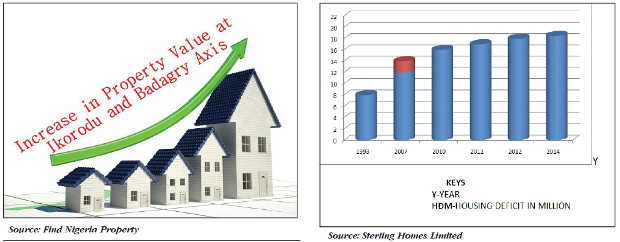

If current trends in urbanisation and income growth persist, by 2025 the number of urban households that live in substandard housing—or are so financially stretched by housing costs that they forego other essentials, such as healthcare—could grow to 440 million, from 330 million. This could mean that the global aff ordable housing gap would affect one in three urban dwellers, about 1.6 billion people.
It finds that the affordable housing gap now stands at $650 billion a year and that the problem will only grow as urban populations expand: current trends suggest that there could be 106 million more low-income urban households by 2025, for example. To replace today’s inadequate housing and build the additional units needed by 2025 would require $9 trillion to $11 trillion in construction spending alone. With land, the total cost could be $16 trillion.
Of this, we estimate that $1 trillion to $3 trillion may have to come from public funding. Back here in Nigeria, quite a number of measures and efforts have been made by the government (federal and states) and the private sector to effectively address the challenge of cheap and affordable shelter.
Unfortunately, the result has been mixed-one step forward and two steps backwards. It is therefore my intention to present the grim Facts & Figures on Shelter with the objective of spurring our leaders and other stakeholders to rise up to the realities of providing good shelter for the people of Nigeria at an affordable rate.














