






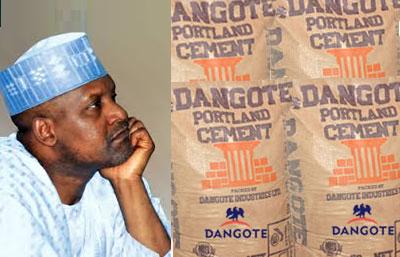


The global supremacy for cement production is growing per second across many nations. Today, nations have come to realise the key importance of attaining domestic cement sufficiency for national development and export.
In Nigeria, the Dangote Group is leading the nation’s dream for cement sufficiency and expansion in Africa. The Cement war is presented in infographics for greater appreciation.
Cement Factsheet:
Russia, CEE and CIS
In this abridged extract from a 2014 EY report, Denis Borodenok and Evgeni Khrustalev provides an overview of the cement industry in Russia, Belarus and Kazakhstan.
Recent modernisation projects to increase alternative fuels storage and handling capacity at Cement Hranice in the Czech Republic.
Cement Factsheet: Turkey
World Cement’s December 2014 issue featured a regional report on the Turkish cement industry. This includes a handy factsheet(below), an article on energy management within the Turkish cement sector by Mahmut Selekoglu, as well as a case study by Kipas Cement and SpectraFlow Analytics Limited on the installation of online analysers for improved raw mill control.
DANGOTE CEMENT
Manufacturing/ Importation, Packaging & Distribution.
Dangote Cement is a fully integrated cement company and has projects and operations in Nigeria and 14 other African countries;
Dangote Cement’s current total production capacity in Nigeria from its three existing cement plants namely Obajana (10.25MMTPA), Ibese (6.0MMTPA) and Gboko (4.0MMTPA) is 20.25MMTPA.
The Obajana Cement Plant (OCP) located in Kogi State is reputed to be one of the single largest cement plants in the world with a combined capacity of 10.25MMTPA.
A fourth line which will add 3.0MMTPA to the existing capacity will bring the total capacity of Obajana to 13.25MMTPA by 2015.
Dangote Cement is also the biggest quoted company in West Africa and the only Nigerian company on the Forbes Global 2000 Companies.
CEMENT – NIGERIA PLANTS:
Obajana Cement Plc, Kogi Benue Cement Company, Benue Dangote Cement Works Ltd, Ibese Combined Capacity : 20 million Mtpa.
TERMINALS:
Lagos Cement Terminal, Port Harcourt Cement Terminal, Onne cement terminal, Aliko Inland cement terminal, Continental Cement terminal, Combined Capacity: 9 million Mtpa
CEMENT – AFRICA PLANTS
Senegal 1.5 million MTpa, Zambia 1.5 million MTpa (Green-field projects), Tanzania 1.5 million MTpa, South Africa 2.2 millon MTpa, Congo (Brazzaville) 1.5 million MTpa, Ethiopia 1.5 million MTpa, Cameroun (Grinding) 1.5 million MTpa
TERMINALS
Ghana 3.0 million MTpa, Sierra Leone 0.5 million MTpa, Ivory Coast 1.0 million MTpa, Liberia 0.5 million MTpa
CEMENT FOCUS – OBAJANA
Single largest cement plant in Africa with a capacity of 5.2 million MTpa (additional capacity of over 5 million MTpa planned)
Vertical roller mills for energy, efficient grinding of raw material and clinker.
Gas pipeline of approx. 90 km length for the supply of natural gas to cement plant and power plant from Ajaokuta to Obajana (capacity -96,000 cu.m /hr.) Power plant of capacity 135 mw – gas / diesel based.
















