Tuesday, March 3, 2026
27.1 C
Lagos

Business

Tinubu Hails Nigeria-UAE Partnership as BUA Signs MoU with Abu Dhabi Ports, Mair Group

President Bola Ahmed Tinubu has commended the signing of...

Tinubu Hails BOI on N636bn Loan Disbursement to Businesses in 2025

President Bola Ahmed Tinubu has commended the Bank of...

Reputation Economy: How Nigerian Brands Won, Lost Public Trust in 2025

P + Measurement Services, Nigeria’s leading independent media intelligence...

UAC Records Revenue Surge, Profit Impacted by One-Off Acquisition-Related Costs

UAC of Nigeria Plc has announced its unaudited financial...

Repton Group Wins 2025 Dangote Cement Largest Distributor Award

…in Nigeria, Sub-Saharan Africa By Goke Ilesanmi L-R: Alhaji Aliko...

ICT

Konga Partners Verve to Delight Customers with Free Shopping Vouchers

  Konga, Nigeria’s leading composite e-commerce platform has partnered with...

NCC Spotlights Renewable Energy on World Consumer Rights Day

  The Nigerian Communications Commission (NCC) has concluded arrangements to...

Governors, NCC Set for Broadband Awareness Forum Oct 20

All Nigeria State Governors are set to discuss how...

VerveLife 5.0 Gears Up for Nairobi, Lagos Events

Following a successful series of Verve Life 5.0 satellite...

Telecom Infrastructure Critical to Successful 2023 Elections – Danbatta

The Executive Vice Chairman of the Nigerian Communications Commission,...

Capital Market

NGX RegCo Issues Advisory on Recent Price Movements, Urges Informed Trading

NGX Regulation Limited (NGX RegCo), the independent regulatory arm...

Stanbic IBTC Nominees Celebrates 30 Years of Trust with Landmark Gala Event

Stanbic IBTC Nominees Limited marked a significant milestone on...

NGX GMD, Temi Popoola, Seeks Collaborative Alignment to Drive Sustainable Capital at IFC Confab

Temi Popoola, Group Managing Director and Chief Executive Officer...

AI: Powerful Tool for Economic Growth in Africa-NGX Chair, Umaru Kwairanga

 KEYNOTE SPEECH BY THE CHAIRMAN OF THE NIGERIA EXCHANGE...

Transcorp, DMO, MTN, Dangote Cement, CardinalStone, among Winners at NGX Made of Africa Awards

Transnational Corporation Plc, the Debt Management Office, CardinalStone, Chapel...

Insurance

AIICO 2026 Agency Retreat Honours Outstanding Sales Champions

Mrs. Ego Uzochukwu (Award Winner, centre); flanked on her...

Sovereign Trust Insurance Spreads Love with Fire Safety Drive

On Valentine's Day, Sovereign Trust Insurance Plc showed its...

Mutual Benefits Begins 2026 with ₦5.9bn January Claims Settlement

Mutual Benefits Assurance Plc, a leading Nigerian insurance company,...

Love That Protects: AIICO Takes Valentine’s Message to the Streets

In a vibrant twist to this year’s Valentine’s Day...

Business

Tinubu Hails Nigeria-UAE Partnership as BUA Signs MoU with Abu Dhabi Ports, Mair Group

President Bola Ahmed Tinubu has commended the signing of...

Tinubu Hails BOI on N636bn Loan Disbursement to Businesses in 2025

President Bola Ahmed Tinubu has commended the Bank of...

Reputation Economy: How Nigerian Brands Won, Lost Public Trust in 2025

P + Measurement Services, Nigeria’s leading independent media intelligence...

UAC Records Revenue Surge, Profit Impacted by One-Off Acquisition-Related Costs

UAC of Nigeria Plc has announced its unaudited financial...

Repton Group Wins 2025 Dangote Cement Largest Distributor Award

…in Nigeria, Sub-Saharan Africa By Goke Ilesanmi L-R: Alhaji Aliko...

ICT

Konga Partners Verve to Delight Customers with Free Shopping Vouchers

  Konga, Nigeria’s leading composite e-commerce platform has partnered with...

NCC Spotlights Renewable Energy on World Consumer Rights Day

  The Nigerian Communications Commission (NCC) has concluded arrangements to...

Governors, NCC Set for Broadband Awareness Forum Oct 20

All Nigeria State Governors are set to discuss how...

VerveLife 5.0 Gears Up for Nairobi, Lagos Events

Following a successful series of Verve Life 5.0 satellite...

Telecom Infrastructure Critical to Successful 2023 Elections – Danbatta

The Executive Vice Chairman of the Nigerian Communications Commission,...

Capital Market

NGX RegCo Issues Advisory on Recent Price Movements, Urges Informed Trading

NGX Regulation Limited (NGX RegCo), the independent regulatory arm...

Stanbic IBTC Nominees Celebrates 30 Years of Trust with Landmark Gala Event

Stanbic IBTC Nominees Limited marked a significant milestone on...

NGX GMD, Temi Popoola, Seeks Collaborative Alignment to Drive Sustainable Capital at IFC Confab

Temi Popoola, Group Managing Director and Chief Executive Officer...

AI: Powerful Tool for Economic Growth in Africa-NGX Chair, Umaru Kwairanga

 KEYNOTE SPEECH BY THE CHAIRMAN OF THE NIGERIA EXCHANGE...

Transcorp, DMO, MTN, Dangote Cement, CardinalStone, among Winners at NGX Made of Africa Awards

Transnational Corporation Plc, the Debt Management Office, CardinalStone, Chapel...

Insurance

AIICO 2026 Agency Retreat Honours Outstanding Sales Champions

Mrs. Ego Uzochukwu (Award Winner, centre); flanked on her...

Sovereign Trust Insurance Spreads Love with Fire Safety Drive

On Valentine's Day, Sovereign Trust Insurance Plc showed its...

Mutual Benefits Begins 2026 with ₦5.9bn January Claims Settlement

Mutual Benefits Assurance Plc, a leading Nigerian insurance company,...

Love That Protects: AIICO Takes Valentine’s Message to the Streets

In a vibrant twist to this year’s Valentine’s Day...

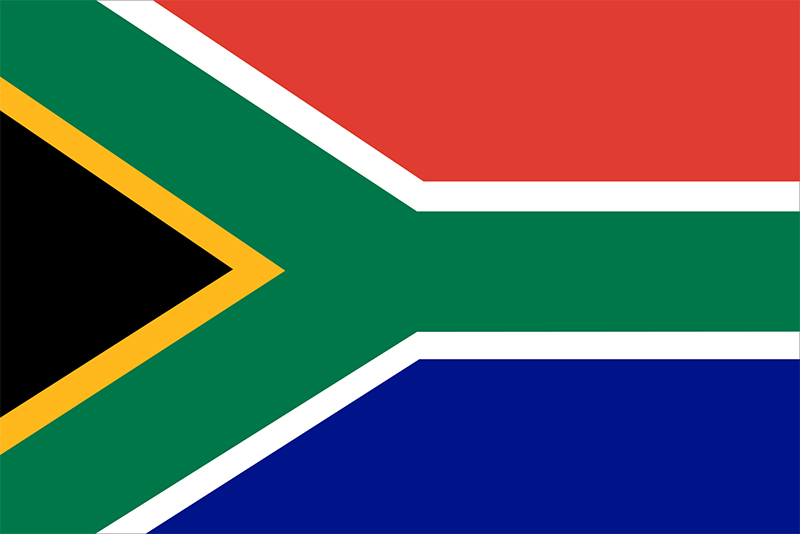
South Africa: Business Insolvencies Rise by 22% over COVID-19 Pandemic

• Thanks to massive state intervention, global insolvencies decreased in 2020 (-12%) and will continue to do so in 2021 (-6%). Euler Hermes expects global insolvencies to rise by +15% in 2022, but still at a low level (-4% compared to pre-crisis figures).
• The US will be an exception in the global landscape, keeping insolvencies at a low level in 2021 and 2022, while Europe will see mixed trends and Emerging Markets should be watched very closely.
• Business insolvencies in South Africa are expected to reach 2,200 cases for the full year
• 5 factors will set the tone for the path ahead: the global momentum of the economic rebound, the pace of withdrawal of state support, the extent of “fragile” companies, the deterioration of companies’ financials and the quick recovery of business creation.
Since 2020, state support measures have helped most economies avoid a large wave of business insolvencies despite the historic economic shock caused by the Covid-19 crisis. But will their gradual withdrawal spark a resurgence in the coming months?
Euler Hermes’ economists investigate in their latest report.
• Global insolvencies are on the rise, but still at a lower level than in 2019
Global insolvencies decreased in 2020 (-12%) and will continue to do so in 2021 (-6%) as the extension of many state support measures in a context of generally accommodative monetary policy is helping to manage the pressure on companies’ liquidity and solvability.
“Looking at insolvency levels, governments succeeded in helping companies face the crisis: massive state intervention prevented one out of two insolvencies in Western Europe and one out of three in the US in 2020. Their extension will keep insolvencies at a low level in 2021, but what happens next depends on how governments act in the coming months,” said Maxime Lemerle, Head of Sector and Insolvency Research at Euler Hermes.
According to Euler Hermes, the withdrawal of support measures for companies sets the stage for a gradual normalisation of business insolvencies. The world’s leading trade credit insurer expects global insolvencies to post a +15% y/y rebound in 2022, after two consecutive years of decline.
But with a fine-tuned and step-by-step removal, the return to pre-crisis insolvency levels will take longer: global insolvencies will remain -4% below 2019 levels in 2022.

• The US and Asia could take longer to see a resurgence compared to parts of Europe and several Emerging Markets
Emerging Markets are already seeing a normalisation of business insolvencies amid renewed restrictions in response to new waves of infections and less generous policy support. We expect those in Africa to largely exceed pre-Covid-19 levels as soon as 2021, and those in Central/Eastern Europe and Latin America to do so in 2022.

• Business insolvencies in South Africa rise by 21.5%
South Africa is one of the few countries posting, for the first months of 2021, more business insolvencies compared to 2020 – with notably Italy and Spain and Morocco. Business insolvencies increased by +21.5% y/y over the first seven months of the year, with 1,162 cases compared to 956 in 2020.
This shows that South Africa has already recovered to its pre-crisis level since business insolvencies were reaching 1,140 cases on average since 2014 for the same period (January to July).
“Q3 liquidations for trade, food and accommodation have been impacted the most as a result of lockdown restrictions and lack of substantial state support. They were at 286 between January to August 2021 versus 229 for the same period last year. The majority of the other sectors showed marginal declines or improvements from last year,” says Luke Morawitz Head of Credit Intelligence at Euler Hermes South Africa, which operates through the Allianz Global Corporate & Specialty (AGCS) license in South Africa.
“Euler Hermes expects business insolvencies in South Africa to reach 2,200 cases for the full year, which would represent more than pre-crisis levels since insolvencies were averaging 1,900 cases over the 2014-2019 period), but much less than the record reached in 2009 and 2001 when business insolvencies exceeded 4,100 at the full year,” adds Morawitz.
After a noticeable decline in 2020-2021 due to the faster exit from the pandemic and the corresponding economic recovery, most Asian countries will post higher insolvencies in 2022 (+18% y/y for the region). India in particular will see a strong surge (+69% y/y) due to the specific duration of the suspension of courts over 2020-2021.
However, while most countries will return to the ‘natural’ number and trend in insolvencies related to their business demographics and economic outlooks, the region overall will still record less insolvencies in 2021 than in 2019, unless a prolonged resurgence of the virus continues to disrupt ports, plants and supply chains.
Western Europe will post mixed trends: Spain and Italy are likely to see a large recovery of insolvencies by 2022 (5,110 and 10,500 insolvencies, respectively) due to their higher shares of sectors sensitive to Covid-19 restrictions. In contrast, Germany (16,300), France (37,000), Belgium (8,150) and the Netherlands (2,400) will take longer to return to pre-crisis levels because of large support packages and/or the extension of support measures.
The US is the main outlier, with a low number of insolvencies likely both in 2021 and 2022 due mainly to the combination of massive support (notably the PPP virus loan program in 2020 and the recovery plan in 2021-22) and the fastest economic rebound in over three decades.

• 5 indicators will shape how insolvencies evolve in the coming months
Euler Hermes has identified five factors that will set the tone of the path ahead for global insolvencies:
• The global momentum of the economic rebound, which will be decisive for the pace of removal of state support measures, and in turn impact the pace of business insolvency normalization. Most advanced economies should see GDP growth above the +1.7% required to stabilize insolvencies in 2021-2022. As a reminder, Euler Hermes estimates that global GDP will grow by +5.5% in 2021 and +4.2% in 2022;
• The pace of withdrawal of state support, since it will also influence the cash burning dynamic of companies;
• This point is even more important as many fragile companies will still be at high risk of default, notably the pre-Covid-19 ‘zombies’ kept afloat by emergency measures and the companies weakened by extra indebtedness from the crisis;
• The deterioration of companies’ financials, which is adding to debt sustainability issues;
• The quick recovery of business creation, since the increase in the number of businesses will mechanically increase the base for potential insolvencies, particularly in sectors where creation is highly related to meeting new needs arising from the pandemic (i.e) home delivery) but with uncertain viability.


Hot this week

NCDMB: Remittance of 1% Nigerian Content Levy Still Mandatory

The Nigerian Content Development and Monitoring Board (NCDMB) on...

NCDMB Builds Capacity in Health Sector, Donates Hi-tech Equipment, Simulators to Bayelsa Medical University

A state-of-the-art Clinical Skills and Simulation Laboratory, fully equipped...

NCDMB Holds Lagos Midstream Workshop, Charges Operators on Compliance, New Policies

The Nigerian Content Development and Monitoring Board (NCDMB) has...

Stanbic IBTC Bank Nigeria PMI: New Orders Return to Growth, Inflation Eases to Lowest in Six Years

The Nigerian private sector returned to growth in February,...

Topics

Rivers State Govt Heads to Supreme Court over Fight with Pro-Wike Legislators

The Rivers State Government has resolved to appeal a...

VBank Leads Discourse on Innovative Payment Systems at 2021 Nigeria Fintech Week

L-R (Mudiaga Umukoro, CEO Appzone Core; Akeem Lawal, Divisional...

Sales Superstars Shine: Prudential Zenith Life Honors Top Achievers at Gala Night

Prudential Zenith Life Insurance hosted its annual Sales Gala...

NNPC Woos South Korean Investors for Gas Projects

The Nigerian National Petroleum Company Limited (NNPC) has held...

AIICO, Coronation Drag Insurance Index 0.3% Lower at NGX

Babatunde Fajemirokun Managing Director/CEO AIICO Insurance Plc The Nigeria Daily Market Report...

‘Funding- key to Unlocking Nigerian Hotel Pipeline’

Radisson Blu Hotel, Lagos The rapid expansion in the number...

Independents to Account for 25% Oil Production by 2020

Independents are projected to account for about 500kbpd by the year 2020, representing 25% of crude oil production in Nigeria, from the current level of 10%. The development is seen as a reflection of the changing landscape of the oil and gas industry in Nigeria. Key Recommendations: • Integration of the upstream to other parts of the value chain may eventually be driven by the independents. • Challenges such as security, especially for independents operating in shallow waters. Local companies reiterated that security and community challenges have greatly altered their cost of production which cannot be fully ascertained. When coupled with Government take and interest from loans the cost per barrel increases. • Government is to ensure that an enabling environment is created - independents need to be able to deliver on capacity growth and funding.
Exit mobile version