






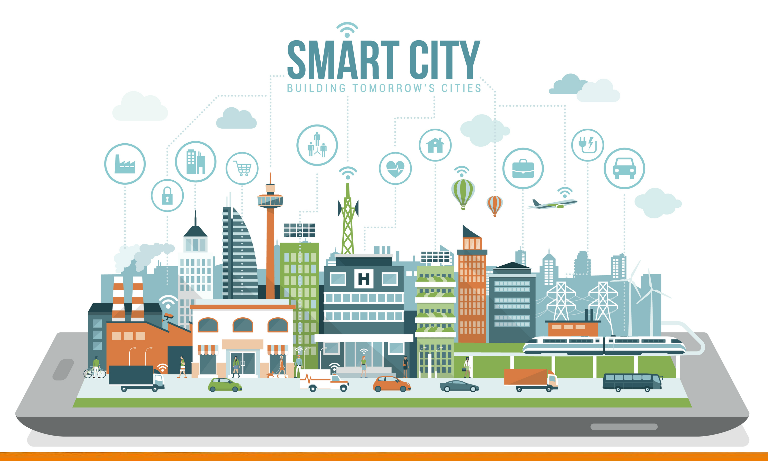


A new forecast from the International Data Corporation (IDC) Worldwide Smart Cities Spending Guide shows global spending on smart cities initiatives will total nearly $124 billion this year, an increase of 18.9% over 2019.
The top 100 cities investing in smart initiatives in 2019 represented around 29% of global spending, and while growth will be sustained among the top spenders in the short term, the market is quite dispersed across midsize and small cities investing in relatively small projects.
“This new release of IDC’s Worldwide Smart Cities Spending Guide brings further expansion of our forecasts into smart ecosystems with the addition of smart ports alongside smart stadiums and campus,” said Serena Da Rold, program manager in IDC’s Customer Insights & Analysis group.
“The Spending Guide also provides spending data for more than 200 cities and shows that fewer than 80 cities are investing over $100 million per year. At the same time, around 70% of the opportunity lies within cities that are spending $1 million or less per year. There is a great opportunity for providers of smart city solutions who are able to leverage the experience gained from larger projects to offer affordable smart initiatives for small and medium sized cities.”
In 2019, use cases related to resilient energy and infrastructure represented over one third of the opportunity, driven mainly by smart grids. Data-driven public safety and intelligent transportation represented around 18% and 14% of overall spending respectively.
Looking at the largest use cases, smart grids (electricity and gas combined) still attract the largest share of investments, although their relative importance will decrease over time as the market matures and other use cases become mainstream.
Fixed visual surveillance, advanced public transportation, intelligent traffic management, and connected back office follow, and these five use cases together currently represent over half of the opportunity. The use cases that will see the fastest spending growth over the five-year forecast are vehicle-to-everything (V2X) connectivity, digital twin, and officer wearables.
Singapore will remain the top investor in smart cities initiatives. Tokyo will be the second largest spender in 2020, driven by investments for the Summer Olympics, followed by New York City and London. These four cities will each see smart city spending of more than $1 billion in 2020.
On a regional basis, the United States, Western Europe, and China will account for more than 70% of global smart cities spending throughout the forecast. Latin America and Japan will experience the fastest growth in smart cities spending in 2020.
















