


Wednesday, December 3, 2025
26.6 C
Lagos

Business

P+ Measurement Services Sparks Global Dialogue on Outcome-Based Measurement at 2025 AMEC Measurement Month

P+ Measurement Services, Nigeria’s leading independent media intelligence and...

NIPR Institutes Annual PRICE Awards, Fixes 7th Dec for Ceremony

The Nigerian Institute of Public Relations (NIPR) has once...

LASAA Staff Faces Sanctions for Policy Breach after Viral Allegation, Cleared of Fraud

The Lagos State Signage and Advertisement Agency (LASAA) has...

Stanbic IBTC, Zenith, Axa Mansard, Leadway, MTN, GLO Lead Q3 2025 Brand Report

As Nigeria’s media environment continues to evolve, brand sentiment has emerged...

ICT

Konga Partners Verve to Delight Customers with Free Shopping Vouchers

  Konga, Nigeria’s leading composite e-commerce platform has partnered with...

NCC Spotlights Renewable Energy on World Consumer Rights Day

  The Nigerian Communications Commission (NCC) has concluded arrangements to...

Governors, NCC Set for Broadband Awareness Forum Oct 20

All Nigeria State Governors are set to discuss how...

VerveLife 5.0 Gears Up for Nairobi, Lagos Events

Following a successful series of Verve Life 5.0 satellite...

Telecom Infrastructure Critical to Successful 2023 Elections – Danbatta

The Executive Vice Chairman of the Nigerian Communications Commission,...

Capital Market

Stanbic IBTC Capital Clinches 4 Top Honours at AIHN Investment Banking Awards 2025

Stanbic IBTC Capital, a subsidiary of Stanbic IBTC Holdings,...

NGX T+2 Settlement Cycle ‘Goes Live’ Event

L – R: Chinwendu Ekeh, Head, Operations & IT,...

FG Reassures Investors, Pledges Balanced Capital Gains Tax Outcomes as NGX Lists MREIF

Nigerian Exchange (NGX) today hosted the Minister of Finance...

Nigerian Stocks Present Buying Opportunities as Market Sheds N2.8trn

Nigeria's equities market closed last week ending November 7...

NGX Reaffirms Leadership in Advancing Africa’s Islamic Finance Ecosystem

Nigerian Exchange Limited (NGX) has reaffirmed its leadership in...

Insurance

SanlamAllianz Nigeria Wins .NG Insurance Website of the Year 2025

SanlamAllianz Nigeria's website/portal, www.sanlamallianz.com.ng, has been adjudged winner of...

Leadway Assurance, AGRA, NADF, Verdure Climate Advance Agric Insurance Solutions

Leadway Assurance, one of Nigeria's leading insurance providers, has...

AIICO Launches All-in-One Financial Protection for Nigeria’s Underserved Population

L-R: Mr. Mike Eko – (Novus Agro Limited) Mr. Oluwatosin...

Sovereign Trust Insurance Secures Board’s Approval to Raise N5bn Capital

Sovereign Trust Insurance Plc notifies its shareholders and the...

Insurers Support Partnership with State Govts to Drive Insurance Penetration in Nigeria

The insurance community in Nigeria is poised to upscale...

Business

P+ Measurement Services Sparks Global Dialogue on Outcome-Based Measurement at 2025 AMEC Measurement Month

P+ Measurement Services, Nigeria’s leading independent media intelligence and...

NIPR Institutes Annual PRICE Awards, Fixes 7th Dec for Ceremony

The Nigerian Institute of Public Relations (NIPR) has once...

LASAA Staff Faces Sanctions for Policy Breach after Viral Allegation, Cleared of Fraud

The Lagos State Signage and Advertisement Agency (LASAA) has...

Stanbic IBTC, Zenith, Axa Mansard, Leadway, MTN, GLO Lead Q3 2025 Brand Report

As Nigeria’s media environment continues to evolve, brand sentiment has emerged...

ICT

Konga Partners Verve to Delight Customers with Free Shopping Vouchers

  Konga, Nigeria’s leading composite e-commerce platform has partnered with...

NCC Spotlights Renewable Energy on World Consumer Rights Day

  The Nigerian Communications Commission (NCC) has concluded arrangements to...

Governors, NCC Set for Broadband Awareness Forum Oct 20

All Nigeria State Governors are set to discuss how...

VerveLife 5.0 Gears Up for Nairobi, Lagos Events

Following a successful series of Verve Life 5.0 satellite...

Telecom Infrastructure Critical to Successful 2023 Elections – Danbatta

The Executive Vice Chairman of the Nigerian Communications Commission,...

Capital Market

Stanbic IBTC Capital Clinches 4 Top Honours at AIHN Investment Banking Awards 2025

Stanbic IBTC Capital, a subsidiary of Stanbic IBTC Holdings,...

NGX T+2 Settlement Cycle ‘Goes Live’ Event

L – R: Chinwendu Ekeh, Head, Operations & IT,...

FG Reassures Investors, Pledges Balanced Capital Gains Tax Outcomes as NGX Lists MREIF

Nigerian Exchange (NGX) today hosted the Minister of Finance...

Nigerian Stocks Present Buying Opportunities as Market Sheds N2.8trn

Nigeria's equities market closed last week ending November 7...

NGX Reaffirms Leadership in Advancing Africa’s Islamic Finance Ecosystem

Nigerian Exchange Limited (NGX) has reaffirmed its leadership in...

Insurance

SanlamAllianz Nigeria Wins .NG Insurance Website of the Year 2025

SanlamAllianz Nigeria's website/portal, www.sanlamallianz.com.ng, has been adjudged winner of...

Leadway Assurance, AGRA, NADF, Verdure Climate Advance Agric Insurance Solutions

Leadway Assurance, one of Nigeria's leading insurance providers, has...

AIICO Launches All-in-One Financial Protection for Nigeria’s Underserved Population

L-R: Mr. Mike Eko – (Novus Agro Limited) Mr. Oluwatosin...

Sovereign Trust Insurance Secures Board’s Approval to Raise N5bn Capital

Sovereign Trust Insurance Plc notifies its shareholders and the...

Insurers Support Partnership with State Govts to Drive Insurance Penetration in Nigeria

The insurance community in Nigeria is poised to upscale...

‘Poor Education Funding Stalling Growth in Nigeria’-IntelServe CEO

Mr. Roman Oseghale, Head Consultant and CEO of IntelServe Inc., a Canadian Business Analytical Services Company has reiterated the importance of Human Capital Development using data to back up his research.

He stated that no nation among over 100 countries that has been surveyed in the research relegated education and prospered, everything Nigeria is facing today is as a result of poor education funding, he stated that the blue print for national development was Human Capital Development and that the answer was right in front of everyone but no one is looking in the right direction.
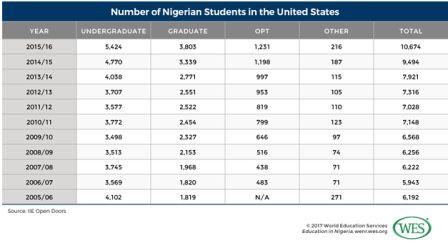
His research and presentation at The Platform on October 2 revealed how the socioeconomic activities of the country is falling apart because of governments inadequate investment in Human Capital Development (Education and Skills) in the youths of the country.

In 2017 with a projected GDP of USD$408.3 bn, a population of 182 million, Nigeria’s education budget is USD$1.77 bn representing 7.4% of the budget and 0.43% of expected GDP at the end of the year compared to USD$3.038 bn in 1981 with a GDP of USD$61.1 bn with a population of 75.7 million which represented about 30% of the budget and 4.97% of the GDP.

Compared to other countries that were surveyed, Nigeria has only spent USD$52.79 bn from the federal level in 46 years despite being one of the most populated countries. Brazil has spent USD$1.6 tn, Chile has spent 131.2 bn, Mexico 939.8 bn, Canada 1.68 tn, United Kingdom 2.88 tn, Germany 3.74 tn, USA 18.01 tn, Egypt 161.3 bn, South Africa 372.6 bn, Thailand 234 bn, Indonesia 282.6 bn, and Malaysia 214.4 bn to mention a few.

He pointed out that investment in the knowledge economy was the main driver of economic growth, he made it known that because of lack of education investment, Nigeria has continued to slip down the Global Competitiveness Index, from 83rd position in 2005, to 127th position in 2010 and has remained at 127th since…he stated that countries that invest heavily in education were moving up the ranks, examples were Indonesia from 69 to 41, China from 48 to 28, Malaysia which stayed at 25, Singapore from 5 to 2, and Philippines from 73 to 57.

He stated that Nigeria was relatively stable in the 60’s, 70’s and early 80’s and had a balance in its socioeconomic activities because the country was investing in Human Capital Development which reached its peak of 4.97% of GDP approximately 5% of GDP as stipulated by the United Nations.

He stated that the country may not understand the concept of education beyond the institution, a place where knowledge is obtained, certificate and degrees are given, and a tool that moves a child out of poverty, he argued that education was the weapon used in balancing all facets of the socioeconomic activities and as education funding continued to drop all facets of the society started falling apart creating a threat to both social and economic stability of the country.

He pointed out that education is an investment and not an expense, a tool used for economic growth and sustainability and that education is the weapon used to balance the socioeconomic activities of any country, and that if you destroy education you destroy everything. He stated that once public education is underfunded and destroyed, the country invariably destroys the socioeconomic activities and every facet of the socioeconomic factors starts to fall apart. He stated that education is the glue that holds the socioeconomic activities of a country together.

The research showed that from 1982 education expenditure started dropping and dropped below USD$1 bn in 1986 and stayed below USD$1 bn, it wasn’t until 2006 that education expenditure climbed above USD1 bn again in 20 years. He pointed out that education expenditure did not reach USD$3 bn again until 2011, the amount the government spent in 1981…..it took government 30 years to spend the same amount they spent in 1981 on education. And all the while education expenditure was reducing, population was increasing.

Through his research he was able to point out how Nigeria was ahead of many Asian countries in per capita income in the 60’s, 70’s, and early 80’s because of Nigeria’s investment in Education, but as soon as Nigeria stopped investing in education and the Asian countries picked up, their per capita income surpassed that of Nigeria.

He said that “underfunding education leads to fall in Per Capita Income, which leads to population explosion, increase in poverty, with poverty leading to crime, at the same time poverty also leads to social unrest, with social unrest leading to state/regional instability which leads to economic loss for the country. On the other hand population explosion also leads to environmental degradation which leads to health issues and leads to economic loss for the country.

The research highlighted the worrisome part; extreme poverty has continued to drop in the world and by region, total living in extreme poverty as a percentage of population in the world dropped from 52.7% in 1981 to 10.7% in 2013.

While the largest regions with extreme poverty has also continued to drop…Sub-Saharan Africa has dropped from 52.8% in 1981 to 41% in 2013, South Asia from 61.4% to 15.1%, East Asia/Pacific has dropped from 78% to 3.5% in the same period.

Nigeria’s share of extreme poverty as a percentage of people living in extreme poverty in Sub-Saharan Africa has continued to increase….from 17.6% in 1981 to 28.4% in 2011, and to 32.2% in 2013….while Nigeria is 18.8% the population of Sub-Saharan Africa, Nigeria share of extreme poverty is 32.2%…..which means that as at 2013, one in every three persons living in extreme poverty in Sub-Saharan Africa is a Nigerian while in 1981 it was one in every 5.6 persons….while extreme poverty is reducing in Sub-Saharan Africa, that of Nigeria is increasing. Nigeria share of extreme poverty increased by 83% between 1981 and 2013.

He stated that as poverty increases, crime increases…..data showed that Nigeria’s prison population increased by 26% between 2011 to 2015 while population increased by 10% during the same period, with offence against properties and offence against persons being the highest.
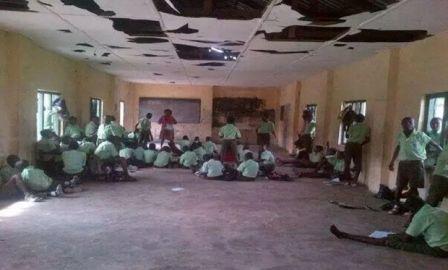
A school classroom somewhere in Nigeria

Hot this week

Stanbic IBTC Capital Clinches 4 Top Honours at AIHN Investment Banking Awards 2025

Stanbic IBTC Capital, a subsidiary of Stanbic IBTC Holdings,...

Emirates Gets African Travel Gold Award as Nigeria Launches “Culture Meter Index”

Paulos Legesse, Emirates Nigeria Country Manager welcoming welcoming the...

Fidelity Bank Receives Customs Service Award for Pioneering Role in UCMS Implementation

L – R: Head, Central Collections Unit, Olaide Adeyemo;...

SanlamAllianz Nigeria Wins .NG Insurance Website of the Year 2025

SanlamAllianz Nigeria's website/portal, www.sanlamallianz.com.ng, has been adjudged winner of...

Leadway Assurance, AGRA, NADF, Verdure Climate Advance Agric Insurance Solutions

Leadway Assurance, one of Nigeria's leading insurance providers, has...

Topics

1bn Women Worldwide Lack Access to Financial System

$300bn Financing Gap Between Men & Women. Financial exclusion remains a major constraint for women, particularly in developing countries. More than one billion women still do not use or have access to the financial system, according to the World Bank Group’s latest Global Findex Report. IFC has estimated that worldwide, a $300 billion gap in financing exists for formal, women-owned small businesses, and more than 70 percent of women-owned small and medium enterprises have inadequate or no access to financial services.

NSE Opens 2016 Essay Competition to Promote Financial Literacy

The Nigerian Stock Exchange (The NSE or The Exchange)...

British Court: Insurers Wrong to Deny COVID-19 Claims

London judges have ruled that some of the world’s...

How Malnutrition Hinders Women Empowerment

Systemic malnutrition hinders the empowerment of women in many...

LaPRIGA Awards 2024: Chain Reactions Africa Claims Three Deserving Recognitions

L-R: Senior Multimedia Specialist, Creative & Digital, Chain Reactions...

Almond Insurance Industry Awards 2023: Nominations Now Open

Nominations for the 2023 Almond Insurance Industry Awards is...

Buhari Confirms Sunday Thomas as Commissioner for Insurance

  Mr. Sunday Thomas Commissioner for Insurance/CEO National Insurance Commission (NAICOM)  President Muhammadu...

‘Why Nigerian, African Varsities Rank Lowly Globally’ – Ghana VC

Leading African Development Economist and Vice Chancellor of University...
Exit mobile version







