

The three Executive Orders issued by President Bola Ahmed Tinubu on the Oil and Gas Industry in March 2024 did not erode the relevance of the Nigerian Oil and Gas Industry Content Development (NOGICD) Act on the operations of the oil and gas industry, the Nigerian Content Development and Monitoring Board (NCDMB) has said.
This was one of key messages from the Local Content Masterclass and panel discussion at the African Energy Week, which started in Cape Town, South Africa.
Discussions at the panel highlighted Nigeria’s local content’s milestones and processes, provided local lessons for other African oil and gas producing countries, clarified misconceptions, as well as positioned Nigeria’s oil and gas industry for investment.
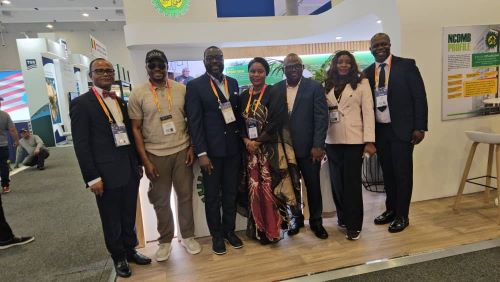
The panellists included the Director Capacity Building, Engr. Abayomi Bamidele, General Manager Monitoring and Evaluation, Mr. Silas Omomehin Ajimijaye, and General Manager, Nigerian Content Development Fund (NCDF), Ms. Fateemah Mohammed, and the session was moderated by the General Manager Corporate Communications, NCDMB, Dr. Obinna Ezeobi.
Giving insight into the Presidential Directives, Engr. Bamidele observed that some oil and gas stakeholders grossly misinterpreted the Presidential Directives to mean that the NOGICD Act had been relegated or sidestepped and they no longer need to comply with the provisions of the law.
“The Special Adviser to the President on Energy had to clarify that the Presidential Directives did not set aside local content. They only mandated that existing capacities must be patronized and middlemen must be excluded from the contracting process.”
The three Executive Orders are the Presidential Directive on Local Content Compliance, Presidential Directive on Reduction of Petroleum Sector Contracting Cost and Timelines and Presidential Directive on Oil and Gas Companies (Tax Incentives, Exemption, Remission, etc.
Bamidele confirmed that NCDMB had streamlined its contracting strategies to align with the Presidential Directives, collapsed its touchpoints in the contract approval process from 9 to 5, thereby contributing to the shortening the industry’s contracting cycle, reduction of the cost of projects and catalysing new oil and gas projects from operating oil and gas companies.
He announced that qualified international service companies can now be awarded the Nigerian Content Equipment Certificates (NCEC), to facilitate their direct participation in deepwater operations in the Nigerian oil and gas industry, as provided in the NOGICD Act. This policy will attract investments into the sector, and is consistent with the Presidential Directives, he explained.
On Board’s strategy for capacity development for new oil and gas projects, he said plans are afoot to conduct trainings in skill areas that are in a high demand in the sector. He underlined the need to always streamline capacity building initiatives with requirements and changing dynamics in the industry.
The Board is also committed to developing critical infrastructure such as the Brass Island Shipyard with support of the NLNG, as well as completing and operationalising the Nigerian Oil and Gas Parks at Odukpani, Cross River State and Emeyal-1 in Bayelsa State, he hinted.
Counselling sister Africa countries, Engr. Bamidele noted that local content and capacity building strategies must be country-specific, and policy makers must understand the mindset and skillsets of their nationals.
He further advised that local content policies and capacity building models must be relevant and applicable to the host country’s technological, educational and manpower capacities.
While making his comments, the General Manager, Monitoring and Evaluation, Mr. Silas Omomehin Ajimijaye outlined the robust mechanism the Board deploys in monitoring companies’ execution of oil and gas projects, ensuring compliance with the provisions of the NOGICD Act, and retaining significant value in the economy.
On the impact of divestment of oil and gas assets on Nigerian content compliance, he stated that the transfer of assets to indigenous operators had not impacted negatively on compliance. This is because the Board sustained the compliance protocols it had established with the previous owners. However, the Board, is ready to support successor companies to navigate challenges they might have with compliance, he added.
Speaking further Ajimijaye highlighted the importance of robust research and development initiatives to achieving sustainable local content development. He indicated that NCDMB had developed an R&D roadmap and collaborates regularly with operating companies, service firms, the academia, and other relevant institutions.
Currently, NCDMB has established six centers of excellence at key universities across six zones of the country, while Research and Development Fund has been deployed to support commercialization of viable projects, with 15 research ideas and inventions currently supported to ensure their successful development, he added.
In her contributions, the General Manager, NCDF, Fateemah Mohammed explained that the Nigerian Content Intervention Fund is a dedicated finance scheme that provides single digit financing to Nigerian service companies, enabling them to grow capacities and play key roles in the oil and gas industry.
Giving insight into the seven products of the NCI Fund, she dwelt on the Community Contractors Fund, which is a N50 billion finance scheme designed for contractors in local communities, whereby they can assess up to N100 million, at single digit to execute contracts in the oil and gas industry and grow the local economy.
Another unique product is the US$20 million Women in Oil and Gas Intervention Fund managed by Nigeria-Export-Import Bank, for deepening the capacities and capabilities of women entrepreneurs and industrialists to fully participate in the Nigerian oil and gas industry.
Recommending similar funding schemes to other African countries, Mohammed disclosed NCDMB’s aspiration to grow the NCI Fund and collaborate with other financial institutions to unlock larger projects and enhance skills development of the populace.