






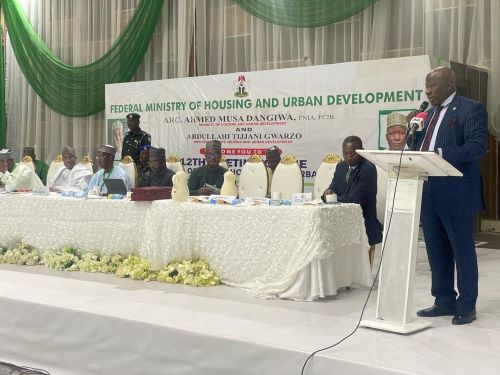


The Commissioner for Insurance and Chief Executive Officer of the National Insurance Commission, NAICOM Mr. Sunday Thomas has enjoined federal and state governments to begin to make adequate provisions for insurance of public buildings and buildings under construction in their respective annual budgets.
He said these categories of insurance are made compulsory by extant insurance laws in Nigeria and, thus, must be complied with by all.
According to Thomas, Section 64 of the Insurance Act 2003 makes it mandatory for individuals, governments and corporate organisations that undertake the construction of any building above two (2) floors to procure a builder’s liability insurance policy (building under construction) from any of the NAICOM’ licensed Insurer in Nigeria.
Speaking further, he said Section 65 of the Insurance Act 2003 also makes it compulsory for all public buildings in the country to be insured. This is to protect innocent victims in the events of accidents and other disasters that may occur while they are within such premises.
Mr. Thomas spoke at the 12th meeting of the National Council of Lands, Housing and Urban Development, holding in Kaduna State. Participants at the session include the Honourable Minister of Housing and Urban Development, Arc. Ahmed Musa Dangiwa; Minister of State, Housing and Urban Development, Abdullah Tijjani Gwarzo; Chairman, Senate Committee on Housing and Urban Development, Sen. Aminu Tambuwal; Chairman, House Committee on Housing and Habitat, Hon. Balele Aminu and Chairman, House Committee on Urban Development and Regional Planning, Hon. Abiante Awaji, The Permamnent Secretary, Federal Minstry of Works and Housing, Mahmuda Mamman; Commissioners, Permanent Secretaries, Directors of Lands and Housing from the 36 States of the federation; Managing Director of Federal Mortgage Bank of Nigeria, Nigeria Mortgage Refinancing Company, Shelter Afrique, etc.
Thomas urged the various state governments to emulate the Lagos State government by domesticating the insurance laws in their respective states.
He listed some of the benefits from compliance with these compulsory insurances to the Federal and State Governments to include:
- Reduction in the Federal and State Government expenditure in event of disaster that may affect citizens by shifting the burden to the risk-bearers (Insurance Companies), hence restoration would not be settled from tax payer’s money
- Creation of employment opportunities for citizens of the State
- Opportunity for enhancing the Internally Generated Revenue (IGR) of the respective states amongst others
















