


Saturday, April 18, 2026
27.6 C
Lagos

Business

Guinness Nigeria: N1tn Market Capitalisation Signals Strong Investor Confidence, Sustained Value Creation

Guinness Nigeria Plc has achieved a landmark milestone, surpassing...

Nationwide Voting Platform Empowers Consumers to Rate Brands, Public Institutions Based on Real Value, Trust, Service Delivery

  https://consumervalue.vercel.app/nominate In a bold step to deepen consumer voice and...

BOOK REVIEW: Personal Cost Control Strategies

  Author: Festus Abiodun Adebisi Publisher: Maximax Inc. Reviewer: Goke Ilesanmi Many people...

The Swift Ascendant Lands in Abuja: Martell’s Monumental Journey of Audacity Reaches the FCT

After kicking off in Lagos, Martell’s nationwide campaign, Martell...

PR Industry Leaders Hail Adejumoh’s Book, Advocate Strategic Shift in Practice

L-R: Chief Yomi Badejo-Okusanya (YBO), Chairman, Board of the...

ICT

Konga Partners Verve to Delight Customers with Free Shopping Vouchers

  Konga, Nigeria’s leading composite e-commerce platform has partnered with...

NCC Spotlights Renewable Energy on World Consumer Rights Day

  The Nigerian Communications Commission (NCC) has concluded arrangements to...

Governors, NCC Set for Broadband Awareness Forum Oct 20

All Nigeria State Governors are set to discuss how...

VerveLife 5.0 Gears Up for Nairobi, Lagos Events

Following a successful series of Verve Life 5.0 satellite...

Telecom Infrastructure Critical to Successful 2023 Elections – Danbatta

The Executive Vice Chairman of the Nigerian Communications Commission,...

Capital Market

NGX Group Commends Happy Woman Digital Platform Initiative, Seeks Partnership

Being text of the speech by Alhaji (Dr.) Umaru...

Nigeria’s Reforms Driving Strong Domestic Capital Mobilisation, Says NGX Group CEO

The Group Managing Director/Chief Executive Officer of Nigerian Exchange...

NGX Group, IFC, CSCS, WIMBIZ Convene Leaders to Advance Gender Equality at 2026 Ring the Bell Ceremony

Nigerian Exchange Group Plc (NGX Group), in collaboration with...

Insurance

NIA to Honour Past Governing Council Members

The Nigerian Insurers Association (NIA) is pleased to announce...

Nigeria Hosts 1st ECOWAS Brown Card Zonal Meeting 2026 in Lagos

‎The Commissioner for Insurance, National Insurance Commission, Mr. Olusegun...

Heirs Insurance Group, United Capital Partner on Self-Care, Wealth Event for Ambitious Women

Heirs Insurance Group, Nigeria’s fastest-growing insurance group, and United...

NAICOM Pledges Commitment to Labour Standards, Staff Welfare

The National Insurance Commission (NAICOM) reaffirms its strong commitment...

Business

Guinness Nigeria: N1tn Market Capitalisation Signals Strong Investor Confidence, Sustained Value Creation

Guinness Nigeria Plc has achieved a landmark milestone, surpassing...

Nationwide Voting Platform Empowers Consumers to Rate Brands, Public Institutions Based on Real Value, Trust, Service Delivery

  https://consumervalue.vercel.app/nominate In a bold step to deepen consumer voice and...

BOOK REVIEW: Personal Cost Control Strategies

  Author: Festus Abiodun Adebisi Publisher: Maximax Inc. Reviewer: Goke Ilesanmi Many people...

The Swift Ascendant Lands in Abuja: Martell’s Monumental Journey of Audacity Reaches the FCT

After kicking off in Lagos, Martell’s nationwide campaign, Martell...

PR Industry Leaders Hail Adejumoh’s Book, Advocate Strategic Shift in Practice

L-R: Chief Yomi Badejo-Okusanya (YBO), Chairman, Board of the...

ICT

Konga Partners Verve to Delight Customers with Free Shopping Vouchers

  Konga, Nigeria’s leading composite e-commerce platform has partnered with...

NCC Spotlights Renewable Energy on World Consumer Rights Day

  The Nigerian Communications Commission (NCC) has concluded arrangements to...

Governors, NCC Set for Broadband Awareness Forum Oct 20

All Nigeria State Governors are set to discuss how...

VerveLife 5.0 Gears Up for Nairobi, Lagos Events

Following a successful series of Verve Life 5.0 satellite...

Telecom Infrastructure Critical to Successful 2023 Elections – Danbatta

The Executive Vice Chairman of the Nigerian Communications Commission,...

Capital Market

NGX Group Commends Happy Woman Digital Platform Initiative, Seeks Partnership

Being text of the speech by Alhaji (Dr.) Umaru...

Nigeria’s Reforms Driving Strong Domestic Capital Mobilisation, Says NGX Group CEO

The Group Managing Director/Chief Executive Officer of Nigerian Exchange...

NGX Group, IFC, CSCS, WIMBIZ Convene Leaders to Advance Gender Equality at 2026 Ring the Bell Ceremony

Nigerian Exchange Group Plc (NGX Group), in collaboration with...

Insurance

NIA to Honour Past Governing Council Members

The Nigerian Insurers Association (NIA) is pleased to announce...

Nigeria Hosts 1st ECOWAS Brown Card Zonal Meeting 2026 in Lagos

‎The Commissioner for Insurance, National Insurance Commission, Mr. Olusegun...

Heirs Insurance Group, United Capital Partner on Self-Care, Wealth Event for Ambitious Women

Heirs Insurance Group, Nigeria’s fastest-growing insurance group, and United...

NAICOM Pledges Commitment to Labour Standards, Staff Welfare

The National Insurance Commission (NAICOM) reaffirms its strong commitment...

Long-term Decline in Shipping Losses Prevails as Economic Pressures Challenge Safety Progress

85 large ships lost worldwide in 2015, down by 45% over a decade.

Regional disparities remain. Losses up in top global hotspot – South China and South East Asian waters. In 2015, East and West African coasts saw losses of six ships bringing the tally of vessels lost between 2006 and 2015 to 94.

Economic and market conditions are pressurizing costs, raising safety concerns.

Cyber exposure, driven by Internet of Things (IoT), e-navigation and piracy, “mega ship” salvage issues, superstorms and increasing Arctic casualties heighten risk environment. Piracy incidents down in West and East Africa, although the risk remains high.

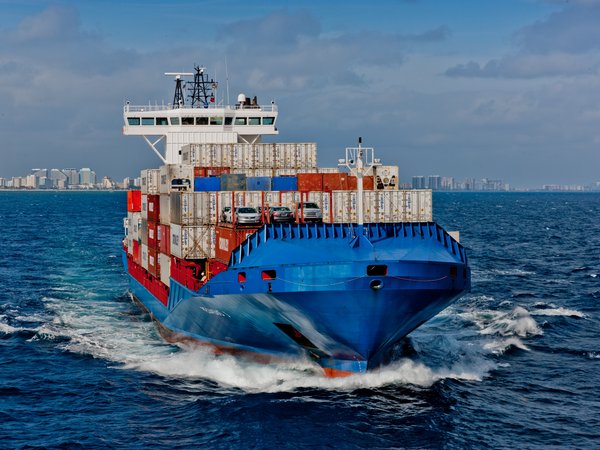
Shipping losses continued their long-term downward trend with 85 total losses reported worldwide in 2015, according to Allianz Global Corporate & Specialty SE’s (AGCS) fourth annual Safety and Shipping Review 2016, which analyses reported shipping losses of over 100 gross tons.

Although the number of losses remained stable year-on-year, declining by just 3% compared with the previous year (88), 2015 was the safest year in shipping for a decade.

Losses have declined by 45% since 2006, driven by an increasingly robust safety environment and self-regulation. However, disparities by region and vessel-type remain.

In 2015, East and West African coasts saw losses of six ships bringing the tally of vessels lost between 2006 and 2015 to 94.

“Shipping safety and security remains a challenge on the continent due to historic underdevelopment of the maritime industry. AGCS Africa expects an increase in losses as the industry acquires more ships in line with the African Union’s Agenda 2063, which has prioritized the marine economy as a major contributor to growth within the continent. The insurance industry will continue to play a key role in protecting and growing marine insurance risks on the continent,” said Allianz Global Corporate &Specialty Africa Technical Underwriting Manager Mark Govender.

More than a quarter of all losses occurred in the South China, Indochina, Indonesia and Philippines region (22 ships). Losses increased year-on-year, unlike other major regions.

Cargo and fishing vessels accounted for over 60% of ships lost globally, with cargo losses up for the first time in three years. The most common cause of total losses is foundering (sinking), accounting for almost 75% of losses, up 25%, and often driven by bad weather.

There were 2,687 reported shipping incidents (casualties including total losses) globally during 2015, down 4%.Activity is spread across all days of the week, although Thursday sees the most incidents and Saturday the fewest.

The East Mediterranean and Black Sea (484) remains the top incident hotspot. Three vessels share the accolade of being the most incident-prone – a ro-ro in the Great Lakes region, a hydrofoil in the East Mediterranean and Black Sea and a ferry in the British Isles – with 19 incidents over the past decade.

Economic Pressures Challenge Safety Advances
While the long-term downward trend in shipping losses is encouraging, the continuing weak economic and market conditions, depressed commodity prices and an excess of ships are pressurising costs, raising safety concerns.

AGCS has seen an increase in frequency losses over the past year which can likely be attributed to some extent to this environment.
“The economic downturn – and its impact on the shipping sector – is likely to have a negative impact on safety,” says Captain Rahul Khanna, Global Head of Marine Risk Consulting, AGCS.

“Many sectors, such as general cargo, bulk and offshore, are already challenged and any drop in safety standards will be a serious case for concern.”

It is critical that economic pressures do not allow a “put it off until later” safety mentality to develop, AGCS experts warn. Some ship owners are already stretching maintenance to longest possible intervals while others are laying-up vessels.“

Reactivation of these vessels to a market that has moved on technologically may result in a painful exercise. There is a need for standardized lay-up procedures,” says Captain Jarek Klimczak, Senior Marine Risk Consultant, AGCS.

As well as impacting investment in vessel maintenance, cost pressures can impair crewing conditions, passenger ship safety and salvage and rescue. AGCS has seen an increase in fatigue-related insurance claims over the past decade.

With crew numbers already often at their lowest possible level, and a future staffing shortage anticipated, longer shift patterns could exacerbate this issue. Meanwhile, training remains below par in some areas, such as electronic navigation, which should not be seen as panacea but as a complementary tool.

Although significant progress has been made in passenger ship safety, concerns remain, particularly around non-international voyages.

Some parts of Asian domestic trade remain years behind international standards, as evidenced by a number of recent domestic ferry losses in South East Asian waters. Profit pressures mean scheduling maintenance can be challenging.

“Mega ship” Salvage Issues and Super-storm Ship Sinkings
The appetite for ever-larger container ships has seen cargo-carrying capacity of the largest vessels increase by 70% over 10 years to 19,000+ containers. Two “mega ships”, the CSCL Indian Ocean and APL Vanda were grounded in February 2016, raising questions about a more serious incident.

There are concerns commercial pressures in the salvage business have reduced easy access to the salvors required for recovery work on this scale. The industry may need to prepare for a $1billion plus total loss scenario.

The report also notes that exceptional weather events are becoming more commonplace, bringing additional risks and disruption to supply chains. This year, the effect of a “super” El Niño is expected to lead to more extreme weather conditions.

Meanwhile, bad weather was a factor in three of the five largest vessels lost last year, including the El Faro, one of the worst US commercial maritime disasters in decades. “The fact that super-storms are causing ships to sink is concerning,” says Sven Gerhard, Global Product Leader Hull & Marine Liabilities, AGCS. “We are seeing more and heavier natural catastrophe events. Weather routing will continue to be a critical component to the safe navigation of vessels.”

Cyber Risk Evolves, as Piracy Threat Grows
The shipping industry’s reliance on interconnected technology also poses risks. Cyber risk exposure is growing beyond data loss.
There have already been a number of notable cyber incidents and technological advances including the “Internet of Things” (IoT) and electronic navigation means the industry may only have a few years to prepare for the risk of a vessel loss.

“Pirates are already abusing holes in cyber security to target the theft of specific cargoes,” says Captain Andrew Kinsey, Senior Marine Risk Consultant, AGCS. “The cyber impact cannot be overstated. The simple fact is you can’t hack a sextant.”

For the first time in five years piracy attacks failed to decline in 2015[1]. South East Asia attacks rose, accounting for 60% of all incidents. Attacks in Vietnam surged year-on-year. However, progress continues to be made in Africa with incidents down in West and East Africa, although the risk remains high.

Other risks identified in the report include:
Lower emissions safety threat: There have been unexpected safety implications from the shipping industry’s drive to reduce emissions, resulting in power issues related to rising use of ultra-low sulfur fuel. AGCS has seen an increase in machinery claims related to fuel.

Arctic casualties rising: There were over 70 reported shipping incidents in Arctic Circle waters during 2015 – up almost 30% year-on-year, the highest in a decade. The incoming Polar Code is welcomed, but safety questions remain about best practices and clean-up.


Hot this week

Guinness Nigeria: N1tn Market Capitalisation Signals Strong Investor Confidence, Sustained Value Creation

Guinness Nigeria Plc has achieved a landmark milestone, surpassing...

Stanbic IBTC Asset Management Bags Top Asset Management Award 2026 by Global Banking & Finance Review

In a noteworthy achievement in Nigeria's asset management landscape,...

Tinubu Assents to N68.32tn Appropriation Bill, 2025 Budget Extension

President Bola Ahmed Tinubu has assented to the 2026...

Nationwide Voting Platform Empowers Consumers to Rate Brands, Public Institutions Based on Real Value, Trust, Service Delivery

  https://consumervalue.vercel.app/nominate In a bold step to deepen consumer voice and...

PenOp Appoints Anthonia Okoro as Chief Executive Officer

Pension Fund Operators Association of Nigeria is pleased to...

Topics

Tinubu Hails BOI on N636bn Loan Disbursement to Businesses in 2025

President Bola Ahmed Tinubu has commended the Bank of...

South Africa to Host 46th AIO Conference June 8

The Republic of South Africa will host the 46th...

FOR THE RECORD – CONSUMER: King or Servant in Insurance Business

By Chief Yemi Soladoye Technical Adviser, Insurance Consumers Association of...

Maida: Stakeholder Input Crucial in Utilising Emerging Technologies

Speech the Executive Vice Chairman (EVC)/Chief Executive Officer (CEO), Nigerian...

Stanbic IBTC Holdings Reports Remarkable Financial Growth for H1 2025    

Overview of Financial Performance  As of June 30, 2025, Stanbic...

Nigerian Royal Entrepreneur Plans196 Hotels by 2026

A Nigerian Royal has unveiled her ambitious plans for...

2020: Nigeria’s Flaring Reduction Target

A recent two-day seminar organised jointly by the government...

Independents to Account for 25% Oil Production by 2020

Independents are projected to account for about 500kbpd by the year 2020, representing 25% of crude oil production in Nigeria, from the current level of 10%. The development is seen as a reflection of the changing landscape of the oil and gas industry in Nigeria. Key Recommendations: • Integration of the upstream to other parts of the value chain may eventually be driven by the independents. • Challenges such as security, especially for independents operating in shallow waters. Local companies reiterated that security and community challenges have greatly altered their cost of production which cannot be fully ascertained. When coupled with Government take and interest from loans the cost per barrel increases. • Government is to ensure that an enabling environment is created - independents need to be able to deliver on capacity growth and funding.
Exit mobile version






