






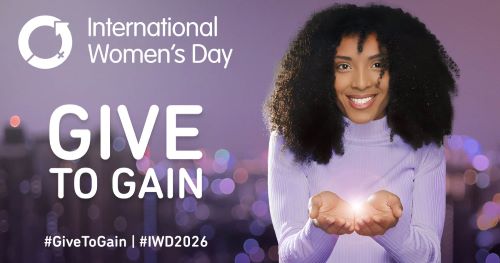


As the global community commemorates International Women’s Day 2026 under the theme “Give to Gain,” the Executive Director, Centre for Media and Society, CEMESO, Dr. Akin Akingbulu, has called for a deliberate restructuring of Nigeria’s political and media power architecture, asserting that democratic resilience and economic growth depend on institutional inclusion—not rhetorical commitment.
According to Dr. Akingbulu, Nigeria’s democratic stability and long-term prosperity are inseparable from the intentional redistribution of power, visibility, and protection within its governance and information systems.
“The promise of ‘Give to Gain’ is not sentimental,” he stated. “It is economic, democratic, and structural. No nation can exclude half of its population from influence and still claim legitimacy or sustainable development.”
He explained that the theme demands clarity about what must be given—and what the country stands to gain. Political parties, media proprietors, and institutional gatekeepers must relinquish exclusionary patronage networks, biased editorial gatekeeping, and the tolerance of digital violence that systematically push women out of public discourse.
In return, Nigeria gains strengthened democratic credibility, expanded productivity, and deeper public trust.
Global economic projections indicate that full integration of women into economic life could raise national GDP by nearly nine percent. Likewise, a media ecosystem that reflects the diversity of its population enhances democratic legitimacy and citizen confidence.
Akingbulu further observed that Nigeria continues to operate within what he described as a regime of “rhetorical equality,” where constitutional guarantees are undermined by weak enforcement. Women currently occupy only 3.7 percent of Senate seats and 4.4 percent of seats in the House of Representatives—significantly below the 35 percent benchmark articulated in national gender policy. Wage disparities ranging from 20 to 30 percent persist across sectors, while millions of women remain constrained by structural barriers to safety, health, and bodily autonomy. These gaps, he emphasized, are not peripheral social concerns—they are governance vulnerabilities that weaken institutional performance and public trust.
He cautioned against treating Nigerian women as a homogeneous category, underscoring the intersectional realities that deepen exclusion. Rural women operating within informal agricultural economies remain locked out of formal credit markets due to customary land tenure systems.
In parts of Nigeria, insecurity continues to suppress female school attendance, while women in conflict-affected regions face compounded risks of displacement and exclusion from formal peacebuilding processes. “Inclusion must be granular,” Dr. Akingbulu noted. “If reform does not account for geography, age, disability, and conflict exposure, inequality simply reappears under a new label.”
Within the media sector itself, CEMESO identifies patterns that mirror broader political marginalisation. Female experts remain underrepresented in policy debates and election coverage, while female political actors are frequently relegated to soft-feature reporting or subjected to gendered framing. Digital harassment has created what Dr. Akingbulu described as a “chilling effect,” discouraging women journalists, analysts, and candidates from sustained civic engagement. “Nigeria cannot broadcast its way out of a governance crisis using only half its voices,” he asserted. “To ‘Give to Gain’ means dismantling entrenched newsroom hierarchies and enforcing safety standards that protect female journalists from both physical and digital intimidation.” We are not merely commemorating a day; we are demanding a fundamental shift in editorial power and increase participation of women in the electoral process through the passage of the Special Seats Bill (HB 1349). Without gender parity in both the ballot box and the newsroom, our democratic architecture lacks the foundation to withstand the pressures of 2027 and beyond.”
Reaffirming CEMESO’s mandate in media development and democratic strengthening, Dr. Akingbulu stressed that the organisation’s commitment extends beyond advocacy. “We are not calling for symbolic gestures,” he stated. “We are investing in institutional mechanisms that make inclusion measurable, monitorable, and enforceable.”
Accordingly, CEMESO urged the media to uptake its resources on Gender Sensitive Guidelines for Media Coverage of the Electoral Process in Nigeria, It also assured of its commitment to expand its gender-sensitive media interventions to track representation trends in political and governance reporting; strengthen digital safety and protection toolkits for female journalists and civic actors confronting online abuse; and deepen capacity-building initiatives that widen the pipeline of women experts across broadcast, print, and digital platforms. These interventions are designed to normalise women’s leadership within the public information ecosystem and reduce structural bias in political communication.
CEMESO also called on critical stakeholders to act decisively, urging the National Assembly to pass the Special Seats Bill (HB 1349) to ensure that women’s representation moves beyond the current stagnation which is below five percent.
State governments were encouraged to fully implement and adequately fund protective legislation that safeguards women’s rights and participation. Media proprietors were advised to institutionalise gender-sensitive editorial standards and sanction harassment within newsrooms. Political parties were challenged to adopt transparent nomination processes and structured support systems that reduce the financial and structural barriers confronting female candidates.
The election management body urged to review and strengthen its gender policy to promote inclusive electoral processes and ensure greater participation of women in Nigeria’s political space.
Concluding, Dr. Akingbulu emphasised that the road to 2030 demands more than ceremonial observance. “Equality is not a concession—it is infrastructure,” he said. “If Nigeria gives women equitable access to power, protection, and platforms, the nation will gain economic stability, democratic legitimacy, and social cohesion. The cost of exclusion is stagnation. The dividend of inclusion is national resilience.”
On this International Women’s Day, CEMESO reiterates that the future of Nigeria’s democracy will be determined not by commemorative statements, but by whether institutions are prepared to relinquish entrenched privilege in order to build a more prosperous and legitimate nation.
















