






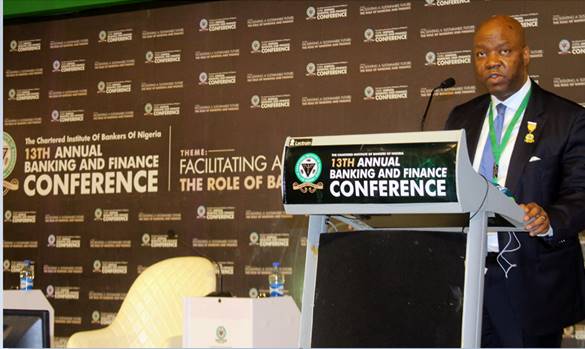


The Managing Director, Ecobank Nigeria, Patrick Akinwuntan has reiterated that the future of Nigerian banking would continue to be shaped by innovations and technology disruptions, stressing that only financial institutions that are amenable to such transformation will remain relevant in the sector. According to Akinwuntan, there was no way banks can remain competitive and relevant without embarking on digital transformation. He noted that banking has come to represent ‘what you do’ without necessarily referring to a particular location.
In his words “there is massive disruptions in the banking space and this is good of the sector. Take a second look at the evolution in the use of cards in ATM and PoS today and its interoperability, USSD, agency banking, blockchain, crypto currency and others. The sector is being democratized for full participation. What about the mobile phone which was essentially for receiving calls but today every Nigeria can make transaction on their phones using the mobile app, or the USSD string. The whole idea is bringing financial services to every household so that we can all participate effectively in the growth of the largest economy in Africa.”
Akinwuntan who was speaking on “Innovations and disruptions: How Fintechs are defining our future at the 13th annual banking and finance conference of the Chartered Institute of Bankers of Nigeria (CIBN) pointed out that Fintechs are making impacts in the financial services.
Also speaking, Ade Bajomo, Executive Director, Information & Operations, Access Bank, said the emergence of Fintechs startups is threatening to displace incumbents with innovative solutions, noting that digital transformation was no longer optional as companies can no longer stay relevant and compete with others than going through digital transformation process.
He observed that the journey from the industrial age into the information age, more specifically the birth of internet, has unlocked unprecedented disruption of business models.
Further Bajomo said “Digital disruption will hit every industry; it is what you make of it that counts. Fintechs are instrumental to closing the financial inclusion gap. Regulation is key to building the desired Fintech ecosystem. Cyber security will be one of the top risks facing financial institutions, upskilling and reskilling is key. Any bank that doesn’t have an online platform will struggle to survive the pandemic. “
















