






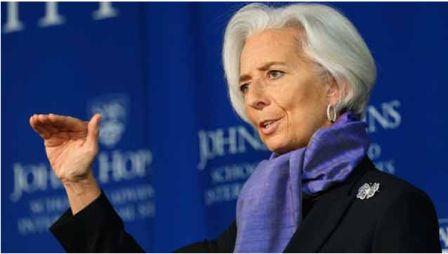


Ms Christine Lagarde, Managing Director, International Monetary Fund (IMF) says strong regulatory and supervisory setting can help ensure that healthy banks are able to provide the lifeblood of Africa’s economic resurgence. She promised that the process will be a long-term effort, and would be supported by the IMF at every step of the way.
Lagarde said in a paper ‘Financial Stability and Pan-African Banking’ she delivered at the Conference on Cross-Border Banking and Regulatory Reforms in Mauritius that African countries share similar hopes—not least of which is the need to develop well-functioning financial systems that are critical for Africa’s growth, lamenting that in many countries, access to finance remains limited.
‘Since the global financial crisis, pan-African banks and other institutions have become important features of the continent’s financial landscape. They are one more piece of evidence of the region’s dynamic changes. These institutions—including some participating in this conference— have filled the gap left by the retrenchment of European and American banks since the crisis. They have supported the growth of individual countries with better products and services. They have advanced economic integration and helped foster financial inclusion, they have leveraged technologies, including disruptive ones—witness the great gains of mobile banking in Kenya.’
She said these are important advances that can offer lessons to the world outside of Africa.
‘All over the world, these advances present central bankers and supervisors with new challenges; vigilance and cooperation will be needed to ensure stability and resilience. The growth of pan-African banks comes at a time of regulatory change worldwide. These reforms—spurred by the 2008 crisis—aim at building stronger defenses against future crises.In addition, you face a delicate balancing act: you need to enhance regulation and supervision but, in implementing global standards, you also must take into account local circumstances.’
- The Supervisory Challenges of Pan-African Banking
Let us begin with the regulatory challenges. As bankers and bank supervisors, you understand the potential vulnerabilities that current slow global and regional growth presents. The changes in Africa’s financial sector landscape over the past decade call for added vigilance.
The expansion of cross-border banking has been impressive. Ten African banks now have a presence in at least 10 countries on the continent, and one is present in more than 30 countries.
This expansion inevitably has brought a host of new complexities. With varying regulatory regimes across countries at different stages of financial sector development, it should not be surprising that effective oversight of cross-border banking presents immense challenges. Unified accounting and reporting standards are absent. Data weaknesses abound. National secrecy laws and constraints on information flows impair cooperation among supervisors in home and host countries.
The key is to ensure that supervision takes place on a consolidated basis.
- The Role of the IMF
Financial sector development is integral to this work. Our policy analysis and advice now consistently focus on financial issues, including under the Financial Sector Assessment Program. Increasingly, this work also is taking on a regional profile, highlighted by the 2015 report on the opportunities and challenges for cross-border oversight presented by pan-African banking.
The Fund is also launching a new capacity development instrument to support financial stability and inclusion in the region.
The IMF strongly supports your efforts to strengthen the environment for financial sector development in Africa. Strong and sound pan-African banks are a crucial part of this effort.














