








- Nigeria has launched a nearly $1 billion modernisation program for the Apapa and Tin Can Island ports in Lagos
- A £746 million ($978.77 million) credit facility backed by UK Export Finance supports the project
- Port inefficiencies cost Nigeria up to $4 billion annually, undermining trade competitiveness and increasing logistics costs
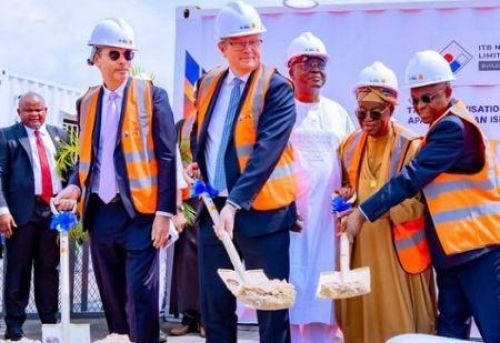
Nigeria’s federal government launched modernisation works at the Apapa and Tin Can Island port complexes in Lagos on Wednesday, November 25, 2026.
The nearly $1 billion project aims to improve cargo handling, streamline port operations and reduce trade costs. Authorities estimate that port inefficiencies cost the economy up to $4 billion annually.
The two facilities, which rank among Nigeria’s main maritime gateways, face mounting capacity constraints. Aging infrastructure, congestion, lengthy customs procedures and cargo evacuation difficulties undermine operational efficiency and increase costs for businesses.
According to Minister of Marine and Blue Economy Adegboyega Oyetola, Nigeria began developing the Apapa port in 1913 and commissioned the Tin Can Island port in 1977. At the time of the latter’s commissioning, Nigeria had approximately 67.2 million inhabitants, recorded $17 billion in annual trade and handled 8.11 million metric tons of port cargo.
Since then, Nigeria’s economic and demographic landscape has changed significantly. The country now has an estimated population of 240 million, conducts more than $100 billion in annual merchandise trade and recorded total port traffic of 129.3 million metric tons in 2025.
However, infrastructure and operational procedures have failed to keep pace with rising cargo volumes. According to Oyetola, cargo dwell times at Nigerian ports range from 10 to 18 days, compared with three to five days at some major international ports. These delays generate additional congestion, storage and demurrage costs, contributing to estimated annual economic losses of $4 billion.
Investment to Reduce Logistics Costs
The modernisation program includes the rehabilitation of quay walls and berths, dredging of channels and waterways, improvements to access infrastructure, and upgrades to cargo-handling equipment and operational systems. The government aims to expand the physical capacity of both facilities and improve cargo-processing efficiency.
A £746 million ($978.77 million) credit facility backed by UK Export Finance (UKEF) supports the project. Polish export credit agency KUKE provides reinsurance to UKEF, while Citibank acts as financing arranger and facility agent alongside other lenders.
ITB-HITECH, a joint venture between Hitech Construction Company Limited and ITB Nigeria Limited, will carry out the construction works.
Authorities expect improved port performance to generate economic benefits beyond maritime operations by reducing costs for manufacturers, importers, exporters and other businesses that rely on supply chains. The government also expects smoother trade flows to strengthen the competitiveness of Nigerian companies.
Broader Port Strategy Faces Execution Challenges
The initiative forms part of Nigeria’s broader strategy to modernize its port network. In September, authorities approved upgrades to several existing facilities, including the Onne and Rivers ports in Rivers State, as well as the Delta and Calabar ports.
Alongside these upgrades, Nigeria is pursuing several new port developments. The latest project involves the Bakassi deep-sea port in Cross River State. Authorities held a ground-breaking ceremony for the $3.5 billion project on November 13. Local authorities also reported approval for $2.27 billion in initial financing.
In September, the Ogun State government and DP World also signed memorandums of understanding to develop the Gateway deep-sea port and the Blue Marine Special Economic Zone.
The two projects represent a combined proposed initial investment of more than $7 billion. Earlier that month, APM Terminals and Badagry Port Development Limited signed an agreement to enter exclusive negotiations over the development of Badagry port.
However, the growing number of projects raises questions about execution. Several Nigerian port developments have experienced prolonged delays, including Badagry, where initial development efforts date back to 2012. The agreement with APM Terminals marks another milestone in the project but does not constitute a final investment decision.
Beyond port infrastructure, the development of road and rail connections, reliable electricity supplies and the ability to attract investors to associated economic zones will also determine the commercial viability of these projects.
Credit: Henoc Dossa