








Even as the exchange rate policy of the CBN continues to generate a healthy debate, the anti-devaluation argument is consistent with maintaining financial and price stability.
The downturn of oil prices has created immediate but temporary fiscal and monetary challenges in Nigeria. Dollar oil revenue to the government has shrunk considerably, reflecting over 70 per cent decline in oil prices from the heights they attained in June 2014.
Therefore, expansion of the federal fiscal deficit has become necessary in order for the government to continue to meet its obligations and deliver service to the populace. In the states, where the fiscal space is more constricted, paying public sector wages has become more challenging.
On the monetary side, there has been downward pressure on the foreign reserves. This has limited the wherewithal of the Central Bank of Nigeria (CBN) to continue to defend the naira value across the foreign exchange markets. The official market is sheltered from exchange rate volatility.
But we have seen the naira reach all-time lows against the dollar in the parallel market, causing public anxiety and threatening the way working class Nigerians love to live.
While this is on, it is so easy to become downbeat in one’s outlook for the Nigerian market. Extreme opinions have called into question any sense of progress the country has made with economic management, especially since the return of democratic governance in 1999. They see the threats of higher public debt, inflation, unemployment and slower economic growth. But these issues are most likely to be short-term.
The current sharp decline in oil prices constitutes a speed bump. Yes, it slowed the pace of economic growth to 3.3 per cent last year, from 7 per cent average GDP growth rate of the last ten years. But, some positive developments are already identifiable with this foreign exchange crunch.
To summarise the totality of the auspicious developments, Nigeria has entered a phase of economic transition. This transition has been imperative for long. To some extent, signs that it is already afoot are undeniable.
But the economic conditions of today ensures that this transition must gather pace. This transition would invariably lead the country to a period of sustained, endogenous high economic growth.
There are three factors that underpin my buoyant outlook on Nigeria. One involves cumulative improvement in governance.
The second is Nigeria’s commitment to macroeconomic stability. And the third is the irrepressible determination of Nigerians to do well for themselves. This third factor ensures the resilience of the citizens and that of the country. It is the critical element that has continued to drive the progress the country has been making.
Cumulative Governance Improvement
The Administration of President Muhammadu Buhari will deliver further improvement in public governance and fiscal management in Nigeria.
The President will continue to build on the progress that has been made since the country returned to democracy in 1999. It is not the better judgment to focus on the challenges of governance and overlook the evidence of the progress that has been made.
Nigeria is committed to democratic governance. In 2007, we appeared surprised when the country made the first-ever democratic transition of government.
The late Umaru Musa Yar’Adua succeeded President Olusegun Obasanjo as elected president. Then in 2009, without much pomp and pageantry, we marked the first straight ten years of democratic governance in Nigeria.
The 2015 presidential election just proved to be another landmark for the country: for the first time in our history, an opposition party candidate won against the incumbent, and the transition of power was smooth.
Ahead of the election, Moody’s affirmed a stable outlook for Nigeria. In an interview with one of the country’s top economic journals, Financial Nigeria, later in 2015, the head of sovereign analysis for the rating agency, Aurelien Mali, said the track-record of conclusive elections in Nigeria was factored in the positive outlook.
Institutions of democratic governance are enjoying longevity. It is a rarity for the legislature, whose existence was usually terminated by the incessant military interregna of the 1980s and the 1990s. Even the tenure certainty for the President nowadays is remarkable in view of our history.
While each administration since 1999 has grappled with putting in place more transparent and accountable frameworks for public and market governance, the fact that the institutional drivers of the process are intact is a mark of progress on its own.
To crown it all, Nigerians are clamouring for further progress. We want the pace of progress to increase. We want responsible and responsive governance. We are even more assured than we were 17 years ago that it is the role of the electorate that is pivotal in constituting government. This awareness is healthy for the Nigerian populace and those who constitute government or aspire to political leadership.
Stable Macro-economic Environment
There is a positive relationship between an environment of political stability underpinned by constitutionality and positive market performance. The Nigerian democracy has even prioritised the development of the Nigerian market.
One of the ways successive governments have demonstrated this is by pursuing macroeconomic stability. Unprecedented levels of domestic and foreign investments have followed, beginning with the mobile telephone industry in 2001.
The CBN has pursued single digit inflation and maintained it in the better part of the last five years. Price stability has been predicated on market reforms and financial market stability.
When the 2008 – 2009 Global Financial Crisis arrived on our shores, the reinvigoration of the banking system through the recapitalisation and consolidation of the banks three years earlier helped us to weather the storm.
A strong response to the crisis through CBN liquidity intervention, introduction of macro-prudential regulation and purchases of impaired assets helped to strengthen the banks. As the country faces the headwind of low oil prices now, Nigerian banks are expected to remain resilient, even if they have to make operational adjustments.
Even as the exchange rate policy of the CBN continues to generate a healthy debate, the anti-devaluation argument is consistent with maintaining financial and price stability.
President Muhammadu Buhari has shown good leadership with his position which indicates that macroeconomic stability is not a political party agenda in Nigeria; it is a country agenda that has been upheld by successive administrations since 1999.
The institutional architecture for supporting market stability has continued to strengthen, and that is without overlooking the higher standards that are yet to be attained. Public debt management in Nigeria has been modernised.
A legal framework through the Fiscal Responsibility Act is in place. It places a 3% limit on fiscal deficit as a ratio of the GDP.
Since the last two fiscal years of the last administration, a policy to channel public borrowing to infrastructure projects came into place. This policy is affirmed in the fiscal borrowing plan of the present administration, as seen in the 2016 budget.
While the borrowing plan in the budget has inflamed passions, it appears that the provision of a N360 billion Sinking Fund to liquidate matured debt has eluded the debate.
Nevertheless, Nigeria has a solid reputation of servicing its debt obligation to both domestic and international financiers.
The deals by which Nigeria exited the Paris Club and London Club debts in 2005 and 2006, respectively, will remain a point of reference in the country’s debt repayment behaviour. Since those important deals, the fiscal authorities have never taken eyes off the sustainability gauge of Nigeria’s public debt.
Primed for Success
Nigerians are generally determined to be successful. If it takes education, we would go for it. If it takes industry, we would become entrepreneurs and start businesses even under the most challenging environment. We are irrepressible in adverse conditions. As the current foreign exchange crisis begins to affect business as usual, we will reinvent ourselves.
Nobody, including the average Nigerian, wants a hard life in place of easy life. Countries that have developed have had to do so in response to challenges that posed a threat to their easy life. It might be geopolitical threat, demographic challenges or economic stress.
In Nigeria today, the formidable threat is the intertwined high dependency on oil for foreign exchange, import dependency and inadequate domestic production.
What we have to do is diversify the economy, promote non-oil exports and boost domestic production. In the meantime, we need to use policy instruments to curb unnecessary imports.
The policy leaning is there, and Nigerians will respond; not only for survival but to achieve and maintain the good life.
This is what defines us as a people of achievement. This is why the outlook of the country is especially buoyant, medium- to long-term.
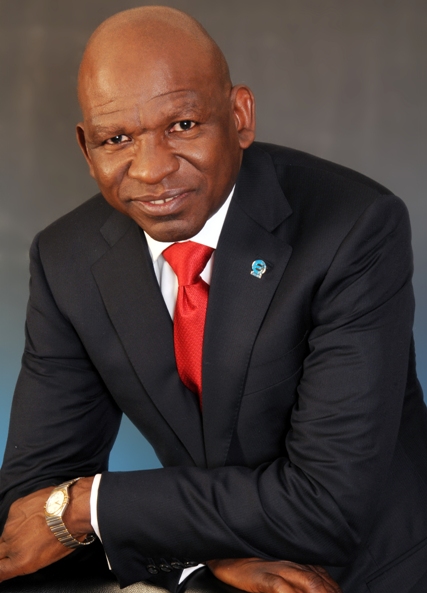
By Roberts U. Orya, Former Managing Director/Chief Executive Officer, Nigerian Export – Import Bank [NEXIM].
















