


It is clear to see that Mr. Godwin Emefiele has demonstrated preparedness for his current position as Governor of Central Bank of Nigeria than what analysts may have acknowledged. During his confirmation-hearing before the Senate, Mr. Emefiele said his regime at the CBN will make banking count for development.
Since assumption of office, he has made concrete policy commitments to back his assertion that finance should have strong connections to development. One can safely expect that more actions in this regard will follow in the course of his time in office.
Mr. Emefiele’s position has long been validated by the International Labour Organisation (ILO) as well as the United Nations at various times and through various pronouncements and declarations.
Since 2007, long before the financial and economic crisis, the ILO has maintained its position regarding the role of central banks in controlling inflation and promoting job creation. The point is, despite precarious levels of unemployment and under-employment in the developing world, many central banks in those regions have not seriously considered employment creation as part of their mandate. Instead, they have narrowly interpreted monetary policy to mean just stemming the tide of inflation through inflation-targeting and price stabilisation.
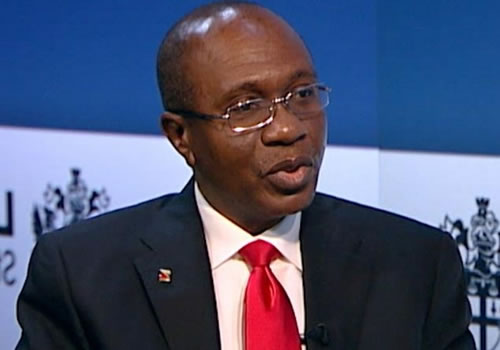
CBN Governor
As has been established by development experts, it is now trite for central banks to limit monetary policy solely to price stabilisation. This is notwithstanding the fact that this alone cannot guarantee that economic growth will improve since low inflation does not necessarily lead to higher income and a stable economy. Nor does a high rate of economic growth necessarily lead to a high rate of employment creation.
This is especially the case in Nigeria where we have witnessed impressive GDP growth rates over the past seven years without a corresponding reduction in the unemployment rate, which rose to 23.9 per cent in 2012 relative to 13.9 per cent in 2000.
Indeed, in his presentation at his maiden press briefing, “Entrenching Macroeconomic Stability and Engendering Economic Development in Nigeria,” Mr. Emefiele disagreed with the dominant school of thought that sees the role of central banking as being limited to achieving low inflation as a policy strategy for growth, increase in employment, and poverty reduction. He audaciously stated that the CBN under his leadership would also begin to include the unemployment rate as one of the key variables considered for its Monetary Policy decisions.
To truly create a ‘people-oriented Central Bank’ as envisaged by the Governor, the issue of access to finance by Micro, Small and Medium-scale Enterprises (MSME) needs to be quickly addressed. The weak connection between banking and development in Nigeria is expressed in the remarkably low access to financing by the MSMEs; difficulties in accessing financing by women entrepreneurs; paucity of long-term funding for real sector operators; high cost of credit across the business spectrum, owing to prohibitive interest rates; general low banking penetration; and weak grassroots banking due to very limited success of microfinance banks. Without a doubt, these issues are impediments to economic growth and development. MSMEs are generally regarded as drivers of innovation. They are also reckoned as the engine of economic growth across developing and advanced economies.
In China’s vibrant economy, SMEs account for 99.9% of total number of firms, and they provide 84% of total employment (World Bank, 2013). Inadequate funding for this sector in Nigeria has long been diagnosed as an impediment to innovation, employment generation and economic growth. 
Another frontier of growth is women entrepreneurship. Empirical data has shown that women are increasingly getting involved in business formation. This global trend has gained even more momentum in developing countries where women, from time, have been known to be very enterprising in the agrarian economy and in trade.
But notwithstanding, around the world, women still very much lag behind men in business ownership. Businesses operated by men tend to be more successful. Apart from the myriad of social forces that militate against the success of women entrepreneurs relative to men, lack of access to financing has been somewhat intractable. Primordial prejudices against women have shifted only in some little ways. Thus, disparity in access to financing based on gender is unfavourable to women.
The funding structure in the economy also calls for interventions in real sector activities. Manufacturers of different stripes turn to Nigerian Export – Import Bank (NEXIM Bank) with the same requirement. They want long-term financing at affordable, or preferably, single-digit interest rates.
But the funds to supply credit under these conditions are hardly available in the market. The lending environment is defined by tight monetary stance, which has seen the Monetary Policy Rate remaining at 12% in the past two years, in order to stymie inflationary pressure.
In tandem, yields on risk-free government securities are in lower double digits. Moreover, low-cost deposit mobilisation by commercial banks remains aspirational due to low level of household savings and low banking penetration. (Only about 25% of the population is banked.)
As for the microfinance segment, it would be apposite to have the following hypothesis tested. One of the consequences of the rapid pace of urbanisation over the years is that renewal of the economically-active population in rural and suburban settings has been impeded.
As such, microfinance is being addressed to the urban poor while the rural poor are chronically underserved. But social identification which influenced traditional practice of micro lending and drove positive repayment behaviours is absent in the cities. For that reason, microfinance banks have especially struggled to make significant impact and remain in business.
This general context to financing in Nigeria has meant that commercial banks are hardly taken to be agents of development. This perception needs to change through the implementation of policies that underpin the role of banking in the development process.
It is, therefore, appropriate and also commendable that Mr. Emefiele has construed the role of the CBN as making banking particularly relevant to development. Central banks have policy tools to make this happen. The CBN governor has hinted on his intent to deploy a variety of such tools.
The MSME Fund
In August, President Goodluck Jonathan launched the Micro, Small and Medium-scale Enterprises fund. Promoted by Central Bank of Nigeria, the N220 billion fund has become the first concrete step under the regime of Mr. Godwin Emefiele to deliver on his promise that the CBN will be an agent of development. The MSME fund spared none of the issues that have been enumerated above. While the size of the Fund means that it will not meet all the needs; it can provide the basis for scaling up the interventions in one form or another.
The MSME sector comprises an estimated half a million operators. Operators in the sector collectively account for about 50% of Nigeria’s GDP, according to the Minister of Commerce, Trade and Investment, Mr. Olusegun Aganga.
However, only 8% of the MSMEs in Nigeria are reckoned to have access to financing. This underscores the importance of this Fund which will lend at single-digit interest rate. With significant funding, it is imaginable that, like the data from China, MSMEs in Nigeria can contribute over 90% of the GDP.
The MSME Fund is not necessarily a novel idea in Nigeria. There have been similar initiatives in the past, which achieved little success. But here is a situation where past failures should not be a hindrance to new efforts. The stakes are higher now for the success of the MSME sector. Because of the large number of the firms, they not only constitute the engine of growth for the economy, they will also create millions of jobs and therefore alleviate poverty.
To put this in context, it has been acknowledged that micro, small and medium scale enterprises tend to employ the poor including those without formal qualifications; and the enterprises are usually the only hope of employment in rural communities. Even so, most poor and unskilled people only get by through self-employment.
It is no surprise the CBN governor has worked really hard to launch the MSME fund with presidential backing and as quickly as he did. He has restated time and again his determination to link Nigeria’s economic growth to job creation. 
Around the world and in the country, policymakers are weary of “jobless growth” because of high unemployment rates. Instead, they are pressing for inclusive, job-oriented economic growth models. Global employment rates have raised concerns, but not merely because employment has again played the role of the laggard in recovering from the last economic downturn.
Unemployment is also associated with social risks, and a move towards full employment is critical for inclusiveness and shared prosperity.
By design, 60% of the MSME Fund is allocated to women entrepreneurs. This is good news for gender advocates and those who care about inclusivity. The fund is a necessary boost for women entrepreneurship.
I agree completely that women are the new frontier for finance. The women folk have long been deprived of access to credit. Whereas women are adept at business formation, mostly in order to improve the living conditions of their family, they are less successful in business. Their greater dedication to family life poses a limit to their business success.
But beyond this, lack of collateral, often based on gender discrimination, especially in land and property ownership, has meant that women have lesser access to financing for their businesses.
However, women are proven to be better money managers. Their success is also known to have more impact on the family than when men are the bread winners. This, therefore, means that women can make more contributions to development if they are empowered with financial access.
Working through the DFIs
The decision of the CBN governor to work with development finance institutions is of particular interest to NEXIM Bank, and Nigerian exporters in the non-oil sectors.
Although the development finance segment of the Nigerian finance industry is in the early stage of transformation, the DFIs have garnered some experience to help deliver development outcomes in their areas of focus.
NEXIM has been working with SMEs in our sectors of focus — Manufacturing, Agro-processing, Solid minerals and Service – under what we call the MASS Agenda. Our interest has been to help nurture indigenous businesses in the MSME sector to become global players, by financing their production and export capabilities.
From our experience, the “MASS” sectors are in the frontline of employment generation, and they are mostly characterised by low barriers for new entrants. This means that interventions in these sectors can quickly scale up.
It is very heartening to note that President Goodluck Jonathan has been an ardent supporter of the DFI community in Nigeria. This undoubtedly will translate to fiscal support for the agenda of the CBN Governor for intervention in the quest for development in the country.
We saw this in the housing sector with the launch of Nigerian Mortgage Refinance Company earlier in January. As already noted, the MSME programme received presidential attention, with Mr. President being physically present at the launch of the fund.
Also, the Co-ordinating Minister for the Economy and Finance Minister, Dr. Ngozi Okonjo-Iweala has already hinted last June, at the dinner organised by the African Development Bank (AFDB) to flag-off events marking its 50th anniversary that the Federal Government was fine-tuning plans to establish a Nigerian Development Bank in 2015.
This is in addition to other programmes by the Administration that will restructure and strengthen development finance institutions in Nigeria to enable them scale up results and close the gaps in development financing.
NEXIM Bank is very enthusiastic on these brighter prospects.
By Chinedu Moghalu: Head of Corporate Communication
Nigerian Export-Import Bank (NEXIM)