Building Resilient African Cities is Possible with Govt, Private Sector Partnership – BCG

In view of the projection that the population in African cities will expand beyond the available resources and infrastructure, the leading management consulting firm, Boston Consulting Group (BCG), has advised African governments to collaborate with the private sector to build smart resilient cities.

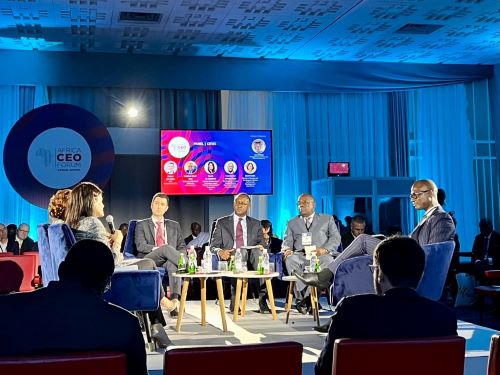
Tolu Oyekan, Managing Partner and Head of BCG Nigeria, gave this advice while moderating a session on “Megacities: Challenges and Opportunities of Unbridled Urbanisation“at the Africa CEO Forum 2022 held recently in Cote D’Ivoire.

The BCG partner and the discussants identified different ways by which African governments could collaborate with the private sector to respond effectively to the expected population growth through affordable housing, green and smart solutions.

The critical stakeholders who spoke at the session include Emmanuel Nyirinkindi, Vice President of Cross-Cutting Solutions, International Finance Corporation (IFC); Amaury de Féligonde, Managing Partner, Okan Africa; Marco Aurelio De Assis, CEO, Group Vivendi Africa; Rania A. Al-Mashat, Minister of International Cooperation, Egypt; and Kaba Niale, Cote D’Ivoire Minister of Planning and Development.

Citing United Nations prediction that African cities‘ population will double by 2050, Oyekan said the situation was likely to overwhelm the capacity of urban cities in the continent, which are already ill equipped to support existing residents.

Oyekan said, “Following the trend, issues such as migration and the potential continued pressure that could create come to the fore. For instance, a city like Lagos experiences about 80 to 100 new residents per day.

There is issue of climate change- with the expectation that cities will experience climate refugees if non-urban areas are not able to adapt appropriately. It is therefore important for governments in collaboration with the private sector to think about increasing digitalization and the potential to create smarter African cities.”

He identified some of the urgent needs that would be required by the huge population as good housing, education, healthcare, food security, adding that physical infrastructure such as strong multi-modal transportation network and electricity are necessities.

According to him, an inclusive economic framework that enables all demographics – women, men, youth, elderly, disabled – to access jobs that enable dignity or support self-employment and entrepreneurship will be required.

He asked the panellists to particularly speak to the climate impact of the population surge and possible solutions to mitigate the impact.

The subject matter experts spoke extensively on the challenges and opportunities in a period of rampant urbanisation, focusing on climate action, the development of clean energy, road network optimization and rapid construction of affordable housing.

Oyekan engaged the business and government leaders on the role of financial institutions in providing risk assessment and funding for sustainable infrastructure and clean energy projects in future African cities.

BCG’s diverse team of experts bring deep industry and functional insights as well as a range of perspectives to topical industry issues.

The ACF 2022 was a platform for international organisations, policy makers and business executives to connect and brainstorm on growth strategies for the continent.


Hot this week

Is Investing for Me? Rethinking Who the Stock Market is Actually Built For

  By Robinson Kolawole "Investing is not for someone like me."...

CIIN Boss, Yetunde llori, Bows Out, Lists Achievements in Office

Mrs. Yetunde llori, the President/Chairman of Council, Chartered Insurance...

WorldStage Business Forum Q2 2026: Prof. Baale Makes Case for Building World-class Nigerian Corporate Culture

L-R: Mr. Segun Adeleye, President/CEO, World Stage Limited; Prof. Lere...

Insurance Brokers Reaffirm Commitment to Local Content, Digital Innovation at SUPERNEWS Conference

Deputy President of the Nigerian Council of Registered Insurance...

Topics

CIIN Empowers Over 50 Young Insurance Professionals at Boot Camp 3.0

L-R: Guest Speakers; Mr. Boniface Amadi, Head, Business Systems Automation, Continental Reinsurance...

Beyond the Change Chorus: Is Nigeria Open for Business Again?

Against the intense apprehension by local and international observers, Nigeria's 2015 Presidential Elections turned out peaceful and successful following the incumbent's concession of defeat prior to the final announcement by the electoral umpire - INEC. The election, which was keenly contested by All Progressives Congress (APC) - General Muhammadu Buhari (GMB) and Peoples Democratic Party (PDP) - Goodluck Ebele Jonathan (GEJ) saw the emergence of GMB as the President-elect of Nigeria. GMB satisfied the constitutional requirement of polling the majority votes of 15.4 million (vs. GEJ's 12.9 million total votes) while also winning at least 25.0% of the votes cast in 28 states (vs. GEJ's 27 states). In the past weeks, there have been two contending words -- Change vs. Transformation. With the former now triumphing over the latter, the Nigerian economy and financial market demand more..."Beyond the change chorus".

Nigeria’s 2015 Appropriation Bill: Legislators Adopt the Ostrich Strategy

A week after the House of Representatives passed the 2015 Budget, the Upper Chamber fulfilled its part of the Appropriation process by passing a N4.5tn budget. This is N134.4bn in excess of the N4.4tn submitted by the Executive arm late 2014. Meanwhile, recurrent expenditure was reduced slightly by N0.5bn to N2.6tn while capital expenditure was scaled down by additional N85.9bn to N557.0bn from N642.8bn proposed by the Executive arm. Effectively, this implies that recurrent expenditure is approximately five times the capital expenditure.

West Africa Needs Advanced Mobile Infrastructure, says IBM Nigeria Boss

Increased investments in relevant new technologies like mobile, cloud and big data analytics that offer advanced solutions and services are essential for West Africa’s socio-economic development. In practically all sectors of the regional economy, these advanced technologies allow economies and companies to ensure the integrity of their data assets, providing them with hitherto unseen levels of data mining capabilities which, allows them to derive fresh insights and business intelligence from these data. These salient points were made recently by Taiwo Otiti, Country General Manager for IBM West Africa, on the sidelines of the HR Leaders Africa Summit held recently in Lagos.

Ecobank Supports Women Entrepreneurs, Partners WOWe Festival

In line with its corporate disposition to sustainable women empowerment, Ecobank Nigeria is partnering Women’s Entrepreneurship Day (WED) on the hosting of the 2015 Women of West Africa Entrepreneurship (WOWe) Festival. The WOWe Festival 2015 with the theme ‘Vision to Reality’ slated for June 25 and 26, will provide the opportunity for female entrepreneurs and corporate professional women with entrepreneurial ambitions, to secure practical information on how to transform their businesses and realise their entrepreneurial ambitions.

Linkage Assurance Staff, Coker Aderonke-Faidat is CIIN’s Ambassador 2023/24

  L-R: Mr. Edwin Igbiti, President, Chartered Insurance Institute of Nigeria (CIIN)...

The $200 Billion Quest for Reliable Electricity in Nigeria

By Elvis Eromosele Nigeria is an energy starved nation. Imagine...

N69.4bn Debt: AMCON Floors Jimoh Ibrahim at Appeal Court

At long last, the Court of Appeal Lagos Division...