Friday, April 17, 2026
28 C
Lagos

Business

Guinness Nigeria: N1tn Market Capitalisation Signals Strong Investor Confidence, Sustained Value Creation

Guinness Nigeria Plc has achieved a landmark milestone, surpassing...

Nationwide Voting Platform Empowers Consumers to Rate Brands, Public Institutions Based on Real Value, Trust, Service Delivery

  https://consumervalue.vercel.app/nominate In a bold step to deepen consumer voice and...

BOOK REVIEW: Personal Cost Control Strategies

  Author: Festus Abiodun Adebisi Publisher: Maximax Inc. Reviewer: Goke Ilesanmi Many people...

The Swift Ascendant Lands in Abuja: Martell’s Monumental Journey of Audacity Reaches the FCT

After kicking off in Lagos, Martell’s nationwide campaign, Martell...

PR Industry Leaders Hail Adejumoh’s Book, Advocate Strategic Shift in Practice

L-R: Chief Yomi Badejo-Okusanya (YBO), Chairman, Board of the...

ICT

Konga Partners Verve to Delight Customers with Free Shopping Vouchers

  Konga, Nigeria’s leading composite e-commerce platform has partnered with...

NCC Spotlights Renewable Energy on World Consumer Rights Day

  The Nigerian Communications Commission (NCC) has concluded arrangements to...

Governors, NCC Set for Broadband Awareness Forum Oct 20

All Nigeria State Governors are set to discuss how...

VerveLife 5.0 Gears Up for Nairobi, Lagos Events

Following a successful series of Verve Life 5.0 satellite...

Telecom Infrastructure Critical to Successful 2023 Elections – Danbatta

The Executive Vice Chairman of the Nigerian Communications Commission,...

Capital Market

NGX Group Commends Happy Woman Digital Platform Initiative, Seeks Partnership

Being text of the speech by Alhaji (Dr.) Umaru...

Nigeria’s Reforms Driving Strong Domestic Capital Mobilisation, Says NGX Group CEO

The Group Managing Director/Chief Executive Officer of Nigerian Exchange...

NGX Group, IFC, CSCS, WIMBIZ Convene Leaders to Advance Gender Equality at 2026 Ring the Bell Ceremony

Nigerian Exchange Group Plc (NGX Group), in collaboration with...

Insurance

NIA to Honour Past Governing Council Members

The Nigerian Insurers Association (NIA) is pleased to announce...

Nigeria Hosts 1st ECOWAS Brown Card Zonal Meeting 2026 in Lagos

‎The Commissioner for Insurance, National Insurance Commission, Mr. Olusegun...

Heirs Insurance Group, United Capital Partner on Self-Care, Wealth Event for Ambitious Women

Heirs Insurance Group, Nigeria’s fastest-growing insurance group, and United...

NAICOM Pledges Commitment to Labour Standards, Staff Welfare

The National Insurance Commission (NAICOM) reaffirms its strong commitment...

Business

Guinness Nigeria: N1tn Market Capitalisation Signals Strong Investor Confidence, Sustained Value Creation

Guinness Nigeria Plc has achieved a landmark milestone, surpassing...

Nationwide Voting Platform Empowers Consumers to Rate Brands, Public Institutions Based on Real Value, Trust, Service Delivery

  https://consumervalue.vercel.app/nominate In a bold step to deepen consumer voice and...

BOOK REVIEW: Personal Cost Control Strategies

  Author: Festus Abiodun Adebisi Publisher: Maximax Inc. Reviewer: Goke Ilesanmi Many people...

The Swift Ascendant Lands in Abuja: Martell’s Monumental Journey of Audacity Reaches the FCT

After kicking off in Lagos, Martell’s nationwide campaign, Martell...

PR Industry Leaders Hail Adejumoh’s Book, Advocate Strategic Shift in Practice

L-R: Chief Yomi Badejo-Okusanya (YBO), Chairman, Board of the...

ICT

Konga Partners Verve to Delight Customers with Free Shopping Vouchers

  Konga, Nigeria’s leading composite e-commerce platform has partnered with...

NCC Spotlights Renewable Energy on World Consumer Rights Day

  The Nigerian Communications Commission (NCC) has concluded arrangements to...

Governors, NCC Set for Broadband Awareness Forum Oct 20

All Nigeria State Governors are set to discuss how...

VerveLife 5.0 Gears Up for Nairobi, Lagos Events

Following a successful series of Verve Life 5.0 satellite...

Telecom Infrastructure Critical to Successful 2023 Elections – Danbatta

The Executive Vice Chairman of the Nigerian Communications Commission,...

Capital Market

NGX Group Commends Happy Woman Digital Platform Initiative, Seeks Partnership

Being text of the speech by Alhaji (Dr.) Umaru...

Nigeria’s Reforms Driving Strong Domestic Capital Mobilisation, Says NGX Group CEO

The Group Managing Director/Chief Executive Officer of Nigerian Exchange...

NGX Group, IFC, CSCS, WIMBIZ Convene Leaders to Advance Gender Equality at 2026 Ring the Bell Ceremony

Nigerian Exchange Group Plc (NGX Group), in collaboration with...

Insurance

NIA to Honour Past Governing Council Members

The Nigerian Insurers Association (NIA) is pleased to announce...

Nigeria Hosts 1st ECOWAS Brown Card Zonal Meeting 2026 in Lagos

‎The Commissioner for Insurance, National Insurance Commission, Mr. Olusegun...

Heirs Insurance Group, United Capital Partner on Self-Care, Wealth Event for Ambitious Women

Heirs Insurance Group, Nigeria’s fastest-growing insurance group, and United...

NAICOM Pledges Commitment to Labour Standards, Staff Welfare

The National Insurance Commission (NAICOM) reaffirms its strong commitment...

The $200 Billion Quest for Reliable Electricity in Nigeria

By Elvis Eromosele

Nigeria is an energy starved nation. Imagine a country in the 21st century with over 200 million people and an unstable power supply. It’s a recipe for backwardness. It is also a sad commentary on the failure of successive governments over a hundred years. No wonder the hum of progress is too often drowned out by the silence of power outages.

Today, homes flicker into darkness, businesses grind to a halt, and dreams of economic growth stall in the face of an unreliable electricity grid. The numbers paint a grim picture. Nigeria generates a mere 6,000 megawatts (MW) of electricity against an estimated demand of 40,000 MW needed for a stable, nationwide supply.

The World Bank estimates this power deficit costs the economy $29 billion annually, an economic hemorrhage that highlights the urgency of reform. This may explain why Adebayo Adelabu, Nigeria’s Minister of Power, laid out a bold vision: a $200 billion investment over 20 years to deliver a 24/7 electricity supply.

This staggering figure, $10 billion a year, has sparked both hope and skepticism. Can Nigeria transform its beleaguered power sector, and what will it take to light up the nation?

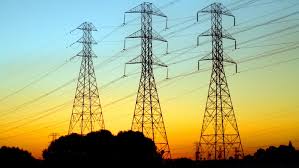
Experts argue that Nigeria’s power crisis is a hydra-headed beast. The issues span generation, transmission, and distribution. The national grid, a relic of decades-old infrastructure, is plagued by inefficiencies. Reports indicate that for every 100 MW generated, 7.79 MW is lost in transmission, a figure that reflects both technical shortcomings and systemic neglect. Vandalism compounds the problem. Indeed, between January 2022 and October 2024, the government spent ₦29.3 billion (roughly $17.7 million) repairing 266 vandalised electricity towers, an average of $66,500 per tower. These fixes however are mere Band-Aids on a system that demands a full overhaul.

The human toll is palpable. In Lagos, small businesses and homeowners alike are compelled to rely on costly petrol/diesel generators to keep their machines/households humming. Many businesses spend more than half of their earnings on fuel.

Across rural Nigeria, entire communities remain off the grid, their potential stifled by darkness; e.g. Otueke in Bayelsa state. The metering gap, less than half of customers have metres, further complicates matters, leading to estimated billing and revenue losses for distribution companies and discontent from electricity consumers. These challenges are not new, but the scale of the solution proposed is unprecedented.

The $200 billion goal is ambitious. It seeks to achieve a generation capacity of 88,000 MW, enough to ensure uninterrupted electricity nationwide by 2045. This figure encompasses upgrades across the entire value chain, generation, transmission, and distribution. It also accounts for the integration of renewable energy, grid modernisation, and policy reforms to attract private investment.

Breaking down the numbers, the plan allocates significant funds to each segment. Transmission infrastructure, for instance, requires a massive investment. The Presidential Power Initiative, launched to modernise the grid, has already committed $1.9 million and €62.9 million in its first phase, boosting capacity by 2,000 MW.

Yet, industry experts estimate that $100 billion over 20 years is needed just to maintain current service levels, let alone expand them. Distribution upgrades, including metering initiatives, also demand substantial funding. The Nigerian Electricity Transmission Access Project (NETAP), backed by a $486 million World Bank credit, is a step toward addressing these gaps, but it’s a drop in the bucket compared to the broader need.

So, while the government focuses on grid expansion, decentralised solutions like mini-grids and solar projects are gaining traction. In a country where vast rural areas remain unconnected, off-grid systems offer a lifeline.

Mini-grids, in particular, are emerging as a game-changer. In northern Nigeria, communities like Gbangba in Niger State have seen transformative change through solar-powered mini-grids. One shudders to imagine what the people used before the project.

The private sector’s role is critical. Of the $32.8 billion needed by 2030 for universal electricity access, the government plans to provide $17 billion, leaving $15.8 billion to come from private investors.

Embedded generation, small-scale power plants serving specific communities or industries, and renewable projects like solar and hydro are seen as cost-effective, but progress is slow. Revenue shortfalls and bureaucratic red tape deter investors, leaving Nigeria’s power sector in a Catch-22: it needs funds to improve, but improvement is needed to attract funds.

The $200 billion estimate is a roadmap, but its success hinges on collaboration between government, private investors, and communities.

We can agree that the $200 billion price tag is daunting. But this is not just about money. Implementation efficiency, transparency, and anti-corruption measures are equally critical. Nigeria’s history of mismanaged projects looms large, with critics pointing to past initiatives that fizzled out despite hefty budgets. The truth is that the funds are one thing, but execution is another. Without accountability, $200 billion could vanish into thin air.

Short-term goals offer a glimmer of hope. Experts estimate that $15-30 billion by 2030 could stabilise the grid, expand metering, and deploy more mini-grids. These steps wouldn’t deliver 24/7 power but could significantly reduce outages and connect millions more to electricity.

For urban centres like Lagos and Abuja, grid upgrades could mean fewer blackouts. For rural areas, off-grid solutions could bridge the gap, promoting economic growth and improving quality of life.

The stakes are high. A reliable power supply could unlock Nigeria’s potential, fueling industries, creating jobs, and reducing poverty. The World Bank’s $29 billion annual loss estimate underscores the cost of inaction.

Yet, the path to transformation is fraught with challenges, technical, financial, and political. As Nigeria grapples with its power crisis, the $200 billion question remains: Can the nation muster the resources and resolve to light up its future?

Eromosele, a corporate communication professional and public affairs analyst, wrote via elviseroms@gmail.com


Hot this week

Guinness Nigeria: N1tn Market Capitalisation Signals Strong Investor Confidence, Sustained Value Creation

Guinness Nigeria Plc has achieved a landmark milestone, surpassing...

Stanbic IBTC Asset Management Bags Top Asset Management Award 2026 by Global Banking & Finance Review

In a noteworthy achievement in Nigeria's asset management landscape,...

Tinubu Assents to N68.32tn Appropriation Bill, 2025 Budget Extension

President Bola Ahmed Tinubu has assented to the 2026...

Nationwide Voting Platform Empowers Consumers to Rate Brands, Public Institutions Based on Real Value, Trust, Service Delivery

  https://consumervalue.vercel.app/nominate In a bold step to deepen consumer voice and...

PenOp Appoints Anthonia Okoro as Chief Executive Officer

Pension Fund Operators Association of Nigeria is pleased to...

Topics

Stanbic IBTC Bank Reintroduces Private Banking Offerings to Empower Nigerians

Stanbic IBTC Bank, a subsidiary of Stanbic IBTC Holdings...

Stanbic IBTC Sponsors Alternative Agric Equipment Trade Show 2021

To reiterate its commitment towards developing the agricultural sector,...

Nominations Open for 2nd IATA Diversity & Inclusion Awards

The International Air Transport Association (IATA) has announced the...

Towards A Stronger Union Bank – Year 105 in Review

2022 was a remarkable year for Union Bank of...

SanlamAllianz Flags Off 12-City Roadshow to Deepen Customer Engagement, Awareness

SanlamAllianz, Nigeria's leading insurance powerhouse formed from the merger...

Shell Completes Acquisition of Daystar Power

Daystar Power, a West African provider of hybrid solar...

Post –COVID-19: Ecobank Nigeria Holds Virtual Graduation Ceremony for Trainees

  57 trainees, who represent batch seven set of graduates...

NCC: Regulatory Instruments Will Tackle Insecurity, Facilitate 5G

The Executive Vice Chairman (EVC) of the Nigerian Communication...
Exit mobile version