


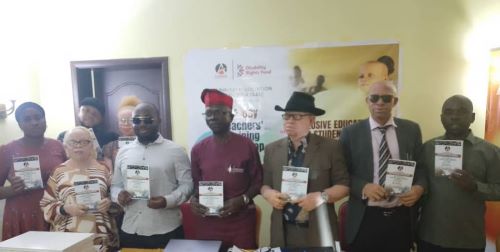
AAN Launches Teachers’ Manual for Teaching Students with Albinism

In a significant move towards inclusive education, the Albinism Association of Nigeria (AAN) has produced a teaching manual for teaching of students with albinism in the classroom.

The Association in collaboration with the Federal Ministry of Education, recently trained 60 teachers drawn from the six geopolitical zones of the country on inclusive education for students with albinism.

The three-day virtual training, funded by the Disability Rights Fund (DRF) under is aimed to equip educators with the tools and strategies needed to address the unique learning challenges faced by students with albinism particularly in the areas of vision and health.

Declaring the training open, Programme Officer for Disability Rights Fund, West Africa, Theophilus Oduada, underscored the significance of the initiative.

“Students with albinism have long faced discrimination, stigmatization, and neglect. This training is about transformation not only in how we view students with albinism, but in how we build educational systems that are inclusive and supportive,” he said.

Highlighting the years of advocacy that led to the training, he announced the official launch of a newly developed manual to guide teachers in effectively supporting students with albinism in classrooms.

This manual is not just a book — it’s a tool for change. Through our advocacy and partnerships, we have seen tremendous progress, and we have made significant strides in ensuring that the needs of these students are not overlooked.

However, much more remains to be done, and this training marks a critical starting point in eradicating the challenges that persist” Oduada stated.

In her welcome address Executive Director of the Albinism Association of Nigeria, Dr. Bisi Bamishe, expressed deep gratitude to stakeholders and reaffirmed the organization’s commitment to inclusive education.

This initiative, as you may know, is designed to equip educators with the knowledge and skills to foster a truly inclusive learning environment for students with albinism. We have come together with a common goal: to build a robust educational framework that will effectively address the unique needs of these students.

“As you may be aware, students with albinism have long faced discrimination, stigmatization, bullying, and a lack of attention to their specific needs, particularly in the areas of vision and health. These issues, unfortunately, continue to hinder their academic progress and achievement.

“This training is aimed at addressing those barriers and providing teachers, administrators, and stakeholders with the tools and strategies they need to help these students overcome these challenges and thrive academically, just like their peers.

“This initiative is a dream come true. We are setting a foundation for schools that recognize and accommodate the unique needs of our children,” she said.

Dr. Bamishe also thanked the DRF, AAN team, consultants, and the Federal Ministry of Education for their collaboration, noting that the training represents a pivotal moment in the association’s advocacy journey.

On his part, the Head of Special Needs Education at the Federal Ministry of Education, Aisuedion Akere, emphasised the policy implications of the training.

He noted that the newly launched manual could undergo official approval processes through national curriculum and policy bodies such as the National Council on Education and the Nigeria Educational Research and Development Council (NERDC).

“Now that we already partner with the Ministry, we can push this manual through official channels for curriculum integration,” he said.

Akere also shared a personal reflection on the lack of awareness among some educators regarding the needs of students with albinism.


Hot this week

NCDMB to Launch Oil and Gas Trainers Certification

The Nigerian Content Development and Monitoring Board (NCDMB) is...

World Yeye Adesola Odeyeyiwa Day: Celebrating a Woman of Great Industry and Elegance

      By Goke Ilesanmi It is another WORLD YEYE ADESOLA ODEYEYIWA...

NAICOM, Ghana’s NIC Strengthen Regional Integration, Drive Insurance Innovation

L-R: Dr. Abiba Zakariah; Commissioner for Insurance, National Insurance...

NCC, CAC Inform Telecom Stakeholders of New Ownership Structure Requirements

The Nigerian Communications Commission (NCC) and the Corporate Affairs...

NCC Appoints Princess Oforitsenere Emiko as Interim Chairman of Digital Bridge Institute Governing Board

The Board of the Nigerian Communications Commission (NCC) has...

Topics

African Airlines to Lose $100m in 2018

The International Air Transport Association (IATA) says African carriers...

COVID-19: Ecobank Nigeria Supports States with Food Items

Ecobank Nigeria has donated food items to several state governments across the country as contribution to various initiatives aimed at cushioning the effect of the current lockdown on citizens. These palliatives are targeted at the most vulnerable members of the society who have been the hardest hit economically as a result of the current crises. Speaking in Lagos, Executive Director Commercial Banking, Ecobank Nigeria, Carol Oyedeji said this action would also go a long way in supporting members of the community who earn a daily wage and may not have the opportunity of working under the present environment. She noted that the donations are part of the bank’s Corporate Social Responsibility (CSR) and focused on providing support as best as possibleShe remarked that “as a bank we give strong priority to people’s welfare. We are determined to assist ordinary Nigerians during the current difficulties and this is one of the ways we are achieving this. We are also offering concessions to our SME Lending customers at this time given the strain on their cashflows and creating ease for the general public to transact digitally while at home”. Ecobank Group has so far contributed over US$3 million to the fight against COVID-19 across its footprint in Africa in line with the Bank’s commitment to the Region. The Institution is supporting governments, the World Health Organisation (WHO) and partnering with private sector operators to alleviate the effect of the pandemic on citizens. These have been in the form of cash, healthcare equipment, donation of supplies, awareness campaigns while also using digital platform to provide funds to beneficiaries of various funds being distributed. The Bank is particularly mindful of the needs of its communities and remains committed to providing the appropriate support required.    

Maintaining Banking System Safety amid the COVID-19 Crisis

By Tobias Adrian & Aditya Narain Today we face economic...

Zenith Bank Expands Global Footprints with Inauguration of Paris Branch

L-R: Mr. Wale Edun, Minister of Finance and Coordinating...

Kwik Takes Last-mile Delivery in Nigeria by Storm

Launched on the 26th June 2019 on both Apple Appstore and...

NCC Donates Four CBT Centres to JAMB

In order to augment facilities for smooth conduct of Computer Based Tests (CBT) by the Joint Admission and Matriculation Board (JAMB), the Nigerian Communications Commission (NCC) has built and donated four of such centres to the examination board. This was disclosed recently by Acting Executive Vice Chairman (EVC), Prof. Umar Danbatta, when JAMB officials paid him a courtesy visit in Abuja. The four centers are located in Kano, Niger, Bayelsa and Oyo states. The centres are equipped with computers, printers, other accessories and Internet connectivity.

Allianz Nigeria: Adewumi-Zer Out, Jaideep Goel in as Interim CEO

Mr. Jaideep Goel as been announced as interim CEO...

Dangote Contracts Honeywell for Major Refinery Capacity Upgrade to 1.4m BPD

Dangote Group is pleased to announce that it has...






