






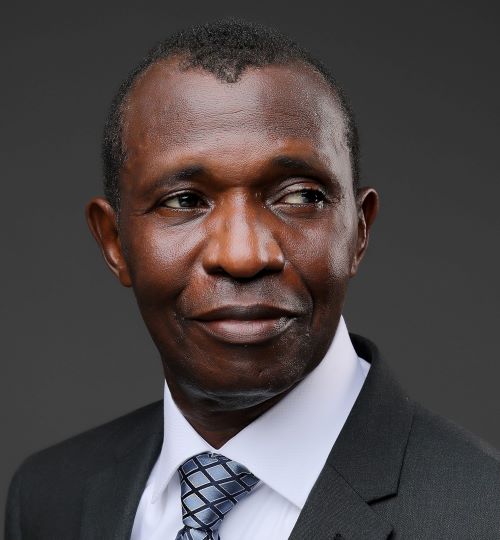


By Michael Owhoko, Ph.D
The quality of a country’s healthcare system is a mirror image of its leaders’ commitment to citizens’ health. Countries like Singapore, Japan, South Korea and Switzerland are among the world’s top countries with best healthcare for citizens, driven majorly by robust funding and well-structured policy programme.
Leaders in these countries do not go to foreign countries for medical tourism, as they have absolute confidence in the delivery capacity of the healthcare system.
But in Nigeria, the healthcare system is fraught with dysfunctionality, forcing elasticity of reliability southward.
Poor health facilities, unprofessionalism, unethical standards, weak regulatory agencies, bad personnel attitude, questionable health insurance schemes, unreliable health management organisations (HMOs), mismanagement, corruption, fake drugs and obsolete equipment are incidental to lack of commitment by Nigerian leaders to efficient and quality healthcare system.
Though, this is a symptom of greater disorders in Nigeria, poor funding and non-utilisation of health facilities by the ruling elites undermine efficiency, quality and delivery capacity of the healthcare system. Why will leaders not trust and utilise the healthcare system they have built, equipped and made available to the people through funding? When food is served to public by a provider who has no intention of eating, there is high probability that quality and hygiene may be compromised.
In the 2025 federal government budget, only N2.56 trillion was budgeted for the health sector, representing 5.15 percent of the country’s total budget of N49.7 trillion, which is far below the 15 percent recommended by the Abuja Declaration, to which Nigeria is a signatory.
Though the N2.56 trillion is an increase of about 58.53 percent of the 2024 budget of N1.62 trillion, however, when viewed in dollar terms, the amount decreased by 15.45 percent, dropping to $1.7 billion from $2.02 billion.
Since the famous coup speech of Late General Sanni Abacha on December 31, 1983 that the country’s health services were in shambles, and hospitals had been reduced to mere consulting clinics without drugs, water and equipment, the health sector has not shown promises of improvement.
Even 34 years after, the wife of Late President Muhammadu Buhari, Aisha, confirmed this in 2017 when she resorted to use of a private hospital wholly owned and run by foreigners due to dysfunctional x-ray machine and lack of syringes in the Villa Clinic.
Unfortunately, 42 years after these observations were made by the powers that were, the healthcare sector is still defined by lack of government’s commitment. This is particularly worrisome when viewed against the background of Nigeria’s growing population, currently characterised by low life expectancy, high maternal and child mortality rates.
This means that dependable and quality healthcare provision is not a priority for government, and therefore, a mirage for Nigeria to achieve high quality healthcare in line with World Health Organisation (WHO)’s standard.
Globally, Nigeria is ranked 157th out of 191 countries by WHO in the areas of quality health delivery performance. As the largest oil producer in Africa and 16th largest in the world, it is untenable for Nigeria not to provide robust funding for the health sector, given the country’s huge earnings from crude oil sales.
Even among African countries, Nigeria is rated poorly in healthcare provision.
In a report released by The Legatum Institute, a London-based global healthcare assessment organization, Nigeria was ranked 11th out of 12 African countries with poor healthcare system. The countries include Central African Republic, South Sudan, Chad, Lesotho, Somalia, Sierra Leone, Swaziland (Eswatini), Liberia, Guinea, Angola, Nigeria and Equatorial Guinea.
Despite this poor performance ranking, no concerted effort is being made by government to improve quality service delivery, as budget allocation to the health sector has been on the downward swing.
Since Nigerian leaders who determine the condition of the sector, do not utilise the facilities due to poor services, it means the Nigerian healthcare system is designed to service the health needs of the poor and common Nigerians, and not Nigerian leaders.
Put differently, the healthcare system in Nigeria is determined and conditioned by the thought process and preferences of those who do not use the services.
For example, the President of the Federal Republic of Nigeria and his cabinet members, including the Minister of Health, together with the Senate President and members of the Legislature, who approve the nation’s tertiary healthcare budget, do not patronize services of Nigerian hospitals.
State governors and their cabinet members, as well as members of the state houses of assembly responsible for approval of budget for secondary healthcare in the country, also, do not patronise health facilities at this level.
Same applies to the various local government chairmen and council members whose jurisdiction cover primary healthcare. They all seek better healthcare outside their domains.
The poor premium placed on the health sector by Nigerian leaders have obviously prevented them from knowing that there is a correlation between robust funding of healthcare system and a healthy workforce, and by extension, robust economy.
A vibrant economy is contingent upon a healthy population and a healthy workforce, as health is a critical contributory factor to economic development. This is the reason advanced economies invest so much in healthcare services, a contrast to Nigeria’s healthcare sector that is troubled by incapacity, unable to address mounting health challenges in the country.
The healthcare delivery system in Nigeria is executed through public and private facilities. Unfortunately, the private healthcare providers are also enmeshed in unprofessional conduct driven by pecuniary motive. Most of them take advantage of the country’s weak systemic policies to deliver poor health services. Regulatory authorities like the National Agency for Food and Drug Administration and Control (NAFDAC), National Health Insurance Authority (NHIA), and The Medical and Dental Council of Nigeria (MDCN) are not doing enough to enforce professionalism and standards in the country’s healthcare system.
I recently lost a friend to prostrate operation in one of the private hospitals in Lagos. Prior to the operation, he walked into the hospital by himself, looking normal. But what he took to be a proactive step to avoid future complications, ended his life.
He was admitted under a health insurance cover managed by an HMO on executive plan with full options. But rapid deterioration of his health in the hospital triggered skepticism on whether quality of treatment was commensurate with subscribed insurance plan.
There are numerous public complaints about HMOs conniving with private hospitals to render inadequate and poor services for financial gains. Most of these hospitals deliberately delay diagnosis and treatment until approval is obtained from HMOs, notwithstanding conditions of patients and category of insurance plans. The NHIA which carries out accreditation of HMOs before approval must look beyond this process to ensure they are continually monitored during operations.
My late friend’s case reminded me of a professional colleague, Mr. Yusuph Olaniyonu, who narrated how God spared his life and given another chance to live again at 58.
His story brought to fore, the ineptitude, inefficiencies, unprofessionalism and lack of commitment and management of patients in Nigerian hospitals. His experience also proved that without connection at the top, patients can die out of share negligence and abandonment without consequence.
After undergoing six major operations and three minor procedures for prostrate, his survival was still on a cliff edge, necessitating the intervention of the Minister of Health through the help of ThisDay Publisher, Nduka Obaigbena and former Senate President, Bukola Saraki.
This intervention notwithstanding, hopes dimmed, leading Saraki to fly him to Egypt where he underwent successful corrective surgical operations.
Olaniyony’s case casts aspersion on the entire medical system in Nigeria, and exposed the agony voiceless Nigerians go through in Nigerian health facilities.
Trust deficit induced by poor services in Nigerian hospitals, has given rise to patronage of unlicensed and quack herbal health practitioners whose activities are damaging vital organs of innocent Nigerians, with concomitant reduction in life expectancy.
It is depressing to know that out of about 34,000 general hospitals, 21,000 primary health centers and 60 teaching hospital and federal medical centers located across the country, only about 41,000 hospitals are functional.
Government must therefore reorder its priorities to make health facilities efficient, affordable and reliable to enable both leaders and poor Nigerians alike to receive treatment in-country, as against resort to medical tourism which cost Nigeria approximately $1.6 billion annually.
Dr. Mike Owhoko, Lagos-based public policy analyst, author, and journalist, can be reached at www.mikeowhoko.com, and followed on X {formerly Twitter} @michaelowhoko.
















