


Wednesday, March 4, 2026
27.6 C
Lagos

Business

Tinubu Hails Nigeria-UAE Partnership as BUA Signs MoU with Abu Dhabi Ports, Mair Group

President Bola Ahmed Tinubu has commended the signing of...

Tinubu Hails BOI on N636bn Loan Disbursement to Businesses in 2025

President Bola Ahmed Tinubu has commended the Bank of...

Reputation Economy: How Nigerian Brands Won, Lost Public Trust in 2025

P + Measurement Services, Nigeria’s leading independent media intelligence...

UAC Records Revenue Surge, Profit Impacted by One-Off Acquisition-Related Costs

UAC of Nigeria Plc has announced its unaudited financial...

Repton Group Wins 2025 Dangote Cement Largest Distributor Award

…in Nigeria, Sub-Saharan Africa By Goke Ilesanmi L-R: Alhaji Aliko...

ICT

Konga Partners Verve to Delight Customers with Free Shopping Vouchers

  Konga, Nigeria’s leading composite e-commerce platform has partnered with...

NCC Spotlights Renewable Energy on World Consumer Rights Day

  The Nigerian Communications Commission (NCC) has concluded arrangements to...

Governors, NCC Set for Broadband Awareness Forum Oct 20

All Nigeria State Governors are set to discuss how...

VerveLife 5.0 Gears Up for Nairobi, Lagos Events

Following a successful series of Verve Life 5.0 satellite...

Telecom Infrastructure Critical to Successful 2023 Elections – Danbatta

The Executive Vice Chairman of the Nigerian Communications Commission,...

Capital Market

NGX RegCo Issues Advisory on Recent Price Movements, Urges Informed Trading

NGX Regulation Limited (NGX RegCo), the independent regulatory arm...

Stanbic IBTC Nominees Celebrates 30 Years of Trust with Landmark Gala Event

Stanbic IBTC Nominees Limited marked a significant milestone on...

NGX GMD, Temi Popoola, Seeks Collaborative Alignment to Drive Sustainable Capital at IFC Confab

Temi Popoola, Group Managing Director and Chief Executive Officer...

AI: Powerful Tool for Economic Growth in Africa-NGX Chair, Umaru Kwairanga

 KEYNOTE SPEECH BY THE CHAIRMAN OF THE NIGERIA EXCHANGE...

Transcorp, DMO, MTN, Dangote Cement, CardinalStone, among Winners at NGX Made of Africa Awards

Transnational Corporation Plc, the Debt Management Office, CardinalStone, Chapel...

Insurance

AIICO 2026 Agency Retreat Honours Outstanding Sales Champions

Mrs. Ego Uzochukwu (Award Winner, centre); flanked on her...

Sovereign Trust Insurance Spreads Love with Fire Safety Drive

On Valentine's Day, Sovereign Trust Insurance Plc showed its...

Mutual Benefits Begins 2026 with ₦5.9bn January Claims Settlement

Mutual Benefits Assurance Plc, a leading Nigerian insurance company,...

Love That Protects: AIICO Takes Valentine’s Message to the Streets

In a vibrant twist to this year’s Valentine’s Day...

Business

Tinubu Hails Nigeria-UAE Partnership as BUA Signs MoU with Abu Dhabi Ports, Mair Group

President Bola Ahmed Tinubu has commended the signing of...

Tinubu Hails BOI on N636bn Loan Disbursement to Businesses in 2025

President Bola Ahmed Tinubu has commended the Bank of...

Reputation Economy: How Nigerian Brands Won, Lost Public Trust in 2025

P + Measurement Services, Nigeria’s leading independent media intelligence...

UAC Records Revenue Surge, Profit Impacted by One-Off Acquisition-Related Costs

UAC of Nigeria Plc has announced its unaudited financial...

Repton Group Wins 2025 Dangote Cement Largest Distributor Award

…in Nigeria, Sub-Saharan Africa By Goke Ilesanmi L-R: Alhaji Aliko...

ICT

Konga Partners Verve to Delight Customers with Free Shopping Vouchers

  Konga, Nigeria’s leading composite e-commerce platform has partnered with...

NCC Spotlights Renewable Energy on World Consumer Rights Day

  The Nigerian Communications Commission (NCC) has concluded arrangements to...

Governors, NCC Set for Broadband Awareness Forum Oct 20

All Nigeria State Governors are set to discuss how...

VerveLife 5.0 Gears Up for Nairobi, Lagos Events

Following a successful series of Verve Life 5.0 satellite...

Telecom Infrastructure Critical to Successful 2023 Elections – Danbatta

The Executive Vice Chairman of the Nigerian Communications Commission,...

Capital Market

NGX RegCo Issues Advisory on Recent Price Movements, Urges Informed Trading

NGX Regulation Limited (NGX RegCo), the independent regulatory arm...

Stanbic IBTC Nominees Celebrates 30 Years of Trust with Landmark Gala Event

Stanbic IBTC Nominees Limited marked a significant milestone on...

NGX GMD, Temi Popoola, Seeks Collaborative Alignment to Drive Sustainable Capital at IFC Confab

Temi Popoola, Group Managing Director and Chief Executive Officer...

AI: Powerful Tool for Economic Growth in Africa-NGX Chair, Umaru Kwairanga

 KEYNOTE SPEECH BY THE CHAIRMAN OF THE NIGERIA EXCHANGE...

Transcorp, DMO, MTN, Dangote Cement, CardinalStone, among Winners at NGX Made of Africa Awards

Transnational Corporation Plc, the Debt Management Office, CardinalStone, Chapel...

Insurance

AIICO 2026 Agency Retreat Honours Outstanding Sales Champions

Mrs. Ego Uzochukwu (Award Winner, centre); flanked on her...

Sovereign Trust Insurance Spreads Love with Fire Safety Drive

On Valentine's Day, Sovereign Trust Insurance Plc showed its...

Mutual Benefits Begins 2026 with ₦5.9bn January Claims Settlement

Mutual Benefits Assurance Plc, a leading Nigerian insurance company,...

Love That Protects: AIICO Takes Valentine’s Message to the Streets

In a vibrant twist to this year’s Valentine’s Day...

The Challenges of Recurring Potholes in Nigeria Roads

By Moses Braimah

In Nigeria, roads are constructed using multiple layers, each designed for a specific purpose.

These layers include the subgrade, sub-base, base course, and surface layer, typically made of bitumen or asphalt. The subgrade forms the foundation and must be compacted to support the above layers.

The sub-base provides additional support, while the base course distributes traffic loads to prevent excessive stress on the subgrade. The topmost layer, usually bitumen, offers a smooth, durable surface for vehicles.

As a key component in in road construction in Nigeria, it is important to delve in more into the role of bitumen. It is a viscous, petroleum-based material, primarily used for binding the road layers and providing a weatherproof surface. Its flexibility allows roads to expand and contract with temperature changes, reducing cracks and wear.

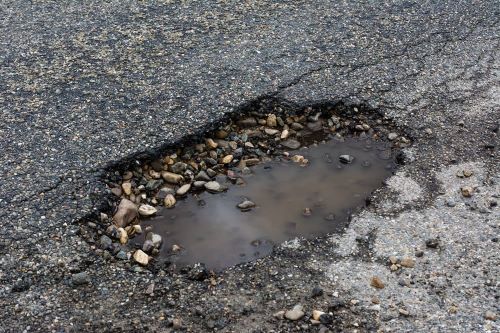
However, bitumen is highly susceptible to damage caused by water infiltration, which explains why potholes quickly reappear after patching. When water seeps through cracks in the surface, it weakens the lower layers, causing the road to collapse under pressure from vehicles.

Drainage and its Importance

Proper drainage systems are critical in road construction. Effective drainage systems are essential for maintaining road longevity. When present and functional, they divert water away from the road, preventing waterlogging, erosion, and weakening of the subgrade.

In contrast, blocked or absent drainage systems cause water to seep into the road layers, weakening the structure and accelerating pothole formation. This is particularly problematic during Nigeria’s rainy season, where the heavy downpour overwhelms poorly designed drainage systems, leading to rapid deterioration of roads.

So, what are the alternatives to bitumen? Given the limitations of bitumen in handling water damage, suggested alternative materials can be explored. These include materials such as geopolymer binders, recycled plastics, and composite materials. They offer greater resistance to environmental factors. However, the most promising alternative to bitumen is concrete pavement.

Why is concrete pavement a superior alternative? Concrete pavement is known also as rigid pavement. It is made from cement and aggregates. It is stronger and more durable than bitumen, particularly in areas with heavy rainfall or high traffic volumes. Concrete’s rigid structure resists deformation, making it less prone to potholes and other surface failures. It also has a longer lifespan, reducing maintenance costs over time.

Advantages of Concrete Pavement over Bitumen

Durability: Concrete lasts 30-50 years compared to bitumen’s 15-20 years, making it a more cost-effective option in the long run.

Water Resistance: Concrete is less permeable than bitumen, offering better protection against water damage and reducing the risk of potholes.

Load-Bearing Capacity: Concrete can handle heavier loads without warping, making it ideal for highways and high-traffic routes.

Reduced Maintenance: While concrete is more expensive to install initially, its low maintenance requirements translate into significant savings over time.

Thermal Resistance: Unlike bitumen, concrete is not sensitive to extreme temperature changes, making it more stable in Nigeria’s varied climate.

Bitumen vs. Concrete: A Comparison

Cost: Bitumen is cheaper to install but requires frequent maintenance, while concrete has a higher upfront cost but lower long-term expenses.

Environmental Impact: Bitumen is derived from petroleum, contributing to environmental degradation. Concrete, though energy-intensive, can be more eco-friendly, especially with newer technologies like carbon capture during production.

Application: Bitumen is more flexible and easier to work with for smaller roads and projects. In contrast, concrete is better suited for highways, bridges, and areas with high traffic.


Aspect Bitumen (Asphalt) Concrete
Cost Cheaper upfront Higher initial cost
Lifespan 10-15 years 20-40 years
Maintenance Frequent repairs Low maintenance
Water Resistance Prone to water damage Highly water-resistant
Thermal Performance Softens and cracks in heat Stable under temperature changes
Sustainability Less eco-friendly (derived from oil) Can be made from recyclable materials


In summary, while bitumen has been the traditional choice for road construction in Nigeria, it may no longer be the best option in the face of recurrent potholes and rising maintenance costs.

With its superior durability, load-bearing capacity, and water resistance, concrete pavement presents a compelling alternative, particularly for high-traffic and coastal roads like the Lagos-Calabar Coastal Highway.

Implementing better drainage systems alongside this shift in materials could significantly improve Nigeria’s road infrastructure for future generations.


– Braimah is an Executive Project Director at PacificMessages.

Hot this week

NCDMB: Remittance of 1% Nigerian Content Levy Still Mandatory

The Nigerian Content Development and Monitoring Board (NCDMB) on...

NCDMB Builds Capacity in Health Sector, Donates Hi-tech Equipment, Simulators to Bayelsa Medical University

A state-of-the-art Clinical Skills and Simulation Laboratory, fully equipped...

NCDMB Holds Lagos Midstream Workshop, Charges Operators on Compliance, New Policies

The Nigerian Content Development and Monitoring Board (NCDMB) has...

Stanbic IBTC Bank Nigeria PMI: New Orders Return to Growth, Inflation Eases to Lowest in Six Years

The Nigerian private sector returned to growth in February,...

Topics

NPA MD: ‘We Are Positioning for Greater Efficiency’

The Managing Director of the Nigerian Ports Authority (NPA)...

Polaris Bank Champions Financial Literacy for Students in Commemoration of World Savings Day 2024

Polaris Bank concluded its nationwide financial literacy initiative with...

Luanda: Most Expensive African City for Expats in 2016

Luanda, the capital of Angola is the most expensive...

Africa Finance Corp Secures $150m Loan from German Bank

In a statement published on June 22, Africa Finance...

NCC, NAICOM, SEC, PenCom, Others for SUPERNEWS Conference April 27

SUPERNEWS Nigeria will on Thursday, April 27, 2023 bring...

Trane Appoints JMG as New Distributor in Nigeria

Trane, a global provider of indoor comfort systems and...
Exit mobile version







