






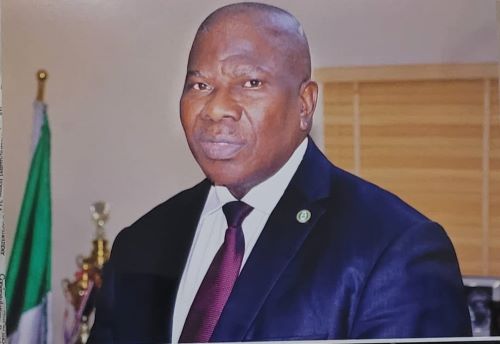


As the global economic downturn escalates and insurance claims rise, the insurance industry in many jurisdictions are now thinking the way out of slumping revenue as costs and claims converge to chip away at their corporate bottom-line.
Prince Cookey reports.
This has invariably given rise to upward adjustment in insurance premium rates to catch up with rising inflation, operational cost and claims.
For instance, the National Insurance Commission (NAICOM) in Nigeria recently raised the Third-Party Property Damage (TPPD) rate and premium on private cars to N3 million and N15, 000 respectively effective from January 1, 2023 from the existing premium of N5, 000.
In a circular (NAICOM/DPR/CIR/46/2022) dated December 22, 2022 and signed by Mr. L. M. Akah, the Director, Policy & Regulations at NAICOM, the Commission said:
- Pursuant to the exercise of its function of approving rates of insurance premium under Section 7 of NAICOM Act 1997 and other extant laws, the Commission hereby issue this circular on the new motor insurance premium rates effective from January 1, 2023.
- Third Party Insurance policies inclusive of ECOWAS Brown Card (EBC).
- Comprehensive motor insurance policy premium rate shall not be less than 5 percent of the sum insured after all rebates/discounts.
- Failure to comply with this circular shall attract appropriate regulatory sanction.
The new insurance premium rates also include claim of N3 million and premium of N20, 000 for Staff Bus; claim of N2 million and premium of N5, 000 for tricycles and claim of N1 million and premium of N3, 000 for motor cycles.
The Worrisome Statistics
As expected, both operators and policyholders are reacting cautiously to the new rates given that an estimated 3.4 million vehicles in Nigeria out of over 13 million lack genuine third-party motor insurance policies as at the second quarter of 2022 due to the activities of fake insurance operators. The situation amounts to annual loss of over N160 billion to the local insurance sector.
A similar study by the Nigerian Insurance Industry Database (NIID) also implied that while 9.4 million vehicles are on Nigerian roads, only 2.74 million of them have genuine insurance policies. The NIID platform was established by the Nigerian Insurers Association (NIA) to verify the genuineness of insurance certificates.
The Reactions
Mr. Adewale Oyerinde, Director-General of the Nigeria Employers’ Consultative Association (NECA) told the News Agency of Nigeria (NAN) that it was right to introduce the new motor insurance rates to drive growth of the insurance sector and the larger economy in Nigeria.
Oyerinde said: “It is worthy of note that the current rate has been in existence for over five years, while the cost of motor vehicles has increased exponentially. Coupled with the general price increase of goods and services, the Commission can be justified if there are guarantees for improved service delivery and a higher response rate from insurance companies.”
But an industry operator cautioned that the timing of the increase could create financial handicap for owners of vehicles given the rising level of inflation and general economic downturn in the country.
The operator said: “Of course, the motor insurance new rate is good news for operators to generate more revenue but the downside is that many vehicle owners who cannot readily afford the new rate of N15, 000 will now justifiably patronise roadside fake insurance agents promising them the old rate of N5, 000. More importantly, in a country where enforcement is a major challenge, who will enforce the new rate?
The regulator should have raised the rate to N10, 000 instead of N15, 000 to make it easier for vehicle owners to pay.”
With the new motor insurance rates in place, the coming months will determine the fate of the new policy by NAICOM in terms of implementation, enforcement and compliance.
NB: First published in Africa Ahead!














