

Renewable Energy: Pathway to Poverty Alleviation in Africa

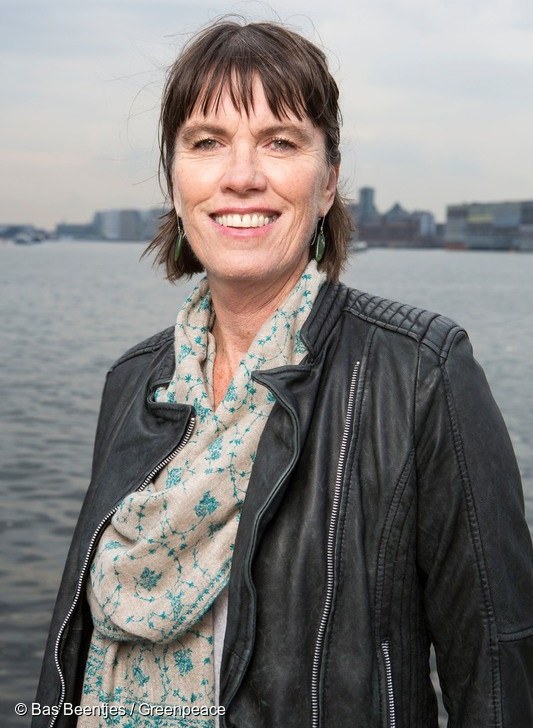
New Executive Director Greenpeace International (http://www.Greenpeace.org) Bunny McDiarmid visited the Greenpeace Africa office in Johannesburg to show solidarity and gain further insight into the key issues. The visit was McDiarmid’s first to the continent since taking office in April.
Greenpeace Africa is concentrating its efforts on promoting sustainable development with particular emphasis on policies that support investment and development in clean renewable energy.
During the visit, McDiarmid said: “I came to meet and support my colleagues here in Africa. Promoting sustainable development is the most viable option for not only driving sustainable social and economic changes but important for protecting our common climate. Keeping dirty fossil fuels in the ground in every corner of the world is no longer a choice it’s an imperative.”
A quarter of the world’s population has no access to electricity and most of these people live in South Asia and sub-Saharan Africa. Access to electricity is key to supporting people out of poverty.
“What I heard is achieving 100% renewable energy by 2050 is absolutely possible in Africa. However, it will require a shift in understanding that renewable energy is already a viable solution but it needs to be backed by the policy makers,” added McDiarmid.
Greenpeace Africa is also working, as part of a global effort, for a stronger response to stop illegal and unregulated plundering of its vast natural forests and safeguarding its rich ocean resources.
“Just as collective action on climate change is key to resolving a global problem, Greenpeace Africa is calling on African nations to work together to manage and protect these precious resources so that they are there for future generations” McDiarmid said.
Greenpeace International recently appointed two female International Executive Directors. Jennifer Morgan and Bunny McDiarmid took up the reigns in an innovative shared-leadership role on 4 April 2016. They succeed South African born Kumi Naidoo who had been at the helm of the organisation for five and a half years.
Bunny McDiarmid is not a new face to Greenpeace. She is a 30-year veteran of the organisation as an activist, ship’s crew member, and most recently, the Executive Director of Greenpeace New Zealand which, under her leadership, became a powerhouse of innovation in the Greenpeace world.

Hot this week

Is Investing for Me? Rethinking Who the Stock Market is Actually Built For

  By Robinson Kolawole "Investing is not for someone like me."...

CIIN Boss, Yetunde llori, Bows Out, Lists Achievements in Office

Mrs. Yetunde llori, the President/Chairman of Council, Chartered Insurance...

WorldStage Business Forum Q2 2026: Prof. Baale Makes Case for Building World-class Nigerian Corporate Culture

L-R: Mr. Segun Adeleye, President/CEO, World Stage Limited; Prof. Lere...

Insurance Brokers Reaffirm Commitment to Local Content, Digital Innovation at SUPERNEWS Conference

Deputy President of the Nigerian Council of Registered Insurance...

Topics

Stanbic IBTC: Celebrating Impressive Gender Equity Scorecard

  Recently, Stanbic IBTC Holdings PLC announced the promotions of...

Polaris Bank Reinforces Commitment to Exceptional Customer Experience at Global Trade Forum in Ibadan

Chris Ofikulu, Executive Director, Retail & Commercial Banking, Polaris...

Union Bank Honoured as Best in Workplace Practice at Seras Awards

L-R: Head, Strategic Communications and Media Relations, Union Bank,...

Big Tech, Not Fintech, Causing Greatest Disruption to Banking, Insurance Markets

Financial institutions’ drive to become more “experience-driven” is opening...

N1tr Fine: NCC Issues November 16 Deadline to MTN

The Nigerian Communications Commission (NCC) says it has issued a November 16, 2015 deadline to MTN Nigeria to pay the N1 trillion penalty it imposed on the mobile operator for failing to disconnect 5.2 million unregistered SIM cards on its network. Mr. Tony Ojobo, Director, Public Affairs of NCC told the AFP: “The deadline set for the payment of the fine is November 16.” “The key issue is if MTN breached the law or not. Certainly, there was a breach. And if there is a breach, we will apply the law.”

Case Study: The Collapse of Lehman Brothers

Overview On September 15, 2008, Lehman Brothers filed for bankruptcy. With $639 billion in assets and $619 billion in debt, Lehman's bankruptcy filing was the largest in history, as its assets far surpassed those of previous bankrupt giants such as WorldCom and Enron. Lehman was the fourth-largest U.S. investment bank at the time of its collapse, with 25,000 employees worldwide. Lehman's demise also made it the largest victim, of the U.S. subprime mortgage-induced financial crisis that swept through global financial markets in 2008. Click here to make a lazy tweet

Local Bourse Sustains Positive Momentum… ASI up 1.1%

Yesterday, the local bourse maintained its positive performance as...







