


Remittance to Africa Hits $35.2bn in 2015, 3.4% Rise

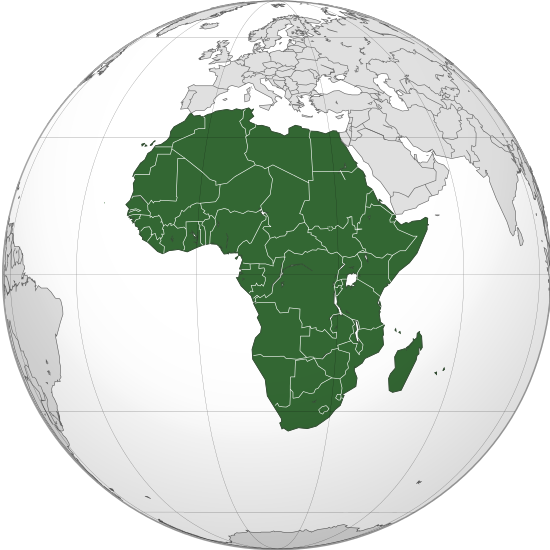
In 2015, money transfers by African migrants to their region or country of origin surged by 3.4% to $35.2 billion, a report by World Bank and other development partners revealed.

This sum, which includes intra-African transfers, represents 6% of total transfers by migrants worldwide to their region or country of origin. Total migrant transfers worldwide, even though down as compared to the previous year is estimated at $581.6 billion.

This information goes against the trend, before the Syrian conflict and refugees’ influx, which puts Africa as number one in terms of migration and due to which some European countries raised barriers thus making it more difficult for Africans to get visas.

Over the past four years, transfers by African migrants to their homes reached $134 .4 billion. A relatively low figure compared to licit and illicit financial flows from Africa.

According to a report published in 2015 by African Union High Level Panel against illicit financial flows, fiscal optimisation allows Africa-based multinationals to send out up to $50 billion each year. To that are added profit transfers which are authorized in most African countries where close to 60% of invested capital stock belongs, directly or indirectly, to foreigners.

The report said high operations costs were behind the low level of money transferred by African migrants. It adds that these costs, though lower as compared to the year before (11.4%) represent 9.5% of total transferred.

There are presently 250 million migrants worldwide, refugees included. Populations with highest levels of migrants include Mexicans (migrating to the USA), Gulf countries and Russia’s satellites States.

The World Bank’s report however, shows that African nations host at least four million migrants, either there to do business (South Africa) or as a result of the rising insecurity (Cameroon, Rwanda, Ethiopia, Djibouti, etc.) that the continent records.


Hot this week

Cardoso, Okonjo-Iweala to Headline 7th Africa Emerging Markets Forum in Abuja

A high-level fireside dialogue between the Governor of the...

Stanbic IBTC Named Winner in Four Categories at Euromoney Awards for Excellence 2026

Stanbic IBTC, a member of Standard Bank Group, was...

NGX Group Delivers Record First-Half Performance, Announces ₦1.30 Interim Dividend

Revenue rises 118% as profit before tax increases 170%,...

DataPro: Beyond the Balance Sheet: A Thorough Approach to Ratings

“In today’s complex financial world, your creditworthiness is your...

NAICOM Pledges Support for Lagos State Building Insurance Scheme

Keynote Address by Mr. Olusegun Ayo Omosehin, Commissioner for...

Topics

‘No Silicon Valley for Africa’

Recently, the city of Cape Town, South Africa welcomed...

 OVH Acquisition: The Facts of the Matter-NNPCL

The attention of NNPC Ltd has been drawn to...

Mobile Broadband to Reach 4.3bn Globally in 2017

The new 2017 edition of ITU’s ICT Facts and Figures reveals...

Independents to Account for 25% Oil Production by 2020

Independents are projected to account for about 500kbpd by the year 2020, representing 25% of crude oil production in Nigeria, from the current level of 10%. The development is seen as a reflection of the changing landscape of the oil and gas industry in Nigeria. Key Recommendations: • Integration of the upstream to other parts of the value chain may eventually be driven by the independents. • Challenges such as security, especially for independents operating in shallow waters. Local companies reiterated that security and community challenges have greatly altered their cost of production which cannot be fully ascertained. When coupled with Government take and interest from loans the cost per barrel increases. • Government is to ensure that an enabling environment is created - independents need to be able to deliver on capacity growth and funding.

Sovereign Trust Insurance Celebrates International Men’s Day 2025

The Head of Corporate Communications and Investor Relations, Segun...

Sterling Leads Charge in Revolutionising Africa’s Agric Value Chain

L-R: Managing Director Sterling Bank, Mr. Abubakar Suleiman; Keynote...

Internet Society Tasks African Policymakers on Opportunity

The Internet Society will call for the adoption of...

AMCON CEO: Why Airlines Fail In Nigeria

The failure of many airlines in Nigeria and why...






