






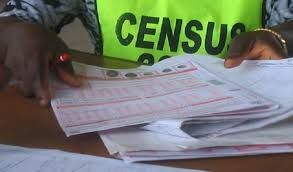


Open Alliance, a coalition of civil society organisations working to improve openness and accountability in government, expresses deep concern over Nigeria’s prolonged failure to conduct a credible National Population and Housing Census, nearly two decades after the last exercise.
Notably, Nigerians aged 18 years and below have never experienced a proper census. The last national population census was conducted in 2006, barely eight years after Nigeria’s return to democratic governance.
Since then, the country has held five general elections, experienced multiple administrations at federal and subnational levels, and undergone significant demographic shifts, yet public planning and resource allocation continue to rely on projections and assumptions rather than verified data.
Against this backdrop, the Presidency’s April 2025 announcement of a committee to lay the groundwork for a long-overdue National Population and Housing Census was widely welcomed as a potential turning point. Chaired by the Honourable Minister of Budget and National Planning, Senator Atiku Bagudu, the committee was mandated to submit an interim report within three weeks.
However, several months after this announcement, there has been no publicly available report, actionable timeline, or policy direction arising from the committee’s work. This prolonged silence has further heightened concerns about the government’s resolve to address Nigeria’s long-standing demographic data deficit.
Equally troubling is the lack of consistency and clarity surrounding budgetary provisions for the census. In the 2026 capital expenditure proposal, N770 million was allocated to the National Population and Housing Census.
When disaggregated across Nigeria’s 36 states and the Federal Capital Territory, this figure amounts to approximately N20.8 million per subnational government.
This figure raises serious questions about adequacy, realism, and strategic intent, especially when juxtaposed with the N693.3 million allocated to capital expenditure for the 2024 population and housing census, which, like the figure, failed to translate into concrete preparatory actions or measurable progress.
Commenting, Joseph Amenaghawon, BudgIT’s Acting Country Director, underscored that a credible census is far more than a statistical exercise.
“Accurate demographic data informs fiscal transfers, constituency delineation, infrastructure planning, healthcare delivery, education policy, and social protection programmes. In the absence of reliable population data, public policy becomes guesswork, undermining efficiency, equity, and accountability in governance,” he said.
Importantly, as Nigeria prepares for its sixth general election since the last census, the continued delay in conducting a national population and housing census poses grave risks to democratic representation, development planning, and social cohesion.
As the National Assembly reviews the 2026 Proposed Budget, we call on the House of Representatives and the Nigerian Senate to prioritise and ensure the conduct of a credible National Population and Housing Census within the year, before electoral preparations gain full momentum. The time to count Nigerians properly and credibly is now.
















