






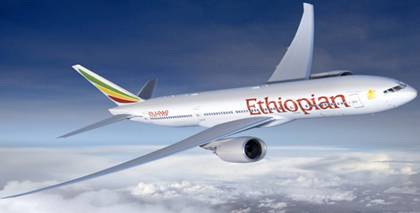


According to the latest edition of Secteur Privé & Développement (Private Sector & Development) published by Proparco, AFD’s arm in charge of private sector, Northern Africa airlines dominate Africa’s air traffic.
Over a total of 44.075 million passengers, these companies namely Egyptair (first with 18 million passengers), Air Algerie (second with 12 million), Royal Air Maroc (third with 11.035 million) and Tunisair (seventh with 2.666 million) grabbed nearly 45% of total number of passengers carried by African airlines, according to the London-based platform OAG, which analyzes the sector.
South African Airlines, which is presently encountering some challenges, Ethiopian Airlines, one of the continent’s most active airlines and Kenya Airways which is also quite present in Africa, despite its financial troubles, are respectively fourth, fifth and sixth.
The growth potential of the inter-African air traffic market is quite significant. Some experts estimate in fact that given Africa’s current communication issues, it is cheaper to build airport infrastructures than roads or railways.
However, according to Jean-Louis Barroux, CEO APG World Connect, cited by Proparco’s magazine, one of the major challenges in the sector is the compartmentalisation of African skies. “It is difficult for most African nations to liberalise air transport as the airspace belongs to them and it holds a strong symbolic and political position for them,” he said.
He added that most public authorities in Africa lack, unfortunately, the skills and resources needed to properly manage this sector. Truly, in many countries are airlines’ directors still appointed due to their ties with the power in place, rather than for their actual skills.
Nevertheless, there are still airlines such as Asky, Rwandair or Air Ivoire that remain the region’s pride as they provide permanent or almost (90%) regular services within Africa.
However, transportation costs are expensive, travelling duration are quite long (it can sometimes take 3 hours to go from Douala in Cameroon to Lagos in Nigeria).
Another challenge is the difficulty for people to move freely between borders in Africa.
















