






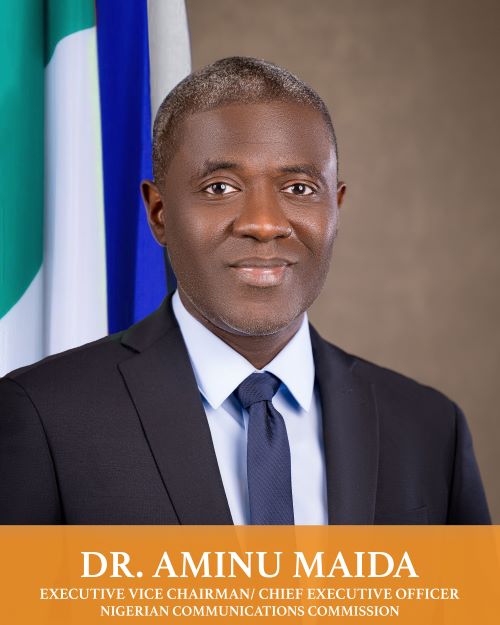


Various digital social investments in Nigeria, through the Nigerian Communications Commission (NCC) were on showcase at the just-concluded 35th annual conference of the African Public Relations Association (APRA) in Abidjan, Côte d’Ivoire.
Through a presentation by the Head of Media Management Relations at the NCC, Dr. Omoniyi Ibietan, who later emerged as the Secretary-General of APRA after an election at the event which took place from 13th to 17th May, 2024, participants had a glean into some of the digital social investments and infrastructure expansion happening in Nigeria, through regulatory efficiency of the Commission.
In his presentation with the title: “Digital Inclusion as Arbiter of Accessible PR: A Case of the Nigerian Communications Commission,” Ibietan highlighted some 36 initiatives of the Commission within and beyond its immediate regulatory mandate, implemented to promote infrastructure expansion, support SMEs, empower educational institutions, advance innovation and promote digital up-skilling of Nigerian youths.
These include the Advanced Digital Awareness Programme for Tertiary Institutions (ADAPTI); Campus Innovation and Entrepreneurship (CIEP) programme; e-PAD project for 232 institutions; Digital Appreciation Project (DAP) for 247 secondary schools; Digital Literacy Training for Teachers (DLT); Digital Integration Programme (DIP) for MSMEs; and the E-Accessibility programme targeted at persons with disabilities.
Others include the Nigerian Girls Can Code Competition; the Build A-Thon, aimed at enabling young persons to pitch and enhance their skills and new learning experience; Tertiary Institutions Digital Centre (TIDC) for 250 institutions; 2,291 Digital Nigeria Centers (DNC) online/offline educational resources; Local Application and Content Deployment programme; and up to 72 Rural Broadband Initiative projects, among others.
According to him, the NCC through its component special purpose vehicle, the Universal Service Provision Fund (USPF) has undertaken several digital infrastructure projects, programmes and collaborative activities with stakeholders.
“These interventions have caused a shift in digital literacy, fundamentally shrank the digital divide and opened the floodgates of participation in political, economic and social processes, and enabled accessible digital public relations in Nigeria,” he said.
While over 20 papers were presented at the APRA Conference to expound its thematic focus of “One Africa, One Voice: Bridging Africa’s Communication Divide”, Ibietan’s paper was the only presentation that showcased digital infrastructure investments by any African country, even though many papers advocated the centrality of adequate broadband infrastructure in enhancing digital culture on the continent.
Ibietan emphasised that digital inclusion is the ability of individuals and groups to access and fully participate in the digital society, particularly in the use of information and communication technologies (ICTs) such as the internet, computers, and mobile devices.
He submitted that digital inclusion encompasses not only access to digital technologies but also the skills, knowledge, and resources needed to effectively utilise them.
He also emphasised that the phenomenon of digital inclusion is desirable for economies that aspire to grow and develop in remarkable and measurable sense.
He said: “This is because digital inclusion promotes social and economic opportunities, enhances civic engagement and participation, supports education and lifelong learning, fosters digital literacy and skills development, encourages innovation and entrepreneurship, and helps to bridge the digital divide and reduce inequalities.”
He referenced that the COVID-19 pandemic and its fallouts proved the significance of digital infrastructure to the economy.
Luckily, he said: “Nigeria’s investment in broadband infrastructure partly explained why the nation was able to cope with the outbreak of the COVID-19 virus because availability of digital infrastructure helped individuals, businesses and the government to migrate their social and economic activities to digital platforms in order to mitigate the devastating effect of the Pandemic.”
He recommended constant and seamless communication among stakeholders to ensure efficiency in the management and proper harvest of derivable benefits social investment and infrastructural projects.
















