






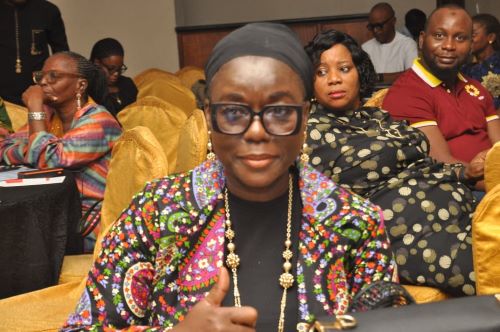


Mrs. Tolulase Omodele-Rufai
Deputy Director
Nigerian Communications Commission (NCC)
Lagos Zonal Office
The Nigerian Communications Commission (NCC) says its strategic intervention in terms of tariff adjustments that are both cost-reflective and competitively aligned with market realities has attracted over $1 billion in fresh investment from telecom operators as a result of investor confidence and healthy competition.
Dr. Aminu Maida, the Executive Vice-Chairman/CEO of NCC, said at the Business Journal Annual Lecture 2025 in Lagos that such resources are now driving network upgrades, infrastructure modernisation and wider national coverage.
Maida, who was represented by Mrs. Tolulase Omodele-Rufai, Deputy Director, NCC, Lagos Zonal Office, said:
“In just seven months, operators and tower companies have deployed more than 2, 900 additional capacity and coverage sites nationwide, significantly improving network strength and service availability.”
On the theme of the lecture: AI & Digital Economy: Projecting the Future of Economic Growth in Nigeria, Maida said AI is already reshaping productivity, services and inclusion.
“For Nigeria, the opportunities of AI are profound in the fields of agriculture, healthcare, creative industry, logistics and education etc. The economic opportunities in new jobs, new businesses, enhanced productivity and new value chains cannot be over-emphasised.”
The NCC EVC argued however that such opportunities are hinged on the availability of the right environment for AI to thrive in terms of resilient connectivity, infrastructure, vibrant ecosystem and ethical governance to drive its appropriate utililisation.
“As Nigeria’s telecom regulator, our mandate is to create an enabling environment for AI to thrive by way of regulations and guidelines to foster the ubiquitous delivery of quality telecommunication services across the country. Broadband is the backbone of AI. It is quality connectivity that makes the innovative potential of AI possible.”
Maida said the Commission has equally launched the Nigerian National Coverage Maps, which enable consumers to visualise coverage, speed and service availability nationwide. It also empowers consumers to make informed decisions, while giving operators the needed data to optimise performance.
“As we look into the future, we can be confident that Nigeria is taking the right steps. With resilient infrastructure, clear and transparent regulation and sustained protection of telecom assets, we can ensure that broadband is not only accessible and affordable, but also transformative. This is how we build a digital economy that is inclusive, secure and forward-looking; one where AI and innovation become catalysts for national prosperity.”
















