






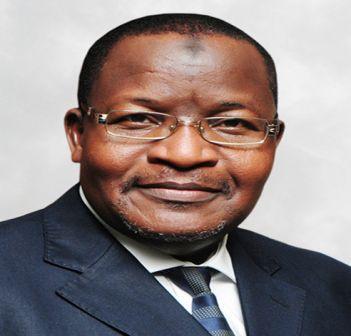


The Central Bank of Nigeria (CBN) and the Nigerian Communications Commission (NCC) would soon come up with regulations to tighten the process of Subscriber Identification Module (SIM) card swap for telecom subscribers.
Mr. Dipo Fatokun, the Director, Banking and Payments System at the CBN explained:
“Some of the fraud we are still battling with is the issue of SIM swap. We have heard of instances where people would say for three days my phone did not work. And because many of us carry more than one phone, if one is not working, at least one will work.
So, what they do is that they swap your phone. That is, they just walk up to a service provider and claim to be the owner of the line. Most often, they have studied that number and they have collaborators, probably in the bank.
And because the process for doing a change of SIM card is so loose, the telcom company would change the SIM card for the person and so he assumes the phone number.
“What does he do? He puts the SIM card in another phone and start using the USSD to make transfers out of the account into another account. So, we are working with the NCC to tighten the process of SIM card swap. It may include biometrics and a unique number may be required.
In Nigeria, we have consistently over the last three years reduced the value of electronic fraud. The game changer is the Bank Verification Number (BVN). It is not only helping us to identify who owns what, but going forward, just as it was announced by the Bankers’ Committee at the last meeting, the BVN would be used as an instrument to track fraudsters in the system.
When electronic fraud happens, money is moved from one account to another account. That other account that money is moved to, the owner can be identified. And when such owners can be identified, they can be blacklisted or watch listed.
It means that fraudsters can be identified and if possible taken out of the system. So, the BVN is going to be a game changer in the respect. We are working on the final framework and when it is concluded, it would be issued to the industry.
Electronics payment is any form of payment where an electronics system is used to initiate authorise and confirm the transfer of money between two parties. This could be for various reasons, such as payment for goods and services, settlement of obligations, gifts, among others.
Electronics payments are enabled by a network of interconnected systems, which make it possible for exchanges of value between payer and payee, sender and receivers or donor and done.”
















