






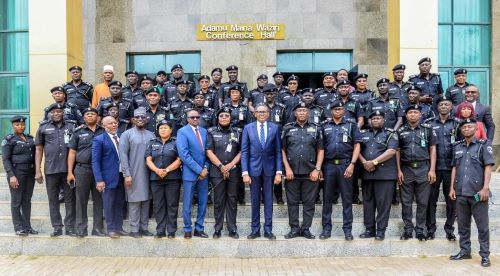


The National Insurance Commission (NAICOM) has organised a one-day training programme for officers of the Nigeria Police Force (NPF), Federal Capital Territory (FCT) Command, aimed at strengthening compliance with Motor Third-Party Insurance and other compulsory insurance policies, as well as enhancing insurance policy verification processes.
The training, held in Abuja, was themed “Building a Culture of Insurance Compliance: Police as Catalysts for Protecting Lives, Property and Enhancing Public Safety.”
The programme was designed to equip police officers with the knowledge and skills required to promote compliance with compulsory insurance laws, verify the authenticity of insurance policies, and deepen public understanding of the benefits of insurance.
Speaking at the event on behalf of the Commissioner for Insurance and Chief Executive Officer of NAICOM, Mr. Olusegun Ayo Omosehin, Mr. Ekerete Ola Gam-Ikon underscored the strategic importance of collaboration between NAICOM and the Nigeria Police Force in promoting compliance with compulsory insurance requirements.
He noted that effective public safety extends beyond crime prevention and law enforcement to include protecting citizens from the financial consequences of unforeseen events.
According to him, insurance serves as a vital social and economic safety net, providing protection for individuals, families, businesses, and public institutions against losses arising from accidents, disasters, and other risks.
Mr. Gam-Ikon stated that the partnership between NAICOM and the Nigeria Police Force is critical to reducing the number of uninsured vehicles on Nigerian roads, protecting road users, curbing the use of fake insurance certificates, and strengthening public confidence in regulatory institutions.
He further emphasized that these objectives align with the provisions of the Nigerian Insurance Industry Reform Act (NIIRA) 2025 and NAICOM’s mandate to deepen insurance penetration and compliance across the country.
He highlighted the unique role of the Nigeria Police Force in advancing insurance compliance through its daily interactions with motorists, business owners, and members of the public. He noted that by promoting adherence to compulsory insurance laws, police officers contribute significantly to the protection of lives and property, the reduction of financial hardship arising from accidents, and the enhancement of public safety.
During the training, participants were equipped with practical knowledge on the objectives and benefits of compulsory insurance, insurance policy verification procedures, the identification of genuine insurance certificates, and the legal framework governing compliance with Motor Third-Party Insurance and other compulsory insurance policies.
The programme also provided an opportunity to further strengthen collaboration between NAICOM and the Nigeria Police Force while encouraging officers to serve not only as compliance officers but also as advocates for insurance awareness within their respective areas of responsibility.
NAICOM reaffirmed its commitment to working closely with law enforcement agencies and other stakeholders to increase insurance awareness, improve compliance levels, discourage the use of fake insurance certificates, and ensure that the insurance sector continues to contribute meaningfully to Nigeria’s economic growth, social stability, and the welfare of citizens.
The Commission urged officers of the FCT Command to champion insurance compliance and serve as role models in fostering a culture where insurance is recognized not merely as a statutory requirement but as an essential tool for protecting lives, property, investments, and livelihoods.
















