





Exploiting the world’s vast resources of unconventional natural gas holds the key to a golden age of gas, but for that to happen governments, industry and other stakeholders must work together to address legitimate public concerns about the associated environmental and social impacts.
A special World Energy Outlook report on unconventional gas, Golden Rules for a Golden Age of Gas, released in London by the International Energy Agency, presents a set of “Golden Rules” to meet those concerns.
“The technology and the know-how already exist for unconventional gas to be produced in an environmentally acceptable way,” said IEA Executive Director Maria van der Hoeven. “But if the social and environmental impacts are not addressed properly, there is a very real possibility that public opposition to drilling for shale gas and other types of unconventional gas will halt the unconventional gas revolution in its tracks. The industry must win public confidence by demonstrating exemplary performance; governments must ensure that appropriate policies and regulatory regimes are in place.”
The Golden Rules underline the importance of full transparency, measuring and monitoring of environmental impacts and engagement with local communities; careful choice of drilling sites and measures to prevent any leaks from wells into nearby aquifers; rigorous assessment and monitoring of water requirements and of waste water; measures to target zero venting and minimal flaring of gas; and improved project planning and regulatory control.
At their recent Camp David summit, G8 leaders welcomed and agreed to review this IEA work on potential best practices for natural gas development. “To build on the Golden Rules, we are establishing a high-level platform so that governments can share insights on the policy and regulatory action that can accompany an expansion in unconventional gas production, shale gas in particular,” said Maria van der Hoeven. “This platform will be open to IEA members and non-members alike.”
“If this new industry is to prosper, it needs to earn and maintain its social license to operate,” said IEA Chief Economist Fatih Birol, the report’s chief author. “This comes with a financial cost, but in our estimation the additional costs are likely to be limited.” Applying the Golden Rules could increase the cost of a typical shale-gas well by around 7%, but, for a larger development project with multiple wells, investment in measures to reduce environmental impacts may in many cases be offset by lower operating costs.
The report argues that there is a critical link between the way governments and industry respond to these social and environmental challenges and the prospects for unconventional gas production. Accordingly, the report sets out two possible future trajectories for unconventional gas:
In a Golden Rules Case, the application of these rules helps to underpin a brisk expansion of unconventional gas supply, which has far-reaching consequences:
• World production of unconventional gas, primarily shale gas, more than triples between 2010 and 2035 to 1.6 trillion cubic metres.
• The United States becomes a significant player in international gas markets, and China emerges as a major producer.
• New sources of supply help to keep prices down, stimulate investment and job creation in unconventional resource-rich countries, and generate faster growth in global gas demand, which rises by more than 50 per cent between 2010 and 2035.
By contrast, in a Low Unconventional Case where no Golden Rules are in place, a lack of public acceptance means that unconventional gas production rises only slightly above current levels by 2035. Among the results:
• The competitive position of gas in the global fuel mix deteriorates amidst lower availability and higher prices, and the share of gas in energy use barely increases.
• Energy-related CO2 emissions are higher by 1.3 per cent compared with the Golden Rules Case but, in both cases, emissions are well above the trajectory required to reach the globally agreed goal of limiting the temperature rise to 2°C.

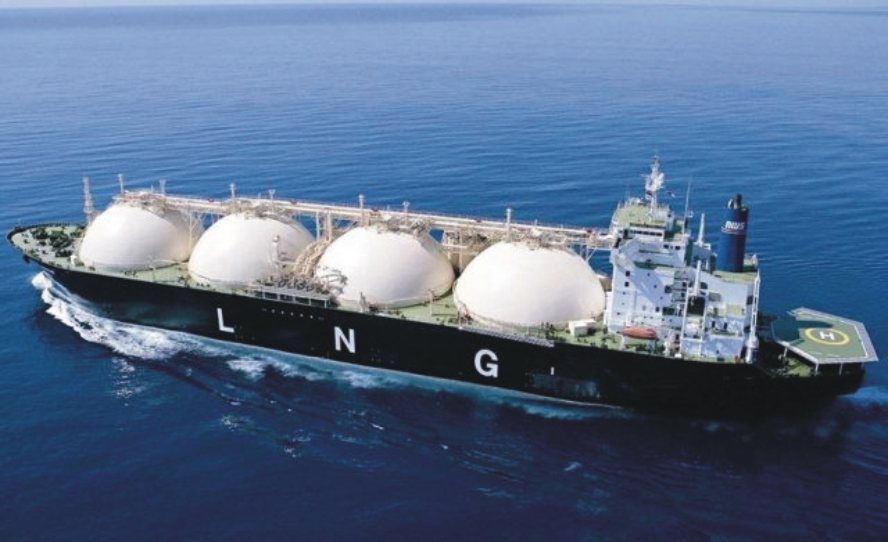
IEA Report: ‘Golden Rules’ Needed to Usher in Golden Age of Gas












Popular Categories




