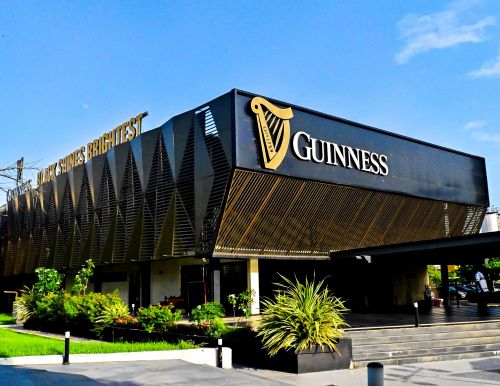


Guinness Nigeria Plc has achieved a landmark milestone, surpassing the ₦1 trillion mark in market capitalisation on the Nigerian Exchange (NGX), underscoring strong investor confidence and a sustained track record of value creation.
As of April 10, 2026, the company’s market capitalisation stood at approximately ₦1.01 trillion, with an enterprise value of ₦1.05 trillion. This milestone reflects a significant re-rating of the business by the market, driven by improved fundamentals and a renewed growth trajectory.
This achievement caps a remarkable 18-month period during which the company has delivered substantial improvements in shareholder value. As of April 12, 2026, Guinness Nigeria’s share price closed at ₦462.90, reflecting strong upward momentum and sustained investor confidence in the company’s strategic direction and performance outlook.
The company’s latest audited financial results for the 18-month period, ended 31 December 2025, further underscore this transformation. Guinness Nigeria delivered revenue of ₦730.80 billion, while gross profit rose by 152% to ₦230.48 billion, demonstrating strong margin expansion and improved operational efficiency.
In a significant turnaround, the company recorded a net profit after tax of ₦41.16 billion, recovering from a loss position in the prior period. This return to profitability highlights the success of ongoing transformation efforts and reinforces the company’s commitment to delivering sustainable, long-term value for shareholders.
The reporting period reflects a pivotal phase in the company’s evolution, including its transition to a new financial year-end of 31 December and its first full audited reporting cycle under its current ownership structure, laying a stronger foundation for future growth.
Commenting on the milestone, Prof. Fabian Ajogwu, SAN, Chairman of the Board said:
“This is a defining moment for Guinness Nigeria and a strong validation of the strategic direction we are pursuing. Crossing the ₦1 trillion market capitalisation threshold reflects the resilience of our business, the strength of our brands, and the renewed confidence of the investment community in our long-term prospects. We remain committed to disciplined governance, sustainable growth, and long-term value creation for all stakeholders.”
Over the period, the company has driven performance through revenue growth, portfolio optimisation, cost discipline, and expanded route-to-market capabilities. These efforts have been complemented by a sharpened focus on innovation, premiumisation, and consumer-centric strategies, reinforcing its leadership in Nigeria’s beverage alcohol sector.
Guinness Nigeria has also continued to strengthen its balance sheet, embed sustainability into its operations, and uphold strong corporate governance standards, while maintaining its commitment to responsible consumption and positive community impact.
Looking ahead, the company remains focused on accelerating growth through consumer obsession, portfolio expansion, and continued innovation, while maintaining a disciplined approach to capital allocation and shareholder returns.
About Guinness Nigeria Plc
Guinness Nigeria is the foremost Total Beverage Alcohol company in Nigeria with a wide portfolio of brands catering to consumers of non-alcohol and alcohol beverages including Malts, Ready-to-Drinks, Spirits, Stout & Beers. Some of its well-known and well-respected brands include, Guinness Foreign Extra Stout, Guinness Smooth, Malta Guinness, Orijin Bitters, Dubic Malt, Gordons Pink Berry, Gordons Orange Sunset, Smirnoff Ice, Smirnoff X1 Choco Vodka, Smirnoff Pineapple Punch, amongst others.
With a very clear ambition – “To become greatly treasured by all its stakeholders as Nigeria’s premier and most celebrated Total Beverage Company”, Guinness Nigeria delivers on its commitment to sustainability and responsibility through three focus areas: Environmental Stewardship, Promoting Responsible Drinking and Positive Community Impact. The company continues to be a champion for responsible drinking and community development.