






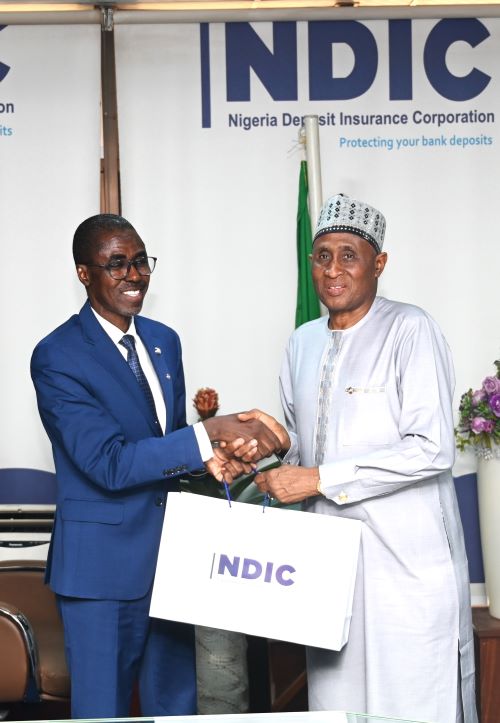


L-R: MD/CE, Nigeria Deposit Insurance Corporation (NDIC), Bello Hassan, presenting NDIC’s research publications to the visiting President and Chairman of Council, Chartered Institute of Directors (CIoD), Alhaji Tijjani M. Borodo, FIoD, during the Governing Council’s courtesy visit to the NDIC’s Management in Abuja.
The Nigeria Deposit Insurance Corporation’s (NDIC) excellence in operational standards, consistent implementation of its mandate, and unwavering commitment to ethical leadership and sound corporate governance especially in banking supervision and depositor protection, have been critical factor in the Corporation’s success in promoting the stability of the banking sector and the nation’s financial system.
The President and Chairman of Council of the Chartered Institute of Directors (CIoD) Nigeria, Alhaji Tijjani Borodo, made these remarks during a courtesy visit by the CIoD Governing Council to the Management of the Nigeria Deposit Insurance Corporation (NDIC) at the Corporation’s Head Office in Abuja.
While commending the NDIC for its notable achievements in bank liquidation and resolution, he noted that poor corporate governance has been a major contributing factor to bank failures. He stated that as the apex professional body for directors in Nigeria, the CIoD has instituted mechanisms and procedures to sanction erring directors found culpable of unethical conduct.
He reaffirmed the Institute’s strong commitment to promoting high standards of governance and leadership across all sectors, including the banking industry.
Tijjani Borodo described the visit of the Governing Council of the CIoD opportunity to strengthen and sustain the partnership between the Institute and the NDIC, particularly in the area of capacity building through board induction programmes, executive leadership development, and governance training tailored to the specific needs of directors in both the public and private sectors.
In response, the NDIC MD/CE, Mr. Bello Hassan, expressed appreciation to the CIoD leadership in promoting professionalism and corporate accountability.
He emphasised the NDIC’s commitment to depositor protection and financial system stability, stressing that corporate governance is central to the Corporation’s operational mandate and critical in strengthening the integrity and resilience of banks as well as instilling public confidence in the financial system.
Mr. Hassan further reiterated the Corporation’s readiness to sustain its partnership with the Institute in advancing a strong culture of corporate governance among the NDIC’s executive staff and across the broader financial industry.
















