


BPE Pays N1bn to 408 PHCN Staff, Retirees

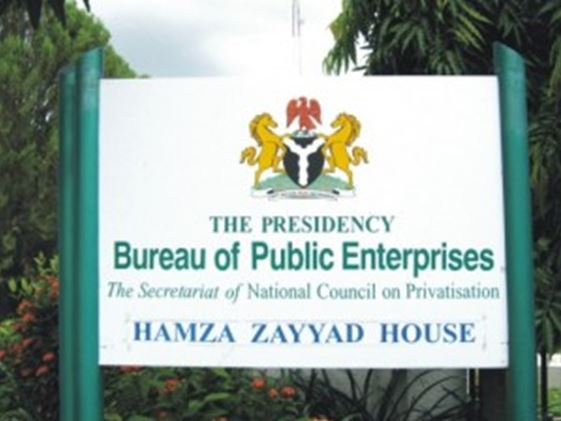
The 408 active staff and retirees/ Next-of Kins (NOKs) of the defunct Power Holding Company of Nigeria (PHCN)  who have been computed and audited by the Office of the Accountant General of the Federation (OAGF) have started receiving payment for their entitlements amounting to N1, 053,402,476.03, the Bureau of Public Enterprises (BPE) has revealed.

The privatisation agency in a statement on Thursday, September 20, 2018 by its Director General, Mr. Alex A. Okoh expressed delight that following the approval of the National Council on Privatisation (NCP), chaired by His Excellency, Professor Yemi Osibanjo, the implementation is leading to the resolution of “this outstanding labour issue in the power sector privatisation”.

He said the current milestone in the resolution and settlement of the outstanding labour liabilities became possible after the Bureau on March 27, 2018, constituted a Technical Working Group (TWG) comprising the OAGF, PENCOM, NELMCO, NUEE, and SSAEAC & NUP which worked assiduously culminating in a meeting between the DG of BPE and the OAGF on August 1, 2018 to finalize the payment process.

It would be recalled that prior to now, the Bureau of Public Enterprises (BPE) through the OAGF  had paid 47,041 out of  the 47,913 active staff  of the defunct PHCN  in 35 batches and 2,962  out of the 4,423 retirement and death benefits  to the beneficiaries in 14 batches.

This is in line with the mandate of the BPE to ensure that labour issues in privatisation are adequately addressed and resolved.

However, given the fact that not all the active staff and retirees/NOKs of the defunct PHCN were verified, the National Council on Privatisation (NCP) at its meeting of April 16, 2015, directed the Bureau to continue with the process of verification and payment of outstanding cases until a final resolution was achieved.

Following the NCP directive and approval, the Bureau conducted the final verification for staff and retirees/NOKs of the defunct PHCN in six geo-political centers from October 3rd-14th, 2016, resulting in the 408 beneficiaries who are now being paid.


Hot this week

Stanbic IBTC Bank Nigeria PMI: New Order Growth Hits One-Year High in August

Nigerian companies increased business activity at a much faster...

Leadway Assurance Partners Orivon Unveils EEWYLA Program at LAUTECH

Oriyon International Limited, a livestock production and aggregation company focused...

Sovereign Trust Insurance Receives Recapitalisation Certificate from NAICOM

Sovereign Trust Insurance Plc (STI), one of Nigeria’s leading...

SanlamAllianz Nigeria Launches Proud Moments 2.0, Celebrates Achievements Worth Protecting

Riding on the resounding success of its foundational debut,...

Topics

Expanding Africa’s Insurance Sector

  By Mikir Shah CEO Africa Specialty Risks Africa’s insurance market is poised...

British Theatres, Concerts Say No Shows Without Insurance Support

By Carolyn Cohn and Barbara Lewis  Mr. Tope Smart Group Managing Director/CEO NEM Insurance Plc British...

N300m Insurance Rebranding Project Stirs Market

The N300 million rebranding project by the insurance industry...

Sovereign Trust Insurance Receives Appreciation Plaque from Atinuke Cancer Foundation

L-R: kayode Adigun, Executive Director, Finance and Corporate Services;...

Nigeria Airways: Murdered in Cold Blood 12 Years Ago by Government! Obasanjo Part 2

In Pages 109, 110 and 111, IFC further gave a deft analysis of the consequences of Liquidation, some of which include: (i) Less likelihood of strong national carrier from “survival of the fittest local strategy; (ii) Disorderly development of air transport market: increases of financial cost from collapse of several domestic carrier; (iii) Great likelihood of worsening safety records in Nigeria; (iv) Increased reliance on foreign carriers, among others. (v) Nigeria would most unlikely not develop into a regional hub.

Financing Development under President Buhari: The Role of Pan African DFIs

By Roberts Orya, MD/CEO Nigerian Export-Import Bank (NEXIM) The Central Bank of Nigeria (CBN) has prognosticated a possible economic recession in 2016. This possible worst outcome of the present slump is something I am sure President Muhammadu Buhari would do everything to prevent. No president wants to be known in history as a 'Recession President.' However, this undesirable economic situation can sometimes become a reality, even inspite of the best efforts of a well-meaning leadership.






