






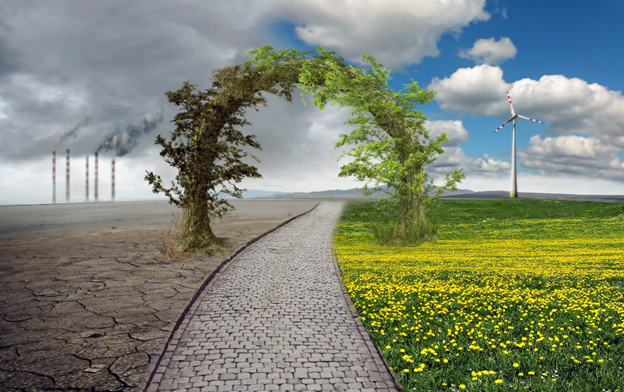


Yesterday, the Intergovernmental Panel on Climate Change released a report detailing progress and pathways to liming global warming to 1.5 degrees Celsius.
Responding to the report, Mr. Apollos Nwafor, Pan Africa Director of Oxfam International said:
“Climate change has set our planet on fire, millions are already feeling the impact, and the IPCC just showed that things can get much worse. Settling for 2 degrees would be a death sentence for people in many parts of Africa. The faster governments embrace the renewable energy revolution and move to protect communities at risk, the more lives and livelihoods that will be spared.
“A hotter Africa is a hungrier Africa. Today at only 1.1 degrees of warming globally, crops and livestock across the region are being hit and hunger is rising, with poor small scale women farmers, living in rural areas suffering the most. It only gets worse from here.
“To do nothing more and simply follow the commitments made in the Paris Agreement condemns the world to 3 degrees of warming. The damage to our planet and humanity would be exponentially worse and irreparable.
“None of this is inevitable. What gives us hope is that some of the poorest and lowest emitting countries are now leading the climate fight. We’ve moved from an era of ‘you first’ to ‘follow me’ – it’s time for the rich world to do just that.
“Oxfam calls for increased, responsible and accountable climate finance from rich countries that supports small scale farmers, especially women to realize their right to food security and climate justice.
“While time is short, there is still a chance of keeping to 1.5 degrees of warming. We must reject any false solution like Large Scale Land Based Investments that means kicking small scale farmers off their land to make way for carbon farming and focus instead on stopping our use of fossil fuels, starting with an end to building new coal power stations worldwide.”
Climate Impact in Africa:
Natural disasters such as droughts and floods have been thwarting development in the African continent. Fluctuations in agricultural production due to climate variations along with inefficient agricultural systems cause food insecurity, one of the most obvious indicators of poverty.
The 2016 El Niño phenomenon, which was super charged by the effects of climate change, crippled rain-fed agricultural production and left over 40 million people foods insecure in Africa. Without urgent action to reduce global emissions, the occurrence of climate shocks and stresses in the Africa region are expected to get much worse.
- On 5 July this year, Africa is likely to have registered its hottest reliable record temperature in Ouargla, northern Algeria, of 51.3C (124.3F).
- There is mounting evidence that higher temperatures linked to climate change have worsened drought and humanitarian disaster in East Africa, including last year’s drought which left over 13 million people dangerously hungry.
- Even at 1.5 degrees of warming, climate impacts in West Africa would be devastating. Wheat yields could fall by up to 25 percent, and at 1.5 degrees Lagos in Nigeria could become a newly heat stressed city like Delhi in India.
- In sub-Saharan Africa 1.5 degrees warming by the 2030s could lead to about 40 percent of present maize cropping areas being no longer suitable for current cultivars, and significant negative impacts on sorghum suitability are projected. Under warming of less than 2 degrees by the 2050s, total crop production could be reduced by 10 percent.
- At 2 degrees of warming heat extremes never experienced before could affect 15 percent of sub-Saharan Africa’s land area in the hot season, causing deaths and threatening farmers’ ability to grow crops.
If global temperature rises by more than 2 degrees by the end of the century, by 2050 this could see daytime temperatures in North Africa (and the Middle East) rise to 46 degrees on the hottest days, which can be deadly.
















